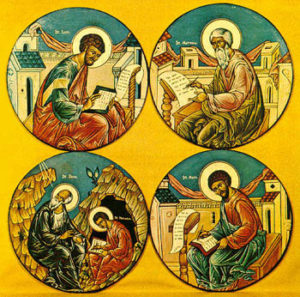
Introduction: In this blog essay, I will give an in-depth defense of the historical reliability of the gospel of Luke. This will be done with the aim of establishing that the gospel of Luke is a credible source testifying to the resurrection of Jesus. In this essay, I will examine the case for and against the historical reliability of the gospel of Luke. I will make the case that the physician Luke, was indeed the author of the book that bears his name. I will also argue that although Luke was not an eyewitness to Jesus’ ministry (and admits as much in his preface), nevertheless, he claims to have gotten his material from eyewitness testimony, and the content of the overall Lukan corpus bears that out. Moreover, I will make the case that the people and events that Luke describes can be verified by both external evidence (e.g extra biblical writings and archeology), as well as internal evidences (e.g The Criterion of Embarrassment). All of this will be in defense of a premise in David Pallmann’s syllogism for the truth that Jesus has risen from the dead. (1) There is testimony saying that Jesus was resurrected. (2) That testimony is credible. (3) There are only three logical possibilities with respect to credible testimony: It is deliberately false, it is honestly mistaken, or it is true. (4) The credible testimony for the resurrection of Jesus is not deliberately false. (5) The credible testimony for the resurrection of Jesus is not honestly mistaken. (6) Therefore, the credible testimony for the resurrection of Jesus is true. (7) If the credible testimony for the resurrection of Jesus is true, then Jesus was resurrected. (8) Therefore, Jesus was resurrected. I will only be looking at Luke as a credible testimony, not the other three gospels. The only times written sources will be cited other than Luke are extra-biblical writings that confirm events in Luke, Old Testament citations that are needed for background context of a Lukan pericope, or in any biblical document that interacts with Luke in interesting ways.
1.1 Why Restrict Yourself Only To Luke?
I’ve used the gospels collectively in the past, but in this case, I’m restricting myself to only the gospel of Luke in order to show the skeptic how strong the evidence really is. I can defend the resurrection of Jesus even with tight methodological restrictions. It also gives me more space to focus on the authorship and content of Luke, whereas I’d have less space to do so if I made use of all four of the gospels collectively as I’ve done in places like “The Case For The Reliability Of The Gospels” (an 11 part blog series) and “Jesus Christ Is A.L.I.V.E”. I have plans on doing this with John as well, and have already done this with the gospel of Matthew in my lengthy essay “Defending The Resurrection Of Jesus From Matthew Alone”. I was inspired to do this after writing my series “Defending The Trinity From Matthew Alone”, “Defending The Trinity From Mark Alone”, “Defending The Trinity From Luke Alone”, and “Defending The Trinity From John Alone” in which I defended the doctrine of the Trinity by just staying inside of each of the four gospels. In that case, though, I was treating the gospels as sacred scripture and exegeting passages talking about the unity of God, the deity of The Father, the deity of The Son, the deity of The Holy Spirit, and their distinctness in their personhood. My audience was people who believed The Bible was inspired but rejected the doctrine of The Trinity. In this project, I’m writing to people who don’t accept the gospels as God-breathed (2 Timothy 3:16). People like atheists and agnostics, for examples. Whereas the former series looked at the gospels’ contents from an exegetical and theological angle, this series will approach the gospels from a historical-critical angle.
1.2 The Syllogism Arguing For The Truth Of Jesus’ Resurrection
David Pallmann’s Maximal Data Argument For Jesus’ Resurrection goes as follows;
1: There is testimony saying that Jesus was resurrected (Luke).
2: This testimony comes from a credible source.
3: There are only three logical possibilities with respect to credible testimony: it is deliberately false, it is honestly mistaken, or it is true.
4: The credible testimony for the resurrection of Jesus is not deliberately false.
5: The credible testimony for the resurrection of Jesus is not honestly mistaken.
6: Therefore, the credible testimony for the resurrection of Jesus is true.
7: If the credible testimony for the resurrection of Jesus is true, then Jesus was resurrected.
8: Therefore, Jesus was resurrected.
This is a logically iron clad syllogism, as David Pallmann said, “Premise 1 is, or at least should be, the least controversial premise within this argument. Surely no one doubts that the four Gospels do claim that Jesus rose from the dead regardless of how they judge the truth of that claim. Premise 3 should also be fairly uncontroversial. After all, there are only two possibilities when it comes to the truth of any proposition. It is either true or it is false. And if it is false, then it can only be either intentionally false or unintentionally false. Hence, the third premise expresses a true trichotomy. Premise 7 is a tautology and is, therefore, true by definition. And premises 6 and 8 follow deductively from the preceding premises. Hence, the controversial premises are going to be premises 2, 4, and 5.” [1]David Pallmann, in his opening statement in the debate “Did Jesus Rise? David Pallmann and Eric Van Evans Debate The Resurrection”, A Sense Of Wonder, July 25th, 2025, Substack.
And so, let us now move on to examine premises 2, 4, and 5 in that order.
2.1 Defense Of Premise 2 – Luke’s Authorship
That the physician and traveling companion of Paul, Luke, is the author of the gospel that bears his name can be supported by two lines of evidence; external evidence and internal evidence. Let us first examine the external evidence.
The External Evidence
- The Early Church Fathers All Agreed That Luke Wrote Luke
Irenaeus (c. 130-202) writes, “Luke also, the companion of Paul, recorded in a book the Gospel preached by him.” [2]Irenaeus of Lyons, “Irenæus against Heresies” 3.1.1., in The Apostolic Fathers with Justin Martyr and Irenaeus, ed. Alexander Roberts, James Donaldson, and A. Cleveland Coxe, vol. 1, The … Continue reading
Justin Martyr (c. 100-165), before quoting from the Gospel of Luke and the other Gospels, notes that “the apostles, in the memoirs composed by them, which are called Gospels, have thus delivered unto us what was enjoined upon them.” [3]Justin Martyr, “The First Apology of Justin” 66, in The Apostolic Fathers with Justin Martyr and Irenaeus, ed. Alexander Roberts, James Donaldson, and A. Cleveland Coxe, vol. 1, … Continue reading Marcion, a heretic who thought the Old Testament God was evil, liked Luke’s gospel since it was written by a gentile, i.e Luke. Although even then, Marcion only allowed a shortened version of it in his own personal canon. Irenaeus said that “Marcion, mutilating that according to Luke, is proved to be a blasphemer of the only existing God, from those [passages] which he still retains”. [4]Irenaeus of Lyons, “Irenæus against Heresies,” 3.11.7, 428.
In his commentary on Luke, New Testament scholar Leon Morris writes, “Tradition unanimously affirms this author to be Luke. This is attested by the early heretic Marcion (who died c. ad 160; Luke was the only Gospel in his canon), the Muratorian Fragment (a list of the books accepted as belonging to the New Testament; it is usually held to express Roman opinion at the end of the second century), the anti-Marcionite Prologue to Luke (which also says that Luke was a native of Antioch, that he was a physician, that he wrote his Gospel in Achaia, and that he died at the age of eighty-four, unmarried and childless), Irenaeus, Tertullian, Clement of Alexandria and others.” [5]Leon Morris, Luke: An Introduction and Commentary, vol. 3, Tyndale New Testament Commentaries (Downers Grove, IL: InterVarsity Press, 1988), 19–20.
With so many extra-biblical witnesses to Luke being a historian, and given the fact that Luke is an obscure person in early church history and ergo, would be unlikely to be a chosen pseudonym, there is every reason to believe that the medical doctor and traveling companion of Paul authored this work.
Internal Evidence
While modern scholarship has moved away from the idea that Luke utilized a unique “medical vocabulary,” it remains strikingly evident that the author of the third Gospel possesses a distinct preoccupation with physical suffering, clinical detail, and humanitarian relief. This medical interest serves as a powerful internal indicator that the author was indeed the “beloved physician” mentioned by Paul (Colossians 4:14). One of the most compelling internal indicators is not the vocabulary itself, but the level of diagnostic detail. As New Testament scholar Craig Blomberg notes, Luke frequently adds clinical nuances to stories shared with the other Synoptics. Where Matthew or Mark might simply describe a condition, Luke provides a professional update. For instance, in the healing of Peter’s mother-in-law, Luke specifies that she was suffering from a “high fever” (pyretō megalō) (Luke 4:38), whereas Matthew (8:14) merely notes she had “a fever.” Luke’s descriptions of illnesses often appear more precise than those in the other Gospels… he alone describes the man with ‘dropsy’ (Luke 14:2) and the man ‘full of leprosy’ (Luke 5:12), suggesting an author who naturally categorized the severity and specific type of physical ailment.”[6]Craig L. Blomberg, The Historical Reliability of the Gospels, 2nd ed., 265. Moreover,The Good Samaritan (a parable unique to Luke’s gospel) from (“L”) shows a humanitarian interest (Luke 10:25-37). Just as a former tax collector like Matthew would be naturally drawn to parables involving debts and ledgers, [7]See my essay“Defending The Resurrection Of Jesus From Matthew Alone” a physician would be drawn to a story centered on the immediate, hands-on treatment of a trauma victim. Moreover, Luke alone records the specific first-aid measures: “pouring on oil and wine” and “binding up his wounds.” This focus on the process of restoration reflects the vocational interests of a healer; The compassion of the physician. Scholar Darrell Bock highlights that Luke’s Gospel is uniquely “the Gospel of the marginalized,” focusing heavily on those society deemed “unclean” or “broken.” This mirrors the professional life of a 1st-century physician, whose daily work brought him into contact with the very people high society avoided. Darrel Bock writes,“Luke’s Gospel shows a special sensitivity to the sick and the social outcasts. For Luke, Jesus is the ‘Great Physician’ whose ministry is defined by the restoration of the whole person—body and soul.” [8]Darrell L. Bock, Luke: Volume 1: 1:1-9:50, Baker Exegetical Commentary on the New Testament (Grand Rapids: Baker Academic, 1994), 7.
In the story of the woman with the issue of blood, Mark (5:26) says she had “suffered much under many physicians” and “spent all that she had, and was no better but rather grew worse.” Luke (the physician) significantly softens this. He simply says she “could not be healed by anyone.” It’s a subtle professional courtesy. Luke removes the swipe at the medical profession’s incompetence while still emphasizing that the condition was humanly incurable. It’s a tiny detail, but it’s exactly the kind of thing a doctor would edit!
Moreover, it is Luke alone who describes a strange condition pertaining to Jesus’ anguish in the garden of Gethsemane the night prior to his crucifixion. Luke 22:44 says “And being in anguish, he prayed more earnestly, and his sweat was like drops of blood falling to the ground.” (NIV) [9]Leon Morris notes in his commentary on Luke that “Some very good MSS omit these verses and rsv puts them in the margin; but the probability is that they should be included. In a day when scribes … Continue reading
There is a medical condition known as hematidrosis. Debra Jailman MD explains in a Web MD article that “Hematidrosis, or hematohidrosis, is a very rare medical condition that causes you to ooze or sweat blood from your skin when you’re not cut or injured. Only a few handfuls of hematidrosis cases were confirmed in medical studies in the 20th century.” [10]Debra Jailman MD, “What Is Hematidrosis?” January 26th, 2022 — https://www.webmd.com/a-to-z-guides/hematidrosis-hematohidrosis She goes on to say that doctors believe that hematidrosis is triggered by the body’s fight or flight response. [11]ibid. Or as Dr. Alexander Methrell explained in his interview with Lee Strobel; it was brought on by high stress. We can easily imagine Jesus, knowing the horrors of crucifixion that he was about to endure, would be in great distress indeed! Unfortunately, this did more than just produce droplets of blood out of the sweat glands. Dr. Methrell told Strobel that this made the skin extremely fragile and sensitive to the touch. [12]Strobel, Lee; Strobel, Lee. Case for Christ Movie Edition: Solving the Biggest Mystery of All Time (Case for … Series) . Zondervan. Kindle Edition. As if the pre-crucifixion scourging wasn’t painful enough (as we’ll see later on when I discuss “The Swoon Theory”), the pain was intensified all the more by this!
Isn’t it interesting that the other accounts of Jesus’ distress in the Garden Of Gethsemane don’t include this detail? This makes sense if the author of this gospel really was a medical doctor. Of course, it’s possible that someone not medically trained would include this. One should not be under the assumption that this point is a slam-dunk argument in favor of Lukan authorship. Rather, what I’m doing in this section on Luke (and indeed, what I’ve done with all of the gospels) is present a cumulative case for traditional authorship. None of these individual pieces of internal evidence would be very compelling on their own, but when they accumulate, they become pieces of evidence of a cumulative case.
2.2 Defense Of Premise 2 – Luke’s Eyewitness Material
Now that we’ve established that the gospel of Luke was written by Luke, the beloved physician (Colossians 4:14), now we need to deal with the issue of where Luke got his information from. For Luke himself, unlike Matthew, was not an eyewitness to virtually anything Jesus said or did. He was not one of the twelve apostles, and he didn’t seem to even know Jesus during his three-year ministry. However, in the preface of his Gospel, Luke is up-front about this, but puts himself forward as a sort of “journalist” who investigated people who were eyewitnesses, so he could “get the scoop” for Theophilus.
Luke 1:1-4 (ESV) says “Inasmuch as many have undertaken to compile a narrative of the things that have been accomplished among us, just as those who from the beginning were eyewitnesses and ministers of the word have delivered them to us, it seemed good to me also, having followed all things closely for some time past, to write an orderly account for you, most excellent Theophilus, that you may have certainty concerning the things you have been taught.”
Regarding the prologue to Luke’s gospel, the biblical scholar Luuk Van De Wege says “With other ancient historians, the Lukan prologue stresses the themes of inquiry, autopsy (‘seeing for oneself,’ not to be confused with the modern term), careful investigation/informed familiarity, a concern with ‘beginnings’ (e.g., Herodotus 1.5.3, Thucydides 1.23.4) and—in the case of the Acts narrative itself—of travel (e.g., Diodorus 1.4.1; Dion. Halic., Ant. Rom. 1.1.2; Josephus, B.J. 1.16). This latter issue was of paramount importance to ancient historians in the Thucydidean tradition, since only through autopsy and the inquiry of living witnesses could true historiography allegedly be achieved for recent events. Polybius believed, for example, that inquiry was the most important task of a historian (12.4.3c), and Herodotus once traveled to Thasos and Tyre to research a single point (2.44, cf. 2.102). Importantly, within the broad Greco-Roman tradition of history-writing, this ideal of autopsy—whether as a participant of events within the narrative or via the inquiry of participants—led many historians to see historiography as appropriate only for events that could be investigated in person. After all, it was only under such circumstances that living memory could remain accessible and the top tiers of epistemological hierarchy for ancient historians could be met.” [13]van de Weghe, Luuk. Living Footnotes in the Gospel of Luke: Luke’s Reliance on Eyewitness Sources (pp. 25-26). Pickwick Publications, an imprint of Wipf and Stock Publishers. Kindle Edition.
When evaluating the credibility of Luke’s testimony, we must look at his methodological claims in Luke 1:1-4. As Luuk Van De Weghe notes in “Living Footnotes In The Gospel Of Luke”, Luke’s approach reflects the highest historiographical standards of the first century. Drawing on the work of Richard Bauckham, Van De Weghe points out that Luke’s contemporaries, such as Papias, utilized a “judicial” style of inquiry. This is evidenced by the use of specific Greek verbs—like anekrinon—which denote a formal gathering of evidence. Furthermore, early external traditions bolster Luke’s reliability. Irenaeus, who may have had access to direct Johannine tradition through Polycarp, identifies Luke as a “follower and disciple of the apostles.” This suggests that Luke’s Gospel is a report produced by someone with direct access to the primary sources—the “living voices” of the resurrection witnesses. Therefore, Luke qualifies as a credible source under the standards of ancient historiography. [14]van de Weghe, Luuk. Living Footnotes in the Gospel of Luke: Luke’s Reliance on Eyewitness Sources (pp. 35-36). Pickwick Publications, an imprint of Wipf and Stock Publishers. Kindle Edition.
In conclusion, we have every reason to take Luke’s statement as a claim that he carefully investigated eyewitnesses who observed the life, teachings, death, and even resurrection of Jesus seriously.
The issue for the Christian Apologist is being able to identify these witnesses. Luke says he interviewed eyewitnesses, and that he is intending to record an orderly account for theophilus. As we’ve seen from the Luuk Van De Wege quotes, Luke’s intention in writing his gospel is undoubtedly a forensic interest, that is, to record historical events as told by the people who saw and heard Jesus say and do what he did, boots-on-the-ground. And that these were likely “living voices” as Papias interviewed the apostles. But who were his informants? Pastor-scholar John Piper argues persuasively that it was the apostles. In one of his sermons, he says;
“These eyewitnesses and ministers of the word are the apostles. We can see this from the way Luke describes the work of the apostles in Acts: they have the task of bearing witness to what they have seen and of ministering the word, which probably means preserving the sayings and deeds of Jesus, and teaching this meaning to the churches. We see these two tasks in several texts. Acts 1:21, 22 records how they replaced Judas among the twelve apostles. Peter says, ‘One of the men who have accompanied us during all the time that the Lord Jesus went in and out among us, beginning from the baptism of John until the day when he was taken up from us—one of these men must become with us a witness to his resurrection.’
Then in Acts 6:4, after appointing men to serve the tables, Peter says of the apostles, ‘We will devote ourselves to prayer and to the ministry of the word.’ Then in Acts 13:31, Paul refers to the twelve apostles like this: (after his resurrection) ‘for many days Christ appeared to those who came up with him from Galilee to Jerusalem, who are now his witnesses to the people.’ Then finally in Acts 26:16, Paul describes how Christ commissioned him to be a part of this apostolic band by appearing to him and giving him these very tasks. Christ says, ‘I have appeared to you for this purpose, to appoint you to minister and to bear witness to the things in which you have seen me and to those in which I will appear to you.’ So the eyewitnesses and ministers of the word with whom Luke could confirm his work were not just ordinary eyewitnesses; they were the chosen and appointed instruments of Christ himself who had the authority of the risen Lord behind their teaching; they were the apostles.” [15]John Piper, Sermons from John Piper (1980–1989) (Minneapolis, MN: Desiring God, 2007).
To accept this argument at this stage does not necessarily require that, for example, in Acts 26:16, the risen Christ actually spoke to Paul. On pains of begging the question in favor of the resurrection’s historicity (the very task of establishing is my project here), all we need to affirm is that the internal work of Luke suggests that when he uses the term “witnesses”, “Eyewitnesses”, “ministers of the word”, his consistent usage of this term in his work suggests he means primarily apostolic authority. The internal evidence suggests that Luke’s usage of these terms is apostolic in nature.
John G. Mason, in his book “Luke: An Unexpected God”, agrees, writing “Support is given to this suggestion in the closing scene of Luke’s narrative. Luke records Jesus’ words to the eleven and those who were with them (24:33). You, Jesus said, are witnesses of these things (24:48), that is, witnesses to the fact that the Messiah had to die and rise again and that repentance and forgiveness of sins should be proclaimed in his name to all nations (24:47). Furthermore, in the opening chapter of his second volume, Acts, Luke relates Jesus’ charge to his apostles: they were to be his witnesses (Acts 1:8). In the same chapter (Acts 1:21–22), Luke tells us that only someone who had been with Jesus from the time of his baptism until his death and resurrection qualified to be a candidate to replace Judas (as an apostle). From the outset of his narrative Luke himself was committed to protecting the truth of the events and the significance of Jesus’ life and work.” [16]John G Mason, Luke: An Unexpected God, ed. Paul Barnett, Second Edition, Reading the Bible Today Series (Sydney, South NSW: Aquila Press, 2019), 4–5.
Now, you may be wondering why I am talking about verses in both the gospel of Luke and Acts. This is because Luke and Acts were written by the same author. Regardless of whether one accepts Luke the physician as the traditional author of the gospel of Luke, it is undeniable that Acts is a sequel to the gospel of Luke and was likely written by the same guy. For in Luke 1:1-4, Luke addresses his work to “Most Excellent Theophilus.” In Acts 1:1-2, we read “In the first book, O Theophilus, I have dealt with all that Jesus began to do and teach, until the day when he was taken up, after he had given commands through the Holy Spirit to the apostles whom he had chosen.” (ESV). The author of the book of Acts refers to a “first book” (ESV, NRSV), a “former account” (NET), a “former treatise” (KJV) which was also addressed to “Theophilus”. And the author of Acts says that this former book contained an account of “all that Jesus began to do and teach”. Now, let me ask you, what book could possibly fit this description? What book was written to a man named Theophilus and contained an account of “all that Jesus began to do and teach”? I think it’s obvious that this author is referring to the gospel of Luke! And so, when I (and when pastor-scholars John Piper, and John G. Mason) refer to sections of the book of Acts in conjunction with sections of the book of Luke, it is because they have the same author.
While my former series focused on defending the doctrine of the Trinity from the biblical books titled Matthew, Mark, Luke, and John, that series was arguing for the Trinity from an exegetical and theological perspective, and my audience were people who already accepted the gospels as inspired scripture. This series is written from a historical critical angle, written to people who don’t take the gospels as inspired scripture (e.g atheists). And whereas the former defended The Trinity from the GOSPEL of Luke alone, this is defending the resurrection of Jesus from the authors behind those books. We are critically evaluating witnesses, not documents. We are scrutinizing the testimony of authors, not books. Thus, when evaluating what the person “Luke” has to say about what he means by a certain term, it is not a violation of my methodology to step outside of the gospel of Luke. Should Matthew have written documents other than his gospel that survived, I would have consulted them in the prior essay.
Another piece of evidence is the many “We” passages in the book of Acts. These passages indicate that one of Paul’s traveling companions had joined him on his missionary journeys. For example, Acts 16:10 says “After Paul had seen the vision, we got ready at once to leave for Macedonia, concluding that God had called us to preach the gospel to them.” Read Acts 16:10–17; 20:5–15; 21:1–18; 27:1–37; and 28:1-16 for the complete list.
“We set sail from Troas to Samothrace,” “We remained in Philippi some days,” “As we were going to the place of prayer,” etc. The most obvious explanation is that the author of Acts had joined Paul on his journeys. Skeptics have really tried hard to avoid this conclusion. They say that the first person language in Acts shouldn’t be taken literally. They say that this was just a literary device common in ancient sea voyage stories. There are two problems with this; the first is that the vast majority of Paul’s journey were on land, not on the sea. The second problem is that there’s no evidence that this kind of literary device was used in antiquity. It is, as Dr. William Lane Craig calls it on page 243 of his book “On Guard”, a “Scholarly Fiction”! [17]Craig, William Lane. On Guard: Defending Your Faith with Reason and Precision (p. 243). David C Cook. Kindle Edition.
By piecing together the “we sections” of Acts, Luke appears to have been in Jerusalem during 58–60 AD, a period when he likely worked through the details of his account with the apostles and others who constituted the eyewitnesses and ministers of the word. [18]John G Mason, Luke: An Unexpected God, ed. Paul Barnett, Reading the Bible Today Series (Sydney, South NSW: Aquila Press, 2019), 5.
It is my opinion that if we stopped here, we would be in a good enough position to affirm premise 2 of David Pallmann’s argument for Jesus’ resurrection “The testimony comes from a credible source.” Luke is relaying what the apostles [19]And likely Mary The Mother of Jesus for his birth narrative section. are saying about all that Jesus said and did. And the question would then be whether this testimony is deliberately false, honestly mistaken, or true (steps 4-8). However, since we have time, and to make as strong of a case as possible, let’s look at how extra biblical evidence, archaeological evidence, and internal evidences (e.g the criteria of authenticity) support Luke’s reliability. Afterwards, I’ll address some allegations of historical goofs on Luke’s part.
2.3 Defense Of Premise 2 – The Content Of Luke: External Evidences (Broad Strokes)
Extra-biblical evidence confirms the historical persons and events in Luke’s gospel at multiple places, both in broad strokes as well as in minute details. Both together make a strong case that Luke’s gospel is telling a true story, or at least is trying to. Let’s first look at how extra-biblical writings and archeological evidence confirm Luke’s accuracy in the broad details.
- The Existence, Ministry, and Crucifixion Of Jesus
Source 1: Flavius Josephus
The gospel of Luke tells us about a man named Jesus, who was wise and taught people theology and doctrine (Luke 4:14-15, 20:1), and who did miracles (Luke 7:21-22). After getting into hot water with the religious leaders (Luke 22:1–2, 66–71), they sent him to be tried under Pontius Pilate (Luke 23:1). Pilate sent Jesus to die by crucifixion (Luke 23:24-26, 33).
The secular historian Flavius Josephus corroborates this broad outline of events in book 18 of his Antiquities of the Jews. Josephus writes:
“Now, there was about this time, Jesus, a wise man, if it be lawful to call him a man, for he was a doer of wonderful works—a teacher of such men as receive the truth with pleasure. He drew over to him both many of the Jews, and many of the Gentiles. He was [the] Christ; and when Pilate, at the suggestion of the principal men amongst us, had condemned him to the cross, those that loved him at the first did not forsake him, for he appeared to them alive again the third day, as the divine prophets had foretold these and ten thousand other wonderful things concerning him; and the tribe of Christians, so named from him, are not extinct at this day.” [20]Flavius Josephus: Antiquities of the Jews, Book 18, Chapter 3, 3
Now, I know what you’re thinking. “Isn’t this passage inauthentic? After all, Josephus was not a Christian. Yet he explicitly says Jesus was The Christ, the Greek term for Messiah. And even worse, he explicitly says that Jesus rose from the dead? Wasn’t this whole thing just made up by a Christian scribe?” While I agree that Josephus’ passage has been touched up by a Christian scribe so as to make explicit declarations of his Messiahship and resurrection, I don’t think this means we can’t use this passage as good extra-biblical evidence for the existence of Jesus, his fame as a wise teacher (Luke 4:22), and his crucifixion under Pontius Pilate (Luke 23:33-46).
Most scholars believe that there is an authentic core to this passage. One reason is that once the obviously Christian phrases such as “He was The Christ,” “He appeared to them alive again on the third day…” etc. are removed, the paragraph flows much more smoothly. The blatantly Christian portions seem to be parenthetical and don’t affect the overall message of the passage. I would challenge you to find a random paragraph from any book and try to remove certain sentences from it and see if its coherence isn’t greatly affected. Good luck! This heavily implies that there was a core original that belonged to Josephus, despite the ham-handed Christian bits being added later by a scribe.
Here’s how the passage reads with the interpolations omitted:
“Now, there was about this time, Jesus, a wise man. He was a doer of wonderful works. A teacher of such men as receive the truth with pleasure. He drew over to him both many of the Jews, and many of the Gentiles. When Pilate, at the suggestion of the principal men amongst us, had condemned him to the cross, those that loved him at the first did not forsake him, and the tribe of Christians, so named from him, are not extinct at this day.”
This reconstructed version of Josephus is actually remarkably similar to an Arabic version of the text discovered by scholar Shlomo Pines in 1971. In that version, the explicit claims of Jesus being the Messiah or rising from the dead are absent or phrased as reports of his followers (‘they reported that he had appeared to them’), which is exactly what we would expect from a Jewish historian like Josephus [21]Shlomo Pines, An Arabic Version of the Testimonium Flavianum and its Implications (Jerusalem: Israel Academy of Sciences and Humanities, 1971).
“At this time there was a wise man who was called Jesus. His conduct was good, and [he] was known to be virtuous. And many people from among the Jews and the other nations became his disciples. Pilate condemned him to be crucified and to die. But those who had become his disciples did not abandon his discipleship. They reported that he had appeared to them three days after his crucifixion, and that he was alive; accordingly he was perhaps the Messiah, concerning whom the prophets have recounted wonders.” [22]Source: Agapius, Kitab al-‘Unwan, as translated in Shlomo Pines, An Arabic Version of the Testimonium Flavianum and its Implications (1971).
For these and other reasons, most scholars hold to the view that there was an authentic core in the Testimonium Flavianum about Jesus.
Source 2: Tacitus
In Annals 15, the secular historian Tacitus reports about the crucifixion of Jesus in passing, in the context of talking about the burning of Rome and Nero Caesar’s attempt at scapegoating the Christians of the area. Tactitus writes “But not all the relief that could come from man, not all the bounties that the prince could bestow, nor all the atonements which could be presented to the gods, availed to relieve Nero From the infamy of being believed to have ordered the conflagration, the fire of Rome. Hence to suppress the rumor, he falsely charged with the guilt, and punished Christians, who were hated for their enormities. Christus, the founder of the name, was put to death by Pontius Pilate, procurator of Judea in the reign of Tiberius: but the pernicious superstition, repressed for a time broke out again, not only through Judea, where the mischief originated, but through the city of Rome also, where all things hideous and shameful from every part of the world find their center and become popular.” [23]Cornelius Tacitus, Annals (written ca. AD 116), book 15, chapter 44.
Again, mention of Jesus and Pontius Pilate in secular documents. Tacitus affirms that Jesus existed and that He was crucified by Pontius Pilate. Then he says that the movement named after Jesus died down for a while, then it flared up again, originally in Judea, then spread to Rome. Luke and Acts say the same thing; Jesus existed, was crucified by Pilate, and his followers stayed quiet for 50 days after that, then after Pentecost, they started spreading the gospel across the ancient world.
Source 3: Mara Bar Serapion
Mara Bar-Serapion was a Syrian who wrote about Jesus Christ sometime around A.D. 73. He left a legacy manuscript to his son Serapion.
“What advantage did the Athenians gain from putting Socrates to death? Famine and plague came upon them as a judgment for their crime. What advantage did the men of Samos gain from burning Pythagoras? In a moment their land was covered with sand. What advantage did the Jews gain from executing their wise King? It was just after that their Kingdom was abolished.”
About this passage, Josh and Sean McDowell write “Though Mara never uses Jesus’ name, we can be certain he is referring to him because no one else at that point in history would fulfill the requirements of being known as a “wise king” who was killed by the Jews shortly before they were driven from the land. Jesus is obviously in view.” [24]McDowell, Josh; McDowell, Sean. Evidence That Demands a Verdict: Life-Changing Truth for a Skeptical World (p. 150). Thomas Nelson. Kindle Edition.
Unlike the previous two works, we don’t get very much information about Jesus or other New Testament events, but we do get one reference to Jesus’ death.
Source 4: Lucian Of Samosata
Lucian of Samosata was a Greek satirist who lived during the latter half of the second century, around AD 125 to AD 180. He writes about Jesus in The Passing of Peregrinus.
“The Christians, you know, worship a man to this day—the distinguished personage who introduced their novel rites, and was crucified on that account… You see, these misguided creatures start with the general conviction that they are immortal for all time, which explains the contempt of death and voluntary self-dåevotion which are so common among them; and then it was impressed on them by their original lawgiver that they are all brothers, from the moment that they are converted, and deny the gods of Greece, and worship the crucified sage, and live after his laws. All this they take quite on faith, with the result that they despise all worldly goods alike, regarding them merely as common property.”
You can just feel the sarcasm and condescension oozing off of every sentence. Lucian does not mock the Christians for following the teachings of a man who never existed, but for worshipping a man who was crucified, and thus, Lucian confirms the existence and crucifixion of Jesus. Not only that, but Lucian also confirms that Christians worshipped Jesus.
From these secular sources, we have multiple, independent attestations for the existence of Jesus and his death by crucifixion at the hands of Pontius Pilate. Four independent secular records confirm Luke’s account. Paul Maier, retired distinguished professor of ancient history at Western Michigan University, said, “Many facts in the ancient world are established on one source. Two or three sources often make an event impregnable.“” [25]Paul L. Maier, In the Fullness of Time: A Historian Looks at Christmas, Easter, and the Early Church (San Francisco: Harper Collins, 1991), 197. Two sources? You can’t beat it. That’s how source material works in ancient history. This, then, makes the position of the know-nothing neckbeard atheists known as Christ Mythicism as credible of a hypothesis as The Flat Earth is to science! With Luke, Josephus, Tacitus, Mara Bar Sarapion, and Lucian Of Samosata, we have not just 2 independent sources, but 5! According to the criterion of multiple attestation, this makes Jesus existence, and crucifixion at the hands of Pontius Pilate historically certain! And there are more sources if the gospel of John and Paul’s epistles are brought in, totaling 7!
- The Existence and Office Of Pontius Pilate
As you can already see, the existence of the Roman Governor Pontius Pilate is attested in the works of both Flavius Josephus and Cornelius Tacitus, both in connection with the crucifixion of Jesus. Thus, Luke is confirmed to be right when he says that there was a governor by this name. However, there’s more. In 1961, archaeologists in Caesarea Maritima discovered a limestone block used in a theater that bore a Latin inscription: “Pontius Pilatus, Praefectus Iudaeae” (Pontius Pilate, Prefect of Judea). This find confirms not only the existence of the man who presided over Jesus’ trial (Luke 23:1) but also his exact historical title as “Prefect”, and this matches the Roman administrative nomenclature of the era. [26]Jerry Vardaman, “A New Inscription Which Mentions Pilate as ‘Prefect,'” Journal of Biblical Literature 81, no. 1 (1962): 70–71.
- The Existence Of Joseph Caiaphas, The High Priest Who Tried Jesus
The Gospel of Luke also refers to a man named Caiaphas and says that he was the high priest (Luke 3:2), leader of the Sanhedrin (Luke 22:66), and the one who presided over the council that tried Jesus (Luke 22:66–71). Flavius Josephus also confirms the existence of Caiaphas in his works (Josephus, Antiquities 18.2.2, 18.4.3), but, more than just extra-biblical literary mentions of this man, we literally have this man’s bones. In 1990, workers in the Jerusalem Peace Forest accidentally discovered a highly ornate first-century ossuary (a stone box for bones) inscribed with the name “Joseph, son of Caiaphas.”
This find provides physical, biological evidence for a specific contemporary individual Luke identifies by name and station. The high quality of the carving matches the elite status of the High Priest’s family described in the Gospel. [27]Ronny Reich, “Caiaphas Name Inscribed on Bone Box,” Biblical Archaeology Review 18, no. 5 (1992): 38–44. Once again, the gospel of Luke is confirmed by both an extra-biblical writer and by archeology to have been telling the historical truth. Premise 2 of David Pallmann’s syllogism “The testimony comes from a credible source” is starting to look really good, isn’t it?
- The Existence, Ministry, and Death Of John The Baptist.
Luke tells us that there was a man named John the Baptist preaching in the wilderness (Luke 3:2-4), preparing the way of the Lord in fulfillment of Isaiah 40:3 and Malachi 3:1 (Luke 1:17, 3:4-6), and that he baptized people (Luke 3:7, 16). Luke tells us that John the Baptist was imprisoned by Herod Antipas because John preached against the borderline incestuous marriage between Herod Antipas and Herodias (Luke 3:19–20). Luke also tells that Herod Antipas had John the Baptist beheaded (Luke 9:7-9).
Flavius Josephus likewise tells us that there existed a man named John the Baptist who preached and baptized people (Josephus, Antiquities 18.5.2). Josephus also tells us that John the Baptist was imprisoned by Herod Antipas at the fortress of Machaerus (Josephus, Antiquities 18.5.2), and even makes note of how scandalous Herod’s marriage to Herodias was—noting that it violated ancient Jewish law because she was the wife of Herod’s living half-brother (Josephus, Antiquities 18.5.1, 18.5.4).
Once again, a secular historian confirms that what Luke said was true.
- Jesus Was A Miracle Worker
Beyond the broad historical outline, secular and hostile sources provide what scholars call “enemy attestation” to Jesus’ reputation as a miracle-worker. In the Testimonium Flavianum, Josephus identifies Jesus as a “doer of wonderful works” (Josephus, Antiquities 18.3.3), a phrasing that mirrors Luke’s accounts of “mighty works” (Luke 10:13, 19:37). Even more striking is the testimony found in the Jewish Talmud (Sanhedrin 43a). While the Talmud reached its final form later, it preserves early Tannaitic traditions (A.D. 70–200) that acknowledge Jesus was “hanged” on the eve of Passover for “practicing sorcery” [28]Gary Habermas, The Historical Jesus, 1996. As with the religious leaders in Luke’s own narrative who attributed Jesus’ power to Beelzebul (Luke 11:14-15), his non-Christian detractors did not deny that he performed supernatural deeds; they merely reclassified them as occultic. This hostile admission serves as powerful evidence that Jesus’ career was marked by events so undeniably extraordinary that even his enemies had to invent a theory to explain them away.
By the way this explanation was refuted by Jesus himself with two logical counter arguments (1) Satan would be fighting against his own, which would result in the demolition of his army, “A kingdom divided against itself cannot stand”, this is what logicians call a “reductio ad absurdum”. Satan can’t be the one behind these exorcisms, because if he were, he’d be undermining his own kingdom! This would be about as logical as a general commanding his soldiers to go around shooting other soldiers within the same army! Hence, only one logical possibility remains; he is casting out demons “by the finger of God”. (2) If they really wanted to go down that road, they’d be indicting their own exorcists, hence their claim would ultimately be self-defeating. (see Luke 11:17-23).
- The Existence Of Magdala and Of Synagogues
Luke emphasizes Jesus’ ministry in the synagogues of Galilee (Luke 4:15, 8:1). Some scholars previously argued that synagogues did not exist in the region until after the destruction of the Temple in A.D. 70. However, in 2009, a first-century synagogue was excavated in Magdala—the hometown of Mary Magdalene, a key figure in Luke’s account.
The discovery proves that communal worship structures were active in Galilean villages during the life of Jesus, providing the exact historical setting Luke describes for Jesus’ early ministry and the background of his female followers (Luke 8:2-3 ). [29]Stefano de Luca and Marcela Zapata-Meza, “Magdala/Taricheae,” The Oxford Encyclopedia of the Bible and Archaeology (2013).
2.4 Defense Of Premise 2 – The Content Of Luke: External Evidences (The Minutia)
Just as Luke was confirmed by extra-biblical writings and archeological finds in the broad, main details of his gospel, Luke has also gotten minute details right, or what Dr. Lydia McGrew would call “hard things”. Things that you couldn’t know unless you were either there, boots-on-the-ground, witness to these things or spoke to people who were. Because, remember, Luke did not have access to Google. There was no AI chatbot he could consult to see what kind of trees were in the area. The minute things are important external confirmations because they would be so easy to goof up on if the author were making stuff up. We will see that Luke’s credibility as a source (Premise 2 of Pallmann’s Resurrection argument) is even further confirmed.
- Luke Knows About Tax Collector Hoarding
In Luke 3:12, Luke records John The Baptist saying to a group of tax collectors who apparently are repenting of their sins to “Collect no more than you are authorized to do.” This shows an awareness on Luke’s part of the historical practices of tax collectors of the Second Temple Jewish period.
As Pastor Brandon Robbins said, “If a man was selected to be a tax collector, he would pay Rome in advance for the taxes he was expecting to collect in that region. Then he would go out and collect not only what was owed by each person but also an amount on top of that as a commission for himself. Beyond that, tax collectors would frequently stop traders along the highway, demanding a portion of their money or goods. This, of course, led to widespread greed and corruption among tax collectors. They became very wealthy, while the people around them became more and more impoverished. Worse yet, they were bankrupting their own people in the name of Rome, aiding the oppressor and profiting from it.” [30]Robbins, Brandon. The Forgotten Teachings of Jesus: Rediscovering the Bible with The Chosen: Season One (pp. 32-34). David C Cook. Kindle Edition. See also 1. Thomas E. Schmidt, “Taxation, … Continue reading
This is a small, incidental detail that shows a historical awareness of how tax collectors did things that a fabricator living somewhere else in a different time period would be unlikely to get right. This accounts, then for what John The Baptist tells the tax collectors to do; i.e just do your job. Collect the taxes that are due to Rome and no more.
- Sycamore Trees
Luke 19:1-6 (ESV) says “He [Jesus] entered Jericho and was passing through. And behold, there was a man named Zacchaeus. He was a chief tax collector and was rich. And he was seeking to see who Jesus was, but on account of the crowd he could not, because he was small in stature. So he ran on ahead and climbed up into a sycamore tree to see him, for he was about to pass that way. And when Jesus came to the place, he looked up and said to him, ‘Zacchaeus, hurry and come down, for I must stay at your house today.’” ‘ So he hurried and came down and received him joyfully.”
Luke tells us that a tax collector named Zacchaeus climbed a sycamore tree to see Jesus. Because “Zacchaeus was a wee little man, and a wee little man was he,” and Jesus was obscured by a crowd. There is external confirmation of the gospel’s reliability. New Testament scholar Peter J Williams specifies that “The relevant species, Ficus syco-morus, did not grow in northern Mediterranean countries (Italy, Greece, Turkey), and in fact lacks natural pollinators in those countries. But this tree was characteristic of Jericho, according to the second-century rabbi Abba Shaul. How did the author know there were sycamores in Jericho? The simple explanation is that he had either been there or spoken to someone who had.” [31]Peter J Williams, “Can We Trust The Gospels?”, page 82, Crossway.
- Samaritans Be Like “How Dare You Go To Jerusalem!”
Luke 9:51-53 (ESV) says, “When the days drew near for him to be taken up, he set his face to go to Jerusalem. And he sent messengers ahead of him, who went and entered a village of the Samaritans, to make preparations for him. But the people did not receive him, because his face was set toward Jerusalem.”
This is a classic External Undesigned Coincidence between Luke and the Jewish historian Josephus.
The Argument concerns The Samaritan-Pilgrim Conflict. The “minute thing” Luke gets right here isn’t just that Jews and Samaritans disliked each other (otherwise, this would be in the section called “External Evidence – The Broad Strokes”), it’s the specific seasonal reason for the Samaritans being big ole meanies to Jesus.
Luke 9:51-53 tells us that a specific Samaritan village refused Jesus entry. The reason given is odd:“because his face was set toward Jerusalem.” What? If Jesus were going somewhere else, would it be ok? What is going on here? To modern readers like ourselves, this sounds weird, and we suspect that maybe this has some kind of cryptic meaning. However, it is a subtle historical detail that Luke’s original audience would have immediately picked up on. What Luke is describing here is the travel of a pilgrim towards the Jerusalem Temple
The Secular Confirmation of this comes from the non-Christian historian Josephus. In Antiquities of the Jews, Josephus records that the Samaritans had a particular habit of attacking or harassing Jewish pilgrims who were traveling through Samaria specifically to attend the feasts in Jerusalem.
The Quote from Josephus is as follows:
“It was the custom of the Galileans, when they came to the holy city at the festivals, to take their journeys through the country of the Samaritans; and at this time there lay in the road a village that belonged to Samaria… where a great number of people [Galileans] were cut in pieces.” [32]Josephus, Antiquities, 20.6.1.
The point is that Luke mentions this hostility as a casual, unexplained background detail. He doesn’t stop to explain to his readers: “Now, you must understand, the Samaritans were particularly annoyed by people heading to Jerusalem for the feasts.” He just records the rejection and moves on.
This shows that Luke is (1) historically accurate because he reflects a very specific first-century geopolitical tension documented by Josephus. And (2) Candid. He records the failure of the messengers and the rejection of Jesus without trying to smooth over the friction.
- Two Denarii From The Good Samaritan
In Luke 10:29-36, Jesus tells the famous “Parable Of The Good Samaritan”. The story goes that a man was traveling and was suddenly jumped by road bandits. They beat the ever-loving crud out of him, stripped him of his clothing, and left him for dead. A priest and a scribe, each passed him by. Two men you would expect to be godly and full of compassion simply ignored him one after the other. Then a Samaritan, who, as previously noted, were an ethnic group despised by the Jews, was the one to stop and help him. He took the beaten and battered man to an inn and gave the inn-keeper a down payment of two denarii, promising that if it wasn’t enough to house the man until he recovered, he would come back and pay more.
Luke’s precision is further seen in the economic detail of this parable. The traveler leaves “two denarii” with an innkeeper to cover the victim’s care (Luke 10:35). Historical data regarding the purchasing power of the denarius in the 1st century show that this was a highly realistic ‘down payment,’ sufficient to cover room and board for nearly three weeks! As Kenneth Bailey says “Two denarii was a very generous amount… in the first century, it would have paid for the man’s room and board for about two or three weeks. This detail shows Jesus’ (and Luke’s) familiarity with the actual costs of travel and lodging in that specific region.” [33]Kenneth E. Bailey, Through Peasant Eyes: More Lucan Parables, Their Culture and Theology (Grand Rapids: Eerdmans, 1980), 54. As Craig Blomberg notes, “The mention of the ‘two denarii’—enough to provide for the victim’s needs for a significant period—is a characteristic ‘Lukan’ touch of realism. It fits the economic landscape of 1st-century Palestine, where such a sum would cover nearly a month’s stay at a rural inn.” [34]Craig L. Blomberg, The Historical Reliability of the Gospels, 262.
This is another minute detail of Luke’s gospel that is confirmed by extrabiblical material, which would be hard for a fabricator to simply guess at.
- The “Drachma” in the Parable of the Lost Coin (Luke 15:8–10)
Luke 15 contains a series of back-to-back parables, each teaching the same lesson: a single lost thing and the urgent desire of the one who lost said thing to reclaim it, representing God’s strong desire to pursue and redeem anyone who is separated from Him. Verses 8-10 feature The Parable Of The Lost Coin which goes “Or what woman, having ten silver coins, if she loses one coin, does not light a lamp and sweep the house and seek diligently until she finds it? And when she has found it, she calls together her friends and neighbors, saying, ‘Rejoice with me, for I have found the coin that I had lost.’ Just so, I tell you, there is joy before the angels of God over one sinner who repents.'” (ESV)
This is a “Luke Alone” parable. Luke uses the word drachme (drachma). The Argument here is that the drachma was a Greek silver coin roughly equal in value to the Roman denarius. While the denarius was the official currency for Roman taxes (which is why it appears in the “Render to Caesar” stories), the drachma remained the money that common people used in the marketplace of Hellenized cities in the East. Luke uses the drachma in a domestic setting (a woman in her house). This is highly realistic. He doesn’t use the official Roman word; he uses the word a local woman would actually use for her savings. As Dr. Tim McGrew explains, “Luke’s accuracy in the names of coins is not accidental. By using the drachma in the domestic parables and the lepton in the Temple setting, he demonstrates a nuanced understanding of the overlapping Greek, Roman, and Jewish monetary systems in 1st-century Palestine.” [35]Timothy McGrew, “The Reliability of the Gospels,” 2012. [36]See also Craig L. Blomberg, The Historical Reliability of the Gospels, 2nd ed. (2007), 263
- Render To Caesar The Things That Are Caesars
We’re not done talking about money yet! In Luke 20:20-25, we read “So they watched him and sent spies, who pretended to be sincere, that they might catch him in something he said, so as to deliver him up to the authority and jurisdiction of the governor. So they asked him, ‘Teacher, we know that you speak and teach rightly, and show no partiality, but truly teach the way of God. Is it lawful for us to give tribute to Caesar, or not?’ But he perceived their craftiness, and said to them, ‘Show me a denarius. Whose likeness and inscription does it have?’ They said, ‘Caesar’s.’ He said to them, ‘Then render to Caesar the things that are Caesar’s, and to God the things that are God’s.'” (ESV)
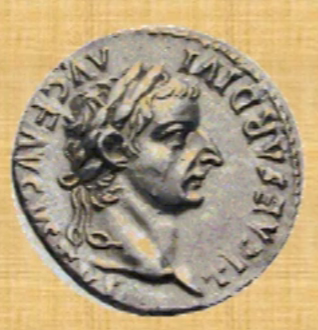
Dr. Tim McGrew highlights the historical and theological brilliance of Jesus’ response to the tax trap in Luke 20:24–25. When Jesus asks for a denarius and questions whose “likeness and inscription” it bears, he isn’t just winning a political debate; he is exposing the hypocrisy of his challengers. As McGrew explains, the coin bore the image of Tiberius Caesar, which was a direct violation of the Second Commandment against “graven images”—a point so sensitive to the Jews of that era that they had previously rioted over such Roman icons.
Furthermore, McGrew points out that the coin’s inscription specifically identified Tiberius as the “Son of the Divine Augustus.” By carrying this currency, the religious leaders were effectively harboring an idol that celebrated the Roman Emperor as a god, thereby violating the First Commandment. Jesus’ command to “render to Caesar” was therefore a stinging rebuke: since they were already compromising their convictions by hoarding Caesar’s idolatrous currency, they should simply give it back to him—and instead focus on giving their true allegiance to God. Give to Caesar the things that bear his image and give to God the things that bear His image (cf. Genesis 1:26-27). [37]Dr. Tim McGrew, “02 – External Evidence for the Truth of the Gospels”, Apologetics 315, March 14th 2012, Time Stamp 50:28-55:20 –> … Continue reading.
- The Fingerprint of Names: Onomastic Congruence
A compelling internal indicator of Luke’s reliability is what scholars call “onomastic congruence”—the statistical match between the names in the Gospel and the names known to be in use in first-century Palestine. By comparing the New Testament to a massive database of over 3,000 names from contemporary ossuaries, papyri, and the works of Josephus, researchers like Richard Bauckham and Peter J. Williams have demonstrated that the “name profile” of the Gospels is an exact match for the specific time and place they describe. [38]Richard Bauckham, Jesus and the Eyewitnesses: The Gospels as Eyewitness Testimony (Grand Rapids: Eerdmans, 2006), 67–84.
This goes beyond just getting the names right; it involves the proportional frequency of those names. For example, the two most popular male names in Palestine at the time were Simon and Joseph. In the Gospels and Acts, these are also the most frequent names. Furthermore, because these names were so common, people used “disambiguators” to tell them apart—such as “Simon Peter” or “Joseph of Arimathea.”
As Peter J. Williams notes, writers outside of Palestine, such as those in Egypt or Rome, used entirely different name sets. A later fabricator or a writer living in the Diaspora would have inevitably “polluted” the narrative with names popular in their own region or failed to use the correct disambiguators for the common local ones [39]Peter J. Williams, Can We Trust the Gospels? (Wheaton: Crossway, 2018), 65–78.
The statistical precision of these names acts as a “chronological and geographical anchor.” As Luuk van de Weghe argues, the probability of a later author guessing the exact proportion and variety of Palestinian names—while also correctly omitting names that only became popular after A.D. 70—is statistically negligible. This suggests that Luke was not inventing stories, but accurately preserving the names of the real people who were part of the history he recorded. [40]Luuk van de Weghe, “The Names in the Gospel of Luke,” in The Reliability of the New Testament, ed. K.R. Harriman (2014).
2.5 Defense Of Premise 2 – The Content Of Luke: Internal Evidences
In this section, we will be looking at indicators of reliability within the text of the gospel of Luke itself. I will mostly employ what has been dubbed by scholars “the criterion of embarassment” and I will use this criterion repeatedly to make a cumulative case for Luke’s truthfulness. The logic of the criterion of embarrassment basically goes like this; people make up lies to make themselves look good or to get themselves out of trouble, but no one lies to make themselves look bad or get themselves into trouble. People will lie to make their arguments, causes, or people they like be cast in a good light, but the reverse is not true.
- The Son Of Man Has Nowhere To Lay His Head.
Luke 9:57-58 (ESV) says “As they were going along the road, someone said to him, ‘I will follow you wherever you go.’ And Jesus said to him, ‘Foxes have holes, and birds of the air have nests, but the Son of Man has nowhere to lay his head.”
This incident is likely historical on the basis of the criterion of embarrassment. As New Testament scholar Michael Bird says “The saying about the Son of Man having nowhere to lay his head (Matt 8:20/ Luke 9:58) is widely regarded as authentic… it satisfies the criterion of embarrassment insofar as it portrays Jesus as a homeless, wandering, and socially marginal figure—hardly the typical portrait for a messianic claimant.” [41]Michael F. Bird, The Gospel of the Lord: A Tutorial on the Origins and Transmission of the Gospels (Grand Rapids: Eerdmans, 2014), 253.
John P. Meier, In “A Marginal Jew” argues that the term “Son of Man” combined with the theme of radical poverty is so counter-intuitive for an early Christian fabricator that it must go back to the historical Jesus [42]John P. Meier, A Marginal Jew: Rethinking the Historical Jesus, Vol. 1 (New York: Doubleday, 1991), 173–175.
Craig Blomberg notes that this saying reflects the “scandal of the incarnation”—the idea that the King of the Universe lived in a state that even the animal kingdom surpassed in terms of basic security [43]Craig L. Blomberg, The Historical Reliability of the Gospels, 2nd ed. (2007), 264.
His “homelessness” was a potential point of ridicule for critics of the early movement. Celsus mocked Jesus for being a wanderer who lived a shameful life on the margins of society. He viewed Jesus’ lack of a home as proof that he was not a god or a king, but a failed magician. Celsus wrote “But after he [Jesus] had recruited ten or eleven people of notorious character… he fled from place to place with them, in a shameful and demeaning way, leading a life of a vagabond.” [44]From Origen, “Against Celsus”, 1.62. suggesting that Luke included the saying because it was a genuine, unforgettable part of Jesus’ own teaching.
- Jesus Won’t Let A Man Bury His Father?
In Luke 9:59-60, a man comes to Jesus wanting to follow him as a disciple, but he requests that he go on first and bury his father. Jesus replies with “Leave the dead to bury their own dead. But as for you, go and proclaim the kingdom of God.” (ESV). The criterion of embarrassment would seem to apply here because Jesus’ response comes off as kind of callous. Granted, Jesus didn’t sin here. It is not as though his father would remain unburied if he wasn’t the one to do it. But it still looks bad at face value.
The 18th century Christian Apologist William Paley also caught this, for in his book “Evidences Of Christianity”, in the section on the “Candour Of The Writers”, wrote of this passage that “This answer, though very expressive of the transcendent importance of religious concerns, was apparently harsh and repulsive; and such as would not have been made for Christ if he had not really used it. At least some other instance would have been chosen.” [45]Paley, William. Evidences of Christianity (p. 178). Kindle Edition.
Granted, there is a good explanation of this, but still, the face value harshness of it would be something a fabricator would either remove or edit. To get theological for a moment, why exactly did Jesus say this? J.I Packer says in The ESV Global Study Bible that “To bury a deceased parent was an important duty, and Jesus clearly encouraged honoring one’s parents (Matt. 15:1–9). But Jesus knew that this man’s request was merely an excuse for not following him. Burial at this time in Judaism often involved a year-long period from the time when the body was first buried until a year later when the bones of the deceased were placed in a box.” [46]J. I. Packer, Wayne Grudem, and Ajith Fernando, eds., ESV Global Study Bible (Wheaton, IL: Crossway, 2012), 1442. And he goes on to explain the odd “Leave the dead to bury their own dead” comment as constituting“a pun in which ‘dead’ means both spiritually dead (compare 15:24) and physically dead.” [47]ibid John A. Martin and John. G. Mason think his father wasn’t even dead yet, but perhaps quite elderly and that the man was waiting on his eventual demise as an excuse for not following Jesus. [48]See John A. Martin, “Luke,” in The Bible Knowledge Commentary: An Exposition of the Scriptures, ed. J. F. Walvoord and R. B. Zuck (Wheaton, IL: Victor Books, 1985), 2:232–233. and John G Mason, … Continue reading
But again, despite there being a perfectly good explanation, this doesn’t remove the face value awkwardness of the passage
- Jesus, Can We Burn These People?
In Luke 7:51-53, we read of how Jesus “set his face to go to Jerusalem” and how Jesus sent messengers ahead of him to a village in Samaria. We saw in the section on external evidences how this provided an Undesigned Coincidence between the gospel of Luke and the secular historian Josephus.
However, the following passage, Luke 9:54-55 also provides historical confirmation of this incident. The criterion of embarassment applies here as the disciples James and John, two of Jesus’ “inner three” look very vindictive, and Jesus has to chastise them. James and John pretty much want to incinerate these people just for being rude. Jesus rebukes them. We’re not told exactly what Jesus said in his rebuke, but nevertheless, the disciples are not painted in a good light here. A fabricator of events would have either omitted this incident entirely or else would have written it in a different way. Remember, earlier, we saw good reason to believe that some of the eyewitnesses who Luke consulted would be the apostles themselves. So this would be, in a sense, the apostles painting themselves in a bad light!
- Immodest Piety
The account of the sinful woman in Luke 7:36–39 meets the historical Criterion of Embarrassment. As Norman Geisler and Frank Turek point out, the scene could easily be misconstrued as a sexual advance, a detail no fabricator would include if they were trying to bolster the reputation of their Messiah [49]Norman L. Geisler and Frank Turek, I Don’t Have Enough Faith to Be an Atheist (Wheaton, IL: Crossway, 2004), 276.. The scandal is deepened when we understand the modesty standards of the time. For a woman to unbind her hair in public was a profound breach of social decency, often equated by cultural historians to a modern woman removing her shirt in a public setting [50]See Mishnah Ketubot 7:6, in The Mishnah, trans. Herbert Danby (Oxford: Oxford University Press, 1933), 254. See also Kenneth E. Bailey, Through Peasant Eyes: More Lucan Parables, Their Culture and … Continue reading The fact that Luke records Jesus allowing this “immodest” display of affection—while the Pharisee looks on in judgment—strongly suggests that the event is a historical report rather than a theological invention. [51]One might also want to question one’s own cultural standards of modesty. If Jesus would be ok with exposed hair, while society of that day would not, then perhaps our own ideas of what counts … Continue reading
- The Failure of the Rock
A final internal indicator of authenticity is the portrayal of Peter’s denial of Jesus (Luke 22:54–62). Under the criterion of embarrassment, historians recognize that early Christian writers would be highly unlikely to invent stories that humiliated their own leaders unless those stories were undeniably true. Peter was the undisputed leader of the early church; yet, Luke records that at the hour of Jesus’ greatest need, Peter did not merely flee, he repeatedly disowned Jesus under the questioning of a lowly servant girl.
As scholar Michael Bird notes, the early church had every motive to “sanitize” their heroes to maintain authority and morale. Instead, we find a raw, unflinching account of the “Rock” crumbling into tears of bitter shame (Luke 22:62). The fact that this narrative was preserved strongly suggests that the event was a matter of public, historical fact that could not be suppressed. It serves as a “stain” on the record that inadvertently proves the integrity of the record-keeper. [52]Michael F. Bird, The Gospel of the Lord: Evangelizing the Early Church (Grand Rapids: Eerdmans, 2014), 62–63.
2.6 Defense Of Premise 2 – Responding To Charges Of Historical Inaccuracy
Before we wrap up our defense of premise 2, “The Testimony comes from a credible source”, it would be good not to just make a positive case for Luke’s reliability, but respond to the argument from skeptics against it. Despite archeologist William F. Ramsay comment that “Luke is a historian of first rank”, [53]Sir William Ramsay, The Bearing of Recent Discovery on the Trustworthiness of the New Testament (London: Hodder and Stoughton, 1915), 81, 222. many skeptics (both scholar and layman) would disagree. So, what are some of the things that skeptics think Luke gets wrong?
- The Census
Luke 2:1-3 (ESV) says, “In those days a decree went out from Caesar Augustus that all the world should be registered. This was the first registration when Quirinius was governor of Syria. And all went to be registered, each to his own town.”
Skeptical scholars as well as lay atheists try to cast doubt on Luke’s credibility as a historian because of the census in Luke 2. There are actually two different objections surrounding the census and I will tackle them one by one. Given that Luke’s census continues to be the go-to objection against Luke’s reliability regardless of how many times we apologists put it to rest, it is definitely worth addressing here.
Census Objection 1: The Timing Of The Census With Herod’s Death is Off By 10 years!
First, skeptics will say that there was no census that Quirinius conducted at the time right before Jesus’ birth. There was a Quirinius census, they say, but it was in A.D 6. What’s the problem? Well, Matthew and Luke have King Herod The Great sitting on his throne right around the time Quirinius conducts this census. Why is that a problem? Because according to Josephus, Herod The Great died before Quirinius was even governor, which scholars date around 4 B.C which is also when Christ’s birth is dated. If Herod died in 4 B.C. and Quirinius didn’t conduct his census until 6. A.D, there is a 10 year gap that seems to blow a hole in Step 2 of Pallmann’s syllogism.
Did Luke goof up by a 10 year margin? How should we respond to this?
1. The “Prior to” Translation
One of the most linguistically robust solutions suggests that Luke is actually distinguishing this census from the later, more famous one. As Dr. Timothy McGrew notes, the Greek word protos followed by the genitive can be translated as “before” rather than “first.” This suggests Luke was telling his readers that this event took place prior to Quirinius’s well-known census [54]Timothy and Lydia McGrew, “The Reliability of the New Testament,” in The Blackwell Companion to Natural Theology, ed. William Lane Craig and J. P. Moreland (Malden, MA: Wiley-Blackwell, … Continue reading. This reading aligns with other New Testament usages of the word, such as in John 1:15, where protos is used to denote chronological priority.
2. The Distinction of a “First” Census
If we retain the traditional translation of “first,” scholars like Craig Blomberg argue that Luke’s specific phrasing implies he was aware of multiple censuses. By labeling it the “first,” Luke explicitly separates it from the census of A.D. 6, which he later mentions in Acts 5:37. Blomberg notes, “It is entirely possible that Quirinius held some official post in the region earlier than his well-known governorship of Syria” [55]Craig L. Blomberg, The Historical Reliability of the Gospels, 2nd ed. (Downers Grove, IL: IVP Academic, 2007), 260.
3. The Dual Governorship Theory
Finally, historical evidence suggests that Quirinius may have held a special military or administrative role in Syria during Herod’s reign. This theory, famously championed by William Paley, suggests that Quirinius was sent as an extraordinary commissioner to oversee the census while other men held the ordinary governorship. Paley argues that “it is extremely probable that [Quirinius] was the person who, in the character of the Emperor’s commissioner, actually ‘enrolled’ the people of Judea” during Herod’s final years [56]William Paley, A View of the Evidences of Christianity (New York: American Tract Society, 1850), 282.
Census Objection 2: Judea was under the control of Herod the Great. He was a client king in good standing, so he would have been allowed to levy taxes himself. The Emperor would not normally issue a decree for a client king in good standing.
A common objection to Luke’s account is the claim that Augustus would not have ordered a census in Judea while Herod the Great was still reigning as a client king. However, as Dr. Timothy McGrew points out, this assumes Herod remained in the Emperor’s “good graces” throughout his entire tenure. Citing the Jewish historian Josephus, McGrew notes that toward the end of Herod’s life, a diplomatic rift occurred. Augustus was so angered by Herod’s unauthorized military actions that he demoted Herod’s status from a “friend and ally” (Rex Socius) to a mere “subject” (Rex Amicus) [57]Timothy McGrew, “04b Alleged Historical Errors in the Gospels (Luke & John)”, June 27th 2012, Apologetics 315, — … Continue reading. [58]Josephus, Antiquities, 16.290
This demotion is crucial because a “subject” king typically lost the right to manage his own taxation. McGrew argues that this political shift explains why an “oath of allegiance” was required of the Jewish people at this time, [59]Josephus, Antiquities, 17.42 a detail explicitly recorded by Josephus. While the Emperor eventually restored Herod to favor, the initial decree for a registration likely began during this period of friction (c. 7 B.C.). This historical context provides a plausible window for the census mentioned in Luke 2:1–2, occurring just prior to the birth of Jesus (c. 6–5 B.C.) and fitting neatly within the window of Herod’s final years. [60]See Timothy McGrew, “04b Alleged Historical Errors in the Gospels (Luke & John)”, June 27th 2012, Apologetics 315, — … Continue reading
The apparent chronological tension in Luke’s census finds a compelling resolution in the political fallout between Herod and Augustus recorded by Josephus [61]Josephus, Antiquities, 16.290. As Luuk van de Weghe notes, these “tells” in the text suggest Luke was working from a source deeply familiar with the shift in Judean status from a “friend” to a “subject” kingdom [62]Luuk van de Weghe, The Historical Tell: Patterns of Eyewitness Testimony in the Gospel of Luke and Acts (Deward Publishing, 2023), 42–45. This political demotion provides the necessary historical motive for a Roman registration during Herod’s reign, predating the more famous census of A.D. 6. In other words, not only is everything I said here a response to a charge of historical inaccuracy, but the passage actually shows a historical awareness that would be easy for someone fabricating a story to get wrong. This defensive answer actually simultaneously makes for an offensive apologetic!
- Luke Gives Pontius Pilate The Wrong Title!
Skeptics argue that Luke made a historical blunder in Luke 3:1. They say Luke gives Pontius Pilate the wrong title, calling him “procurator” (ἡγεμών) instead of “prefect” (Luke 3:1).
The skeptics’ objection rests on a misunderstanding of terminology rather than a genuine historical error. Archaeological evidence from Caesarea Maritima (i.e The Pilate Stone Inscription) confirms Pilate’s official title as praefectus (prefect), a position that involved leading 500–1,000 military troops. [63]Michael Brandon Massey, “Pontius Pilate,” in The Lexham Bible Dictionary, ed. John D. Barry et al. (Bellingham, WA: Lexham Press, 2016). However, Luke’s use of hēgemōn (ἡγεμών)—often translated as “procurator” or “governor”—doesn’t constitute an inaccuracy.
The Greek term hēgemōn that appears in the New Testament corresponds to the Latin praeses, which could be considered synonymous with either procurator or prefect. [64]See George H. Allen, “Procurator,” in The International Standard Bible Encyclopaedia, ed. James Orr et al. (Chicago: The Howard-Severance Company, 1915), 2458. This means Luke employed a general administrative descriptor rather than a technical Roman title. Before the time of Vespasian, no inscriptional evidence definitively established the nomenclature of Judaea’s rulers, and while Tacitus refers to Pilate as procurator, Josephus uses the term epitropos (procurator) for the period of Claudius, making it reasonable to assume this title was current from the beginning. [65]See ibid.
Christian scholars and apologists address this objection by clarifying that Luke wasn’t attempting to provide Rome’s technical administrative terminology. Modern commentators note that while an inscription shows Pilate’s title was “prefect” (not “procurator,” as has often been held), Luke’s broader term remains historically defensible. [66]Leon Morris, Luke: An Introduction and Commentary, Tyndale New Testament Commentaries (Downers Grove, IL: InterVarsity Press, 1988), 3:111. The evangelist prioritized narrative clarity for his audience over Roman bureaucratic precision—hēgemōn was the accessible Greek term for any Roman provincial administrator, regardless of formal title.
Rather than representing carelessness, Luke’s terminology reflects the fluid administrative language of the period and the practical concerns of his Greek-speaking audience. The objection ultimately dissolves when one recognizes that Luke wasn’t claiming to provide Rome’s official designations but rather used conventional Greek terminology to identify Pilate’s role as the governing authority.
- Luke Gives Lysanias The Wrong Title!
A frequent objection to the historical precision of Luke 3:1 involves the mention of Lysanias as the “tetrarch of Abilene.” Critics, following the lead of 19th-century skeptics like David Strauss, long argued that the only Lysanias known to history was a “King of Chalcis” who was executed in 36 B.C. Since this is roughly sixty years before the “fifteenth year of Tiberius” (c. A.D. 28–29), skeptics claimed Luke had committed a massive chronological blunder.
However, as New Testament scholar Craig Blomberg points out, archaeological discoveries have rendered this objection obsolete. An inscription discovered at Abila, the capital of the region, explicitly names a “Lysanias the Tetrarch” during a timeframe that overlaps with the reign of Tiberius. This evidence suggests that there were actually two rulers with this name—likely a grandfather and a grandson—and that Luke’s account aligns perfectly with the later figure [67]Blomberg, 2007.
Timothy and Lydia McGrew further observe that Luke’s accuracy is demonstrated in his choice of political titles. While the earlier, 1st-century B.C. Lysanias was referred to as a “king” or “ruler of the Itureans,” Luke specifically identifies the later figure as a “tetrarch.” The Abila inscription confirms this specific nomenclature, indicating that Luke was not relying on vague legends but on technically precise, contemporary data [68]Timothy and Lydia McGrew, “The Reliability of the New Testament,” in The Blackwell Companion to Natural Theology (2009), 632.
Digital apologists like Michael Jones (Inspiring Philosophy) and Eric Manning (Testify) frequently utilize this “Abilene Inscription” to demonstrate how an alleged error can become a hallmark of credibility once archaeology catches up to the text [69]Michael Jones, “The Reliability of the New Testament,” Inspiring Philosophy, YouTube, May 27, 2016. See also: “Is the Genealogy of Jesus a Contradiction?” Inspiring … Continue reading. Manning specifically notes the internal dating of the inscription itself: it was dedicated to the “August lords,” a plural title referring to Tiberius and his mother, Livia. Because Livia did not receive the title “Augusta” until A.D. 14, the inscription undeniably dates to the first century A.D. This places a ruling Lysanias exactly where and when Luke claimed he was (Luke 3:1), vindicating the Gospel writer’s historical high-ground [70]Eric Manning, “Did Luke Get the Date of Lysanias Wrong?” Greatly Mistaken, February 19, 2019
- Two High Priests!? Poppycock!
Another claim of error on the part of skeptics is in Luke 3:2. Skeptics argue from the Old Testament that there could only ever be one high priest at a time. Moreover, when one was given the job of high priest, they were given the job of high priest for life. Yet John 11:51-52, that Caiaphas was “High priest that year” as though it were an annual office. I’ll address John’s supposed blunder in “Defending The Resurrection Of Jesus From John Alone”. But what about Luke, does he blunder here?
Howard I Marshall and D.R Hall in “The New Bible Dictionary” explain that “First, though the Romans deposed high priests and appointed new ones, the Jews thought of the high priesthood as a life office. The Mishnah (Horayoth 3. 4) says: ‘A high priest in office differs from the priest that is passed from his high priesthood only in the bullock that is offered on the Day of Atonement and the tenth of the ephah.’ Secondly, the title ‘high priest’ is given in Acts and Josephus to members of the few priestly families from which most high priests were drawn, as well as to those exercising the high-priestly office.” [71]D. R. Hall, “Annas,” in New Bible Dictionary, ed. D. R. W. Wood et al. (Leicester, England; Downers Grove, IL: InterVarsity Press, 1996), 49. They go on to say “ When Lk. 3:2 says that the high priest was Annas and Caiaphas, the singular is probably deliberate, indicating that, though Caiaphas was the high priest officially appointed by Rome, his father-in-law shared his high-priestly power, both de facto by his personal influence and, according to strict Jewish thought, also de jure (cf. Acts 4:6).” [72]D. R. Hall, “Annas,” in New Bible Dictionary, ed. D. R. W. Wood et al. (Leicester, England; Downers Grove, IL: InterVarsity Press, 1996), 49.
Time and time again, Luke is confirmed to be right, and it is the skeptics that are wrong. With this lengthy treatment of the case for Luke’s credibility, I think enough has been said that premise 2 is firmly established. And I’ve barely even begun to scratch the surface here. Since Luke is the author of the book of Acts, any evidence for Act’s reliability is confirmation of Luke’s gospel since, as I said earlier in this essay, both books share the same author, and in this series on the resurrection, we’re really evaluating the reliability of authors, not books, contra the Trinity series. Colin J. Hemer wrote a work called “The Book Of Acts In The Setting Of Hellenistic History” in which he talks about 84 historical confirmations in Acts! In both broad and minor strokes! This is what lead the archaeologist William Ramsay to make the comment that “Luke is a historian of the first rank; not merely are his statements of fact trustworthy; he is possessed of the true historic sense… in short, this author should be placed along with the very greatest of historians.” [73]Again, see Sir William Ramsay, The Bearing of Recent Discovery on the Trustworthiness of the New Testament (London: Hodder and Stoughton, 1915), 81, 222.
Defense Of Premise 3: There Are Only Three Logical Possibilities With Respect To Credible Testimony: It Is Deliberately False, It Is Honestly Mistaken, Or It Is True.
This premise should be uncontroversial. It is simply a list of possible explanations as to why a witness would give the testimony that he gives. It certainly seems to represent a true trichotomy. Any proposition is either true or false. If it’s false, it’s either deliberately false (i.e a lie) or it is unintentionally false (i.e the person was mistaken). If it is neither deliberately false nor unintentionally false, then it is not false at all, but true (i.e it corresponds to the way things really went down.) If the skeptic can think of a fourth alternative, he’s welcome to add it to the list, and then we can consider that option, but this really does seem to exhaust the list of possibilities.
Defense Of Premise 4: The Credible Testimony For The Resurrection Of Jesus Is Not Deliberately False.
There are a few reasons to believe that the testimony about the resurrection of Jesus is not a purposeful lie. For one, much of the evidence in favor of premise 2 also establishes premise 4. Luke got his testimony from eyewitnesses, and extra-biblical evidence, archaeological evidence, and the criterion of embarrassment repeatedly show that he is telling the truth throughout his gospel narrative. This sets a low antecedent probability that Luke would be a careful, meticulous historian and then suddenly pivot to telling a wild tale of a resurrected rabbi.
Speaking of the criterion of embarrassment, there is a very good argument from that for the historicity of the empty tomb. Luke tells us that it was women who discovered the tomb empty that first Easter morning. Why is this embarrassing? Because in first century Israel, women were basically considered second class citizens and they were considered to be generally untrustworthy. Talmud Sotah 19a says “Sooner let the words of the law be burnt than delivered to women“! The Talmud also contains a rabbinic saying that goes like this: “Blessed is he whose children are male, but woe to him whose children are female”! And according to the Jewish historian Josephus, their testimony was considered so untrustworthy that they weren’t even permitted to serve as witnesses in a Jewish court of law! (Antiquities, 4.8.15). Drs. Gary Habermas and Michael Licona say “Given the low first-century view of women that was frequently shared by Jew and Gentile, it seems highly unlikely that the Gospel authors would either invent or adjust such testimonies. That would mean placing words in the mouths of those who would not be believed by many, making them the primary witnesses to the empty tomb. If the Gospel writers had originated the story of the empty tomb, it seems far more likely that they would have depicted men discovering its vacancy and being the first to see the risen Jesus.” [74]Habermas, Gary R.; Licona, Michael R.. The Case for the Resurrection of Jesus (p. 73). Kregel Publications. Kindle Edition.
A quick word about a common counter-argument needs to be said. Skeptics respond to this argument by saying that we shouldn’t be surprised to see women at the tomb because they so highly regarded in The New Testament. The early church highly regarded women, which was countercultural at the time (See, for example, Paul’s words in Galatians 3:28). Advocates of this counterargument include the YouTube atheist Paulogia as well as agnostic New Testament Scholar Bart Ehrman. [75]See William Lane Craig, The Reasonable Faith Podcast, “A YouTube Objection To The Resurrection, PART 2” — … Continue reading Ehrman also writes, “Preparing bodies for burial was commonly of work of women, not men. And so why wouldn’t the stories tell of women who went to prepare the body? Moreover, if, in the stories, they are the ones who went to the tomb to anoint the body, naturally they would be the ones who found the tomb empty.” [76]In “How Jesus Became God” New Testament scholar Dr. Michael Licona responds to this objection, saying, “There was no known need to fabricate an appearance to the women. A fabricated report may have had Joseph and/or Nicodemus lead the male disciples to the tomb, discover it empty, and be the recipients of an appearance. Or why not, if the story was a complete fabrication, have the women discover the empty tomb and inform the male disciples, as we find in John, but then have the men be the recipients of the angelic announcement and initial appearance of Jesus? Moreover, an invented story of the resurrection could have recorded the appearance to the men while they were waiting at the tomb for the women to show up or after the women did their part in dressing the corpse. The women need only have played a secondary role.” [77]Licona, Michael R.. The Resurrection of Jesus: A New Historiographical Approach (p. 355). InterVarsity Press. Kindle Edition. In other words, there were other ways to tell the story that would not have included women being the first ones at the tomb. I’ve even proposed that the story could have remained almost the same, but that a few men accompanied the women in order to protect them from bandits or to remove the stone or something. Even this minor tweak would have prevented later critics like Celsus from using this fact against the early Christians. The best explanation for why the story wasn’t told differently was that Luke was constrained to report the facts as they happened, despite the credibility problem this would pose.
I think the strongest argument in favor of the truth of premise 4 is the martyrdom of the apostles. If the Resurrection were a deliberate fabrication, we must believe that the very men Luke drew his information from (Luke 1:1-2) were willing to endure decades of poverty, social ostracization, and agonizing deaths for a story they knew to be false. While many people throughout history have died for mistaken religious ideas, the apostles were in a unique position: they weren’t dying for an ideology, but for a specific claim of physical, historical fact—that they had eaten and drunk with the risen Jesus (Luke 24:41–43). As the “Argument from Martyrdom” suggests, “liars make poor martyrs.” One might risk their life breaking the law for gaining money, sex, or power, but men do not die for a lie that brings them nothing but suffering.
Historical records outside of the New Testament confirm that the leaders of the early church faced the ultimate price for this testimony. Josephus records the execution of James, the brother of Jesus, by stoning in A.D. 62 (Josephus, Antiquities 20.9.1). The Roman historian Tacitus describes the “exquisite tortures” Nero inflicted upon Christians in Rome—where Peter and Paul were traditionally martyred—noting they were covered in wild beast skins and torn by dogs or fastened to crosses (Tacitus, Annals 15.44). Clement of Rome, writing in the late first century, specifically cites the “great examples” of Peter and Paul, who “suffered many labors” and “gave their testimony” unto death (1 Clement 5:1–7). Finally, let me point out that Luke himself was a companion of Paul (Acts/Colossians 4:14), meaning he was an eyewitness to the very persecution he describes. He saw the stakes firsthand. In fact, it would not be unreasonable to suggest that Luke was putting himself in jeopardy simply by publishing this gospel.
The willingness of these men to face the lions and the cross does not, in itself, prove the resurrection happened; however, it does show that they weren’t lying, which is the assertion of this premise; “The Credible Testimony For The Resurrection Of Jesus Is Not Deliberately False.” They could have been mistaken, and that’s the possibility we will look at when we come to premise 5; “The Credible Testimony For The Resurrection Of Jesus Is Not Honestly Mistaken”. But if they were making it up, the first sign of a Roman blade would have prompted a confession. Instead, as scholar Sean McDowell argues, the consistency of their testimony unto death proves their total, unwavering sincerity. By extension, the “eyewitnesses and ministers of the word” from whom Luke meticulously gathered his data were not con-men, but men who had seen something so transformative they were willing to sign their testimony in blood. [78]Sean McDowell, The Fate of the Apostles: Examining the Martyrdom Accounts of the Closest Followers of Jesus (Routledge, 2015).
Defense Of Premise 5: The Credible Testimony For The Resurrection Of Jesus Is Not Honestly Mistaken
In this section, I will examine the possibility that the disciples of Jesus (from whom Luke got his testimony) could be honestly mistaken. Given spacial constraints, [79]and by that, I mean that when articles get lengthy enough, WordPress starts to lack and that ticks me off. I will only consider what I consider the strongest alternative theories to account for what the apostles sincerely believed they saw. I will respond to The Hallucination Theory, The Swoon Theory, The GroupThink Theory, and The Ghost Jesus Theory. I have responded to theories other than these in various writings on the resurrection of Jesus on the Cerebral Faith blog.
First, let’s look at what Luke says about the death and resurrection of Jesus. Luke’s account of the death of Jesus begins with a public, Roman execution overseen by Pontius Pilate and witnessed by a “great multitude of the people” (Luke 23:1–27). Jesus was crucified at the place called The Skull, where he died and was subsequently buried in a rock-hewn tomb by Joseph of Arimathea—a member of the Council (Luke 23:33, 46, 50–53). The reality of his death was confirmed by the centurion and the women who observed the tomb and how his body was laid (Luke 23:47, 55).
On the first day of the week, the women found the stone rolled away and the tomb empty (Luke 24:1-3). When Jesus appeared to two disciples on the road to Emmaus, he did not appear as a distant specter, but walked with them for miles and eventually sat down to a meal, where he “took the bread and blessed and broke it” (Luke 24:13-30).
Then Jesus appears to the eleven. To prove he was not a “spirit,” he explicitly invited them to engage in physical touch: “Handle me, and see; for a spirit has not flesh and bones as you see that I have” (Luke 24:37-39). To further demonstrate his physical nature, he showed them his hands and feet (bearing the wounds of the crucifixion) and ate a piece of broiled fish in their presence (Luke 24:40-43).
- The Hallucination Theory
By far and away the most popular theory to try to explain the disciples’ experiences under a naturalistic worldview is the hallucination theory; that the disciples just hallucinated the risen Jesus. Sometimes these are described as “grief” hallucinations, like when someone might see a loved one appear as a spectre to tell you that they’re ok and are going to heaven, and that they’re not in pain anymore, prior to vanishing. Could the postmortem appearances of Jesus just be grief hallucinations that the disciples experienced as a way to cope with the death of their beloved rabbi?
The hallucination theory suffers from a fatal flaw; that hallucinations aren’t shared, group experiences. Hallucinations are projections of an individual’s brain of some thing onto the external world. They’re like dreams in this way. I remember the Christian Apologist Lee Strobel once using the illustration of a man waking up in the middle of the night, rolling over and waking his wife up and saying “Honey, you’ve got to come join me in this great dream I’m having! We’re in Hawaii! Let’s both go back to sleep, have the same dream, and as a result, we’ll have a completely free vacation!” Don’t you wish we could do that? But we can’t do that. Why? Because dreams are the products of individual brains. They can’t be shared like multiple people watching a TV show.
To illustrate why “group hallucinations” are a psychological impossibility, Gary Habermas and Michael Licona point to the experiences of U.S. Navy SEAL candidates during the infamous “Hell Week.” Under the extreme physical stress and sleep deprivation of their training, many candidates begin to hallucinate. However, even when these elite soldiers are in the exact same frame of mind, sitting in the same raft, their visions are entirely solitary. One candidate might see an octopus, while another sees a train, and a third sees a wall—yet none of them ever see what the others see. [80]Habermas, Gary R.; Licona, Michael R.. The Case for the Resurrection of Jesus (pp. 106-107). Kregel Publications. Kindle Edition.
As Habermas and Licona observe, while many people in a group may hallucinate simultaneously, they do not participate in a shared hallucination. The “internal” nature of these mental events means they cannot be projected into the minds of others. This stands in stark contrast to the testimony in Luke, where the disciples don’t merely experience a series of individual visions, but a collective encounter with the same person at the same time (Luke 24:33–43). If the disciples were merely hallucinating, the “Hell Week” evidence suggests we would find a chaotic mess of conflicting reports rather than a unified witness to a physical Resurrection. All of the disciples see Jesus at the exact same time! This counts heavily against the hallucination theory.
But it gets worse, because they didn’t just see Jesus, they heard him speak “Peace to you!” (Luke 24:36). They reach out and touch him after hearing Jesus say “Handle me, and see; for a spirit has not flesh and bones as you see that I have” (Luke 24:37-39). Moreover, he showed them his hands and feet (bearing the wounds of the crucifixion) and ate a piece of broiled fish in their presence (Luke 24:40-43). Is this how hallucinations normally acts? An entire group of men all see the same thing, hear the same thing, and, oh, by the way, this figment of their imagination manipulates actual existing objects in real space and time (e.g fish)? This is not just a vision, this is a poly-modal or multi-sensory experience! For the hallucination theory to work, we’d have to posit not just a group visual hallucination, but a group visual, audible, and sensory hallucination! The disciples reach out and grab Jesus, and their hands don’t go through him. Jesus picks up fish and eats it, and somehow the fish doesn’t fall to the floor. Maybe the disciples hallucinated the fish too?
But, we don’t just posit one group visual, audible, sensory hallucination, but two! In one of the most detailed post-Resurrection accounts, Luke describes two disciples traveling to Emmaus who are joined by a “stranger” (Luke 24:13-15). They are discouraged, explaining to the traveler that their hope for a political redeemer died with Jesus’ crucifixion (Luke 24:19-21). The nature of the appearance further rules out a hallucination. Jesus walked with them for miles, engaged in a lengthy theological discourse, and eventually sat down for a physical meal (Luke 24:27-30). The “opening of their eyes” occurred specifically during a tangible, familiar act: the breaking of bread (Luke 24:30–31). Upon their realization, they immediately returned to Jerusalem to cross-reference their experience with the other disciples, only to find that Peter had experienced a similar, independent appearance (Luke 24:33-35). Hallucinations don’t walk with you for 7 miles, hallucination don’t break bread, and you certainly don’t experience these as a group!
If I stopped here, this would be enough to nuke the hallucination theory into untenability. But to beat a dead horse, let me remind you of the fact of the empty tomb. Hallucinations aren’t going to empty a grave of its body. The hallucination hypothesis fails to not only explain the postmortem appearances, but the empty tomb as well.
- The Swoon Theory
This theory posits that Jesus never really died on the cross in the first place. Was he crucified? Yes. But he was merely unconsious when the Roman soldiers took him down. Later, the cool damp air of the tomb sort of roused him around into consiousness. Later, when he appeared to his disciples, they mistakenly concluded that he had resurrected from the dead. But Jesus wasn’t a risen savior, he was a traumatized survivor. This would account for not only all of the postmortem appearances, and why the disciples not only saw Jesus, but heard him and could reach out and touch him, but it would even account for the empty tomb as well.
There are two major issues with The Swoon Theory; one medical and the other logical.
1. The Severity of the Scourging. Before the cross, Luke records that Jesus was handed over to the “will” of the mob and the Roman soldiers after being beaten (Luke 22:63–65, 23:25). Roman scourging was not a mere whipping; it involved the flagrum, a whip with jagged bone and metal woven into leather thongs. As the Journal of the American Medical Association (JAMA) notes, this process shredded skeletal muscles and produced “quivering ribbons of bleeding flesh,” often exposing the victim’s veins and even their bowels. [81]William D. Edwards, Wesley J. Gabel, and Floyd E. Hosmer, “On the Physical Death of Jesus Christ,” JAMA 255, no. 11 (1986): 1455–63.
2. Hypovolemic Shock. The result of such blood loss is hypovolemic shock. This condition causes the heart to race to replace lost blood and the blood pressure to plummet, leading to total exhaustion and fainting. We see the clinical evidence of this in Luke’s account: Jesus was so physically decimated that he was unable to carry his own cross, requiring the soldiers to press Simon of Cyrene into service (Luke 23:26). [82]No, I’m not a trained medical professional. I’m getting all of this information primarily from three sources; Doctor Alexander Methrell, from his interview with Lee Strobel in The Case For … Continue reading
3. The Mechanics of Asphyxiation. Crucifixion is essentially a slow death by suffocation. To exhale, a victim must push up on their nailed feet to relieve the pressure on the chest and diaphragm. Once exhaustion sets in, the victim can no longer lift themselves and eventually dies of respiratory failure and asphyxiation. As medical experts explain, a person cannot “fake” the inability to breathe for hours while hanging in public view. [83]Alexander Metherell, cited in Lee Strobel, The Case for Christ (Zondervan, 1998), 193–200.
4. Professional Executioners. We must also consider the source. The Roman centurion who pronounced Jesus dead (Luke 23:47) was a professional executioner whose own life often depended on the successful completion of his duty. The Romans knew the difference between a faint and a corpse. Luke notes that the body was then wrapped in linen and placed in a rock-hewn tomb (Luke 23:53), a process that would have finished off any survivor through lack of medical care and blood loss. To drive home the point, consider someone who DID get medical care; three friends of Flavius Josephus. Dr. Michael Licona writes that “Only one account exists in antiquity of a person surviving crucifixion. Josephus reported seeing three of his friends crucified. He quickly pleaded with his friend the Roman commander Titus, who ordered that all three be removed immediately and provided the best medical care Rome had to offer. In spite of these actions, two of the three still died.” [84]Licona, Michael R.. The Resurrection of Jesus: A New Historiographical Approach (p. 311). InterVarsity Press. Kindle Edition. Two of the three still died. And this was with Roman doctors doing their best to save their lives. Jesus was provided with no medical care AT ALL, and we’re supposed to believe that he survived? This is not plausible.
5. The Problem of the “Half-Dead” Savior. Even if we grant the impossible—that Jesus survived the scourging, the nails, and the suffocation—the theory fails to explain the birth of the Christian movement. As the critic David Strauss famously argued, a man “creeping” out of a tomb, weak, sickly, and in desperate need of medical attention, could never have convinced the disciples that he was the “Prince of Life” and the conqueror of death. [85]David Strauss, A New Life of Jesus, vol. 1, 2nd ed. (Edinburgh: Williams and Norgate, 1879), 412. I think that David Strauss is absolutely right. This would be like if a friend of mine was in a horrible car accident, and then showed up at my house wrapped from head to toe in bandages, in a wheel-chair, with arm and leg casts on both arms, and an eye-patch, and I exclaim “Hallelujah! A miracle! God has raised you from the dead!” No, only an idiot would say that! I would conclude “Thank God you survived! I was sure you had died!” Surely the disciples of Jesus would not be so dumb as to conclude that a bloodied mess of a man walking about on pierced feet, howling in pain with each step was a risen Savior.
In conclusion, The Swoon Theory is as dead as it claims Jesus wasn’t. Thus, it does not account for the empty tomb and the postmortem appearances after all!
- The Group Think Theory
This theory posits that maybe the disciples were so in anticipation that Jesus would rise from the dead, that they sort of talked themselves into it. Maybe one day, when they were walking down towards Jesus tomb, John sees a shadow off in the distance. He taps Peter on the shoulder and says “Hey, Peter. Do you see that over there? I think I see Jesus!” and Peter responds, “Oh! Yeah, yeah, yeah! I think I do! I think I do!” and they just sort of talk themselves into it. They whip themselves into a frenzy of mass hysteria, in other words. That could be, right? Wrong. Because you have to be in anticipation that you’re going to experience something like that. You have to be primed for it. They weren’t! There are several reasons why The Group Think Theory doesn’t work.
1: Jesus died. Jews weren’t expecting a dying messiah, but a messiah who would be a conquering warrior king, one who would throw off the yoke of Rome. [86]The Jews of the first century got their prophecies mixed up. Jesus will indeed get rid of all the evil in the world, He will overthrow Israel’s oppressors, but He’ll do this in His second coming. … Continue reading
2: According to the Old Testament (which Jews call the “Tanakh”), anyone hung on a tree was under God’s curse. This is mentioned in Deuteronomy 21:23. Since Roman crosses were made out of wood, they were technically trees, so people would often times speak of the crucified as “being hung on a tree”. And since this was in the minds of Jews, the way in which Jesus died would have only served to convince the disciples that Caiaphas and the others were right in condemning Jesus as a blasphemer and a heretic.
3: Given what the Jews believed about the bodily resurrection, no one would have been anticipating Jesus’ return. Second Temple Jews generally fell into two camps; those who believed the dead would be raised from the dead bodily, and those who believed no one would get an afterlife. These were the parties of the Pharisees and Sadducees respectively. The latter didn’t expect anyone at any time to rise from the dead, and the former believed that all people would rise from the dead at the end of the world (some to eternal life, others to shame and everlasting punishment as Daniel 12:2 says), but neither party expected any isolated person to get out of their grave right smack dab in the middle of human history.
4: Ultimately, group think doesn’t account for the specific narrative details of the apostolic testimony. Luke tells us that the apostles saw Jesus up close, that they touched him, that they heard him saying specific things and doing specific things. Jesus ate fish in front of them. His tomb was empty. These were up close and personal encounters. This was not, as my first paragraph in this section suggested, John gullibly seeing a shadow, jumping to an irrational conclusion, and then getting the rest of the disciples to participate in the self delusion. Moreover, Luke 24:11 tells us that when the women came and testified to Jesus’ resurrection, we are explicitly told that they did not believe them. Luke says “Their words were like idle nonsense to them.” (NIV) so they were not at all in high expectation that their rabbi would return to them.
- The Ghost Jesus Theory
To address what I call “Ghost Jesus Theory”, we must look at Luke’s intentional, almost clinical, emphasis on the tangible nature of the risen Christ. Luke records that Jesus explicitly challenged the “ghost” hypothesis by inviting the disciples to “handle me and see,” noting that a spirit does not have “flesh and bones” (Luke 24:39). He further provides a biological proof by eating broiled fish in their presence (Luke 24:42-43). These are not the actions of a phantom or a vision; they are the actions of a biological organism. While scholars like Dale Allison suggest these physical details might be later “apologetic legends” added to counter early Gnosticism, [87]Dale C. Allison Jr., The Resurrection of Jesus: Apologetics, Polemics, History, pp. 330–332, 2021 this dismissal falters because we have already established Luke’s pedigree as a meticulous, first-rank historian who drew his data from the “original eyewitnesses” (Luke 1:2).Luke’s reliability is anchored in his specific technical use of the term “eyewitness” (autoptai). In both the Gospel and Acts, Luke uses “witness” (martus) not to describe someone with a vague religious feeling, but someone who can attest to a specific historical event—specifically the Resurrection (Acts 1:21-22). For Luke, an apostle’s primary job description was to be a “witness of these things” (Luke 24:48). Given Luke’s proven track record with minute things like the Lysanias inscription and the Tiberius coinage, it is historically inconsistent to assume he suddenly abandoned his commitment to eyewitness data in favor of creating “physicalist legends.” If Luke’s sources—the apostles—died for a testimony that included these physical encounters, then the “flesh and bones” details are not late additions, but the very core of the original report.
At this point, one might want to try to save Allison’s development suggestion by positing that maybe Luke’s apostolic sources suffered from memory impairment. To address the suggestion of memory impairment or the “Mandela Effect,” we must look at the window of time between the event and the record, as well as the nature of human memory during traumatic or life-altering events. If the Gospel of Luke was authored between A.D. 50 and 60, a date supported by the fact that the Book of Acts (Luke’s second volume) ends with Paul still alive in Rome and fails to mention the pivotal destruction of the Temple in A.D. 70, then we are looking at a gap of only twenty to thirty years. In historical terms, this is really fast, placing the writing well within the lifetime of the original witnesses.
Furthermore, psychologists have identified a phenomenon known as “flashbulb memories.” This occurs when a person experiences a highly emotional, surprising, or consequential event (such as the 9/11 tragedy or the assassination of a leader) which the brain essentially photographs in excruciating detail. Unlike mundane memories that fade, these “flashbulb” events remain remarkably vivid and resistant to total distortion over decades, especially if the persons repeat their experience over and over, as the disciples undoubtedly would have. For the disciples, the sight of their crucified Rabbi standing before them, inviting them to touch his wounds and eating fish in their presence (Luke 24:39-43), would be the ultimate “flashbulb” event!
The idea that an entire group of men collectively misremembered several miles of walking and deep theological discourse (Luke 24:13-27) as a mere subjective vision is psychologically strained. When we combine the early date of Luke’s research with the high-impact nature of the Resurrection appearances, the “memory impairment” theory lacks the explanatory power to account for the specific, physical, and consistent testimony Luke preserved.
Summary and Conclusion: Defending The Resurrection Of Jesus From Luke Alone
We have covered a vast amount of historical, archaeological, and medical territory. To ensure we don’t lose the “forest for the trees,” let us summarize the logical progression we have followed using the eight-step syllogism.
To conclude, we can synthesize the massive amount of data we have covered into the formal logical framework developed by David Pallmann. By applying the “Luke Alone” evidence to these steps, we can see why the Resurrection is the most reasonable historical conclusion.
- Step 1: There is testimony saying that Jesus was resurrected.
- The Evidence: We have the Gospel of Luke, which provides a detailed, primary-source account of the empty tomb and physical appearances.
- Step 2: This testimony comes from a credible source.
- The Evidence: Luke was not an eyewitness, but got his data from eyewitness sources. Based on his usage of the term “eyewitnesses” and “witnesses” in the Lukan corpus, it is a strong likelyhood that he means to refer to Jesus’ twelve apostles. Moreover, Josephus, Tacitus, Mara-Bar Sarapion, Lucian of Samosata confirm many of the broad details of Luke’s gospel; such as Jesus’ existence, ministry as a wise teacher, death by crucifixion under Pontius Pilate instigated by the Sanhedrin, the existence of John The Baptist, and his beheading by Herod Antipas, and so much more. Moreover, Luke’s “minute accuracy” in historical details—the Lysanias inscription, Tiberius coinage, and Onomastic Congruence—establishes him as a historian of the first rank. Moreover, the criterion of embarassment cumulatively shows Luke to be honest and faithful even when it makes the disciples (or potentially even Jesus!) look bad! Finally, whenever critics have charged Luke of error, additional archeological findings have eventually come out to vindicate him.
- Step 3: There are only three logical possibilities with respect to credible testimony: it is deliberately false, it is honestly mistaken, or it is true.
- Step 4: The credible testimony for the resurrection of Jesus is not deliberately false.
- The Evidence: The Criterion of Embarrassment (Women as first witnesses at the tomb) and the Argument from Martyrdom (the apostles dying for their testimony) prove the sincerity of the witnesses. They did not invent a lie that brought them no earthly gain.
- Step 5: The credible testimony for the resurrection of Jesus is not honestly mistaken.
- The Evidence: The Swoon Theory is medically impossible, and the Hallucination Theory fails to explain the collective polymodal experiences of the disciples, and especially physical details such as Jesus eating fish and walking to Emmaus (Luke 24). GroupThink doesn’t work because no first century Jew was expecting the messiah to die as an atonement for sins, and Luke 24:11 bares out that they were not expecting to see a risen Messiah because they dismissed the women’s reports as “idle nonsense”. The Ghost theory doesn’t work because ghosts can’t be touched and don’t eat fish.
- Step 6: Therefore, the credible testimony for the resurrection of Jesus is true.
- Step 7: If the credible testimony for the resurrection of Jesus is true, then Jesus was resurrected.
- Step 8: Therefore, Jesus was resurrected.
Given the truth of the premises, the conclusion follows.
Final Thoughts
The evidence suggests that the most reasonable explanation for the “Luke Alone” data is the one Luke himself provides: The tomb was empty because the Man who was laid there is alive. As the angels told the women at the tomb: “Why do you seek the living among the dead? He is not here, but has risen” (Luke 24:5-6).
Jesus is alive. Jesus claimed to be God (Luke 6:1-5, Luke 8:22-25, Luke 22:66-71) [88]See my essay “Defending The Trinity From Luke Alone” if it’s not immediately clear as to how Jesus claimed to be God in these passages. God would never raise a heretic and a blasphember, but that is exactly what Jesus would have been if his claims were not true. Since God raised Jesus from the dead, God vindicated His claims for which the Sanhedrin sent him to die. And this implies that what Jesus teaches carries a lot of weight. I believe in angels, demons, an afterlife, and the inspiration and authority of The Old Testament because Jesus did. Jesus claimed to be God and that claim was vindicated by His resurrection from the dead. Who would be in a better position to know these things other than God Himself? Therefore, “I don’t believe in Jesus because I believe The Bible, I believe The Bible because I believe in Jesus”. Additionally, since Jesus handpicked the apostles, this authority-inference transfers to the New Testament documents as well, as “sent ones” carry the authority of the ones who sent them. I am a Christian not because it makes me feel good, not because it “works for me”, but because it’s true. It is the best explanation of the historical data.
I will end this lengthy essay with a quote from the classic hymn “Thine Be The Glory” by Edmond Budry;
“Thine be the glory, risen, conquering Son; endless is the victory, Thou o’er death hast won. Angels in bright raiment rolled the stone away, kept the folded grave clothes where Thy body lay.”
References
| ↑1 | David Pallmann, in his opening statement in the debate “Did Jesus Rise? David Pallmann and Eric Van Evans Debate The Resurrection”, A Sense Of Wonder, July 25th, 2025, Substack. |
|---|---|
| ↑2 | Irenaeus of Lyons, “Irenæus against Heresies” 3.1.1., in The Apostolic Fathers with Justin Martyr and Irenaeus, ed. Alexander Roberts, James Donaldson, and A. Cleveland Coxe, vol. 1, The Ante-Nicene Fathers (Buffalo, NY: Christian Literature Company, 1885), 414. |
| ↑3 | Justin Martyr, “The First Apology of Justin” 66, in The Apostolic Fathers with Justin Martyr and Irenaeus, ed. Alexander Roberts, James Donaldson, and A. Cleveland Coxe, vol. 1, The Ante-Nicene Fathers (Buffalo, NY: Christian Literature Company, 1885), 185. |
| ↑4 | Irenaeus of Lyons, “Irenæus against Heresies,” 3.11.7, 428. |
| ↑5 | Leon Morris, Luke: An Introduction and Commentary, vol. 3, Tyndale New Testament Commentaries (Downers Grove, IL: InterVarsity Press, 1988), 19–20. |
| ↑6 | Craig L. Blomberg, The Historical Reliability of the Gospels, 2nd ed., 265 |
| ↑7 | See my essay“Defending The Resurrection Of Jesus From Matthew Alone” |
| ↑8 | Darrell L. Bock, Luke: Volume 1: 1:1-9:50, Baker Exegetical Commentary on the New Testament (Grand Rapids: Baker Academic, 1994), 7 |
| ↑9 | Leon Morris notes in his commentary on Luke that “Some very good MSS omit these verses and rsv puts them in the margin; but the probability is that they should be included. In a day when scribes were sure of the deity of their Lord, some would find difficulty in the thought of his being strengthened by an angel, and they would see the striking details of the agony as pointing to a Jesus all too human. There would be every reason for omitting the words if they were original, but it is difficult indeed to imagine an early scribe inserting them in a text that lacked them.” – Leon Morris, Luke: An Introduction and Commentary, vol. 3, Tyndale New Testament Commentaries (Downers Grove, IL: InterVarsity Press, 1988), 330. |
| ↑10 | Debra Jailman MD, “What Is Hematidrosis?” January 26th, 2022 — https://www.webmd.com/a-to-z-guides/hematidrosis-hematohidrosis |
| ↑11 | ibid. |
| ↑12 | Strobel, Lee; Strobel, Lee. Case for Christ Movie Edition: Solving the Biggest Mystery of All Time (Case for … Series) . Zondervan. Kindle Edition. |
| ↑13 | van de Weghe, Luuk. Living Footnotes in the Gospel of Luke: Luke’s Reliance on Eyewitness Sources (pp. 25-26). Pickwick Publications, an imprint of Wipf and Stock Publishers. Kindle Edition. |
| ↑14 | van de Weghe, Luuk. Living Footnotes in the Gospel of Luke: Luke’s Reliance on Eyewitness Sources (pp. 35-36). Pickwick Publications, an imprint of Wipf and Stock Publishers. Kindle Edition. |
| ↑15 | John Piper, Sermons from John Piper (1980–1989) (Minneapolis, MN: Desiring God, 2007). |
| ↑16 | John G Mason, Luke: An Unexpected God, ed. Paul Barnett, Second Edition, Reading the Bible Today Series (Sydney, South NSW: Aquila Press, 2019), 4–5. |
| ↑17 | Craig, William Lane. On Guard: Defending Your Faith with Reason and Precision (p. 243). David C Cook. Kindle Edition. |
| ↑18 | John G Mason, Luke: An Unexpected God, ed. Paul Barnett, Reading the Bible Today Series (Sydney, South NSW: Aquila Press, 2019), 5. |
| ↑19 | And likely Mary The Mother of Jesus for his birth narrative section. |
| ↑20 | Flavius Josephus: Antiquities of the Jews, Book 18, Chapter 3, 3 |
| ↑21 | Shlomo Pines, An Arabic Version of the Testimonium Flavianum and its Implications (Jerusalem: Israel Academy of Sciences and Humanities, 1971). |
| ↑22 | Source: Agapius, Kitab al-‘Unwan, as translated in Shlomo Pines, An Arabic Version of the Testimonium Flavianum and its Implications (1971). |
| ↑23 | Cornelius Tacitus, Annals (written ca. AD 116), book 15, chapter 44. |
| ↑24 | McDowell, Josh; McDowell, Sean. Evidence That Demands a Verdict: Life-Changing Truth for a Skeptical World (p. 150). Thomas Nelson. Kindle Edition. |
| ↑25 | Paul L. Maier, In the Fullness of Time: A Historian Looks at Christmas, Easter, and the Early Church (San Francisco: Harper Collins, 1991), 197. |
| ↑26 | Jerry Vardaman, “A New Inscription Which Mentions Pilate as ‘Prefect,'” Journal of Biblical Literature 81, no. 1 (1962): 70–71. |
| ↑27 | Ronny Reich, “Caiaphas Name Inscribed on Bone Box,” Biblical Archaeology Review 18, no. 5 (1992): 38–44. |
| ↑28 | Gary Habermas, The Historical Jesus, 1996 |
| ↑29 | Stefano de Luca and Marcela Zapata-Meza, “Magdala/Taricheae,” The Oxford Encyclopedia of the Bible and Archaeology (2013). |
| ↑30 | Robbins, Brandon. The Forgotten Teachings of Jesus: Rediscovering the Bible with The Chosen: Season One (pp. 32-34). David C Cook. Kindle Edition. See also 1. Thomas E. Schmidt, “Taxation, Jewish,” Dictionary of New Testament Background: A Compendium of Contemporary Biblical Scholarship (Downers Grove, IL: InterVarsity Press, 2000), 1165. |
| ↑31 | Peter J Williams, “Can We Trust The Gospels?”, page 82, Crossway. |
| ↑32 | Josephus, Antiquities, 20.6.1. |
| ↑33 | Kenneth E. Bailey, Through Peasant Eyes: More Lucan Parables, Their Culture and Theology (Grand Rapids: Eerdmans, 1980), 54 |
| ↑34 | Craig L. Blomberg, The Historical Reliability of the Gospels, 262 |
| ↑35 | Timothy McGrew, “The Reliability of the Gospels,” 2012 |
| ↑36 | See also Craig L. Blomberg, The Historical Reliability of the Gospels, 2nd ed. (2007), 263 |
| ↑37 | Dr. Tim McGrew, “02 – External Evidence for the Truth of the Gospels”, Apologetics 315, March 14th 2012, Time Stamp 50:28-55:20 –> https://www.youtube.com/watch?v=MtL8hCrvctc&list=PLEW9GCMdySl2NaKi3bOMKbiGIPaxS4386&index=2 |
| ↑38 | Richard Bauckham, Jesus and the Eyewitnesses: The Gospels as Eyewitness Testimony (Grand Rapids: Eerdmans, 2006), 67–84. |
| ↑39 | Peter J. Williams, Can We Trust the Gospels? (Wheaton: Crossway, 2018), 65–78. |
| ↑40 | Luuk van de Weghe, “The Names in the Gospel of Luke,” in The Reliability of the New Testament, ed. K.R. Harriman (2014). |
| ↑41 | Michael F. Bird, The Gospel of the Lord: A Tutorial on the Origins and Transmission of the Gospels (Grand Rapids: Eerdmans, 2014), 253. |
| ↑42 | John P. Meier, A Marginal Jew: Rethinking the Historical Jesus, Vol. 1 (New York: Doubleday, 1991), 173–175 |
| ↑43 | Craig L. Blomberg, The Historical Reliability of the Gospels, 2nd ed. (2007), 264 |
| ↑44 | From Origen, “Against Celsus”, 1.62. |
| ↑45 | Paley, William. Evidences of Christianity (p. 178). Kindle Edition. |
| ↑46 | J. I. Packer, Wayne Grudem, and Ajith Fernando, eds., ESV Global Study Bible (Wheaton, IL: Crossway, 2012), 1442. |
| ↑47 | ibid |
| ↑48 | See John A. Martin, “Luke,” in The Bible Knowledge Commentary: An Exposition of the Scriptures, ed. J. F. Walvoord and R. B. Zuck (Wheaton, IL: Victor Books, 1985), 2:232–233. and John G Mason, Luke: An Unexpected God, ed. Paul Barnett, Reading the Bible Today Series (Sydney, South NSW: Aquila Press, 2019), 147. |
| ↑49 | Norman L. Geisler and Frank Turek, I Don’t Have Enough Faith to Be an Atheist (Wheaton, IL: Crossway, 2004), 276. |
| ↑50 | See Mishnah Ketubot 7:6, in The Mishnah, trans. Herbert Danby (Oxford: Oxford University Press, 1933), 254. See also Kenneth E. Bailey, Through Peasant Eyes: More Lucan Parables, Their Culture and Theology (Grand Rapids: Eerdmans, 1980), 5. |
| ↑51 | One might also want to question one’s own cultural standards of modesty. If Jesus would be ok with exposed hair, while society of that day would not, then perhaps our own ideas of what counts as “immodest” dress are subjective societal conventions and not a matter of absolute biblical morality. For a great discussion on modesty and The Bible, check out “Who Said You Were Naked?: Reflections On Body Acceptance” by David L. Hatton. |
| ↑52 | Michael F. Bird, The Gospel of the Lord: Evangelizing the Early Church (Grand Rapids: Eerdmans, 2014), 62–63. |
| ↑53 | Sir William Ramsay, The Bearing of Recent Discovery on the Trustworthiness of the New Testament (London: Hodder and Stoughton, 1915), 81, 222. |
| ↑54 | Timothy and Lydia McGrew, “The Reliability of the New Testament,” in The Blackwell Companion to Natural Theology, ed. William Lane Craig and J. P. Moreland (Malden, MA: Wiley-Blackwell, 2009), 633 |
| ↑55 | Craig L. Blomberg, The Historical Reliability of the Gospels, 2nd ed. (Downers Grove, IL: IVP Academic, 2007), 260 |
| ↑56 | William Paley, A View of the Evidences of Christianity (New York: American Tract Society, 1850), 282 |
| ↑57 | Timothy McGrew, “04b Alleged Historical Errors in the Gospels (Luke & John)”, June 27th 2012, Apologetics 315, — https://www.youtube.com/watch?v=s5kJuTkUo0w&list=PLMqCPZpkjEcT_pvjy51b-3gSWycBLgijr&index=5 |
| ↑58, ↑61 | Josephus, Antiquities, 16.290 |
| ↑59 | Josephus, Antiquities, 17.42 |
| ↑60 | See Timothy McGrew, “04b Alleged Historical Errors in the Gospels (Luke & John)”, June 27th 2012, Apologetics 315, — https://www.youtube.com/watch?v=s5kJuTkUo0w&list=PLMqCPZpkjEcT_pvjy51b-3gSWycBLgijr&index=5 |
| ↑62 | Luuk van de Weghe, The Historical Tell: Patterns of Eyewitness Testimony in the Gospel of Luke and Acts (Deward Publishing, 2023), 42–45 |
| ↑63 | Michael Brandon Massey, “Pontius Pilate,” in The Lexham Bible Dictionary, ed. John D. Barry et al. (Bellingham, WA: Lexham Press, 2016). |
| ↑64 | See George H. Allen, “Procurator,” in The International Standard Bible Encyclopaedia, ed. James Orr et al. (Chicago: The Howard-Severance Company, 1915), 2458. |
| ↑65 | See ibid. |
| ↑66 | Leon Morris, Luke: An Introduction and Commentary, Tyndale New Testament Commentaries (Downers Grove, IL: InterVarsity Press, 1988), 3:111. |
| ↑67 | Blomberg, 2007 |
| ↑68 | Timothy and Lydia McGrew, “The Reliability of the New Testament,” in The Blackwell Companion to Natural Theology (2009), 632 |
| ↑69 | Michael Jones, “The Reliability of the New Testament,” Inspiring Philosophy, YouTube, May 27, 2016. See also: “Is the Genealogy of Jesus a Contradiction?” Inspiring Philosophy, 2020 |
| ↑70 | Eric Manning, “Did Luke Get the Date of Lysanias Wrong?” Greatly Mistaken, February 19, 2019 |
| ↑71, ↑72 | D. R. Hall, “Annas,” in New Bible Dictionary, ed. D. R. W. Wood et al. (Leicester, England; Downers Grove, IL: InterVarsity Press, 1996), 49. |
| ↑73 | Again, see Sir William Ramsay, The Bearing of Recent Discovery on the Trustworthiness of the New Testament (London: Hodder and Stoughton, 1915), 81, 222. |
| ↑74 | Habermas, Gary R.; Licona, Michael R.. The Case for the Resurrection of Jesus (p. 73). Kregel Publications. Kindle Edition. |
| ↑75 | See William Lane Craig, The Reasonable Faith Podcast, “A YouTube Objection To The Resurrection, PART 2” — https://www.reasonablefaith.org/media/reasonable-faith-podcast/a-youtube-response-to-the-resurrection-part-two and Bart Ehrman in “How Jesus Became God” |
| ↑76 | In “How Jesus Became God” |
| ↑77 | Licona, Michael R.. The Resurrection of Jesus: A New Historiographical Approach (p. 355). InterVarsity Press. Kindle Edition. |
| ↑78 | Sean McDowell, The Fate of the Apostles: Examining the Martyrdom Accounts of the Closest Followers of Jesus (Routledge, 2015). |
| ↑79 | and by that, I mean that when articles get lengthy enough, WordPress starts to lack and that ticks me off. |
| ↑80 | Habermas, Gary R.; Licona, Michael R.. The Case for the Resurrection of Jesus (pp. 106-107). Kregel Publications. Kindle Edition. |
| ↑81 | William D. Edwards, Wesley J. Gabel, and Floyd E. Hosmer, “On the Physical Death of Jesus Christ,” JAMA 255, no. 11 (1986): 1455–63. |
| ↑82 | No, I’m not a trained medical professional. I’m getting all of this information primarily from three sources; Doctor Alexander Methrell, from his interview with Lee Strobel in The Case For Christ, the 1986 edition of The Journal Of American Medical Association, and the documentary “Crucifixion” which I saw on The History Channel a few Good Fridays ago. While I’m not an expert in this field, I’m drawing on the expertise of those who are, so don’t try to argue with me ad hominem. |
| ↑83 | Alexander Metherell, cited in Lee Strobel, The Case for Christ (Zondervan, 1998), 193–200. |
| ↑84 | Licona, Michael R.. The Resurrection of Jesus: A New Historiographical Approach (p. 311). InterVarsity Press. Kindle Edition. |
| ↑85 | David Strauss, A New Life of Jesus, vol. 1, 2nd ed. (Edinburgh: Williams and Norgate, 1879), 412. |
| ↑86 | The Jews of the first century got their prophecies mixed up. Jesus will indeed get rid of all the evil in the world, He will overthrow Israel’s oppressors, but He’ll do this in His second coming. In His first coming, He was to be an atoning sacrifice for our sins (1 John 2:2 cf. Isaiah 53). |
| ↑87 | Dale C. Allison Jr., The Resurrection of Jesus: Apologetics, Polemics, History, pp. 330–332, 2021 |
| ↑88 | See my essay “Defending The Trinity From Luke Alone” if it’s not immediately clear as to how Jesus claimed to be God in these passages. |
Discover more from Cerebral Faith
Subscribe to get the latest posts sent to your email.