Introduction: In this essay, I will examine the case for and against the historical reliability of the gospel of Matthew. I will make the case that the tax collector Matthew, who became one of Jesus’ apostles, was indeed the author of the book that bears his name. I will also argue that the people and events that he describes can be verified by both external evidence (e.g extra biblical writings and archeology), as well as internal evidences (e.g The Criterion of Embarrassment). All of this will be a defense of a premise in David Pallmann’s syllogism for the truth that Jesus has risen from the dead. (1) There is testimony saying that Jesus was resurrected. (2) That testimony is credible. (3) There are only three logical possibilities with respect to credible testimony: It is deliberately false, it is honestly mistaken, or it is true. (4) The credible testimony for the resurrection of Jesus is not deliberately false. (5) The credible testimony for the resurrection of Jesus is not honestly mistaken. (6) Therefore, the credible testimony for the resurrection of Jesus is true. (7) If the credible testimony for the resurrection of Jesus is true, then Jesus was resurrected. (8) Therefore, Jesus was resurrected. I will only be looking at Matthew as a credible testimony, not the other three gospels. The only times written sources will be cited other than Matthew are extra biblical writings that confirm events in Matthew, or Old Testament citations that are needed for background context of a Matthean pericope.
1.1 Why Restrict Yourself To Only Matthew?
I’ve used the gospels collectively in the past, but in this case, I’m restricting myself to only the gospel of Matthew in order to show the skeptic how strong the evidence really is. I can defend the resurrection of Jesus even with tight methodological restrictions. It also gives me more space to focus on the authorship and content of Matthew, whereas I’d have less space to do so if I made use of all four of the gospels collectively as I’ve done in places like“The Case For The Reliability Of The Gospels” (an 11 part blog series) and “Jesus Christ Is A.L.I.V.E”. I have plans on doing this with Luke and John as well. I was inspired to do this after writing my series “Defending The Trinity From Matthew Alone”, “Defending The Trinity From Mark Alone”, “Defending The Trinity From Luke Alone”, and “Defending The Trinity From John Alone” in which I defended the doctrine of the Trinity by just staying inside of each of the four gospels. In that case, though, I was treating the gospels as sacred scripture and exegeting passages talking about the unity of God, the deity of The Father, the deity of The Son, the deity of The Holy Spirit, and their distinctness in their personhood. My audience was people who believed The Bible was inspired but rejected the doctrine of The Trinity. In this project, I’m writing to people who don’t accept the gospels as God-breathed (2 Timothy 3:16). People like atheists and agnostics, for examples. Whereas the former series looked at the gospels’ contents from an exegetical and theological angle, this series will approach the gospels from a historical-critical angle.
1.2 The Syllogism Arguing For The Truth Of Jesus’ Resurrection
David Pallmann’s Maximal Data Argument For Jesus’ Resurrection goes as follows;
1: There is testimony saying that Jesus was resurrected (Matthew).
2: This testimony comes from a credible source.
3: There are only three logical possibilities with respect to credible testimony: it is deliberately false, it is honestly mistaken, or it is true.
4: The credible testimony for the resurrection of Jesus is not deliberately false.
5: The credible testimony for the resurrection of Jesus is not honestly mistaken.
6: Therefore, the credible testimony for the resurrection of Jesus is true.
7: If the credible testimony for the resurrection of Jesus is true, then Jesus was resurrected.
8: Therefore, Jesus was resurrected.
This is a logically iron clad syllogism, as David Pallmann said, “Premise 1 is, or at least should be, the least controversial premise within this argument. Surely no one doubts that the four Gospels do claim that Jesus rose from the dead regardless of how they judge the truth of that claim. Premise 3 should also be fairly uncontroversial. After all, there are only two possibilities when it comes to the truth of any proposition. It is either true or it is false. And if it is false, then it can only be either intentionally false or unintentionally false. Hence, the third premise expresses a true trichotomy. Premise 7 is a tautology and is, therefore, true by definition. And premises 6 and 8 follow deductively from the preceding premises. Hence, the controversial premises are going to be premises 2, 4, and 5.” [1]David Pallmann, in his opening statement in the debate “Did Jesus Rise? David Pallmann and Eric Van Evans Debate The Resurrection”, A Sense Of Wonder, July 25th, 2025, Substack.
And so, let us now move on to examine premises 2, 4, and 5 in that order.
2.1 Defense Of Premise 2: Matthew Is A Credible Source – Authorship
External Evidence
- The Early Church Fathers All Agreed That Matthew Wrote Matthew
Every person in the earliest days of Christianity all agreed on the fact that Matthew was the writer of the first gospel. Papias, Irenaeus, Pantaenus, and Origen all report Matthew as the writer of the First Gospel. Papias was the bishop of Hierpolis in Asia Minor. Papias was born in 60 A.D and lived until around 130 A.D. As such, Papias is one of the earliest of the early church fathers. Papias wrote “Matthew put together the oracles [of the Lord] in the Hebrew language, and each one interpreted them as best he could.” [2]Papias, “Fragments of Papias,” in The Apostolic Fathers with Justin Martyr and Irenaeus, ed. Alexander Roberts, James Donaldson, and A. Cleveland Coxe, vol. 1, The Ante-Nicene Fathers (Buffalo, … Continue reading
Although, if Matthew did originally write his gospel in Hebrew and only later did Greek copies come into being, we have no surviving copies of that. [3]the early church father Jerome reported actually seeing a Hebraic copy of the gospel of Matthew. However, whether this is the same, we cannot be sure.
Papias also wrote “But I shall not hesitate also to put down for you along with my interpretations whatsoever things I have at any time learned carefully from the elders and carefully remembered, guaranteeing their truth. For I did not, like the multitude, take pleasure in those that speak much, but in those that teach the truth; not in those that relate strange commandments, but in those that deliver the commandments given by the Lord to faith, and springing from the truth itself. If, then, any one came, who had been a follower of the elders, I questioned him in regard to the words of the elders — what Andrew or what Peter said, or what was said by Philip, or by Thomas, or by James, or by John, or by Matthew, or by any other of the disciples of the Lord, and what things Aristion and the presbyter John, the disciples of the Lord, say. For I did not think that what was to be gotten from the books would profit me as much as what came from the living and abiding voice.” [4]Papias quoted in Eusebius, Church History, III.39.3-4
In the latter passage, Papias testifies that he personally knew the apostles and wanted to hear what they had to say about Jesus. So, not only was Papias in a great position temporally, but he was in a great position geographically. And knowing the apostles (or at least their companions), he would be in a great position to know if Matthew really penned the gospel that bears his name.
Keith Thompson notes of this passage that “There are some crucial features about this quotation which bear out Papias’ reliability: 1) Papias carefully learned and remembered things from the first and second century elders or presbyters alive in his day who got their information from the apostles. According to Papias this was done to guarantee that he held to truth and not error. 2) Papias would avoid unreliable people who spoke a lot or recited the commandments of others and would instead listen to those who spoke truth traced back to Christ and the apostles. 3) When Papias encountered someone who followed the elders he would question them as to what they learned from the eyewitnesses of Jesus such as the 12 apostles or those who knew them such as Aristion and John the elder. 4) Papias was not concerned with early writings. He was concerned with what could be traced back to Christ and the apostles.
Therefore, when Papias affirms that the apostle Matthew wrote the Gospel of Matthew, according to his discernment method and based on how he says he ascertained knowledge about the Gospel of Mark (see section on Mark), he affirmed Matthaean authorship because he had proper authoritative apostolic confirmation. Papias being a God-fearing man concerned with truth would not assert Matthaean authorship unless this view could be traced back to the apostles and those who knew them. And according to Eusebius Papias’ works testified that he personally knew friends of the 12 apostles from which he derived his information.” [5]Keith Thompson, “Who Wrote the Gospels? Internal and External Arguments for Traditional Authorship”, https://answering-islam.org/authors/thompson/gospel_authorship.html
Now let’s turn to Irenaeus who was a second-century writer and who personally knew Polycarp. Who was Polycarp? I’m so glad you asked. He was a student directly under the teachings of the apostles. Polycarp personally knew the apostles John and Peter. What does Ireneus have to say about the authorship of Matthew’s gospel?
Irenaeus wrote: “Matthew published his Gospel among the Hebrews in their own language, while Peter and Paul were preaching and founding the church in Rome.” [6]Irenaeus quoted in Eusebius, Church History, V.8.2
One of the “Criteria Of Authenticity” that readers of my Minimal Facts blog posts will be familiar with is called the criterion of multiple attestation. This criterion asserts that if X is reported in two or more independent sources, then it’s more likely to be historically true than not. Why? Because the more and more independent sources you have for an event, the less and less likely it becomes that all these different people fabricated the same lie. In the case of Matthean authorship, so far we have two independent witnesses. Papias said Matthew wrote Matthew, and Iraneus says that Matthew wrote Matthew! Not only that, but both authors knew the authors! Let’s assume that we have a biography of Donald Trump written by an author who doesn’t name himself in the work. The front page is devoid of his name, and he doesn’t tell us that he wrote the book anywhere in the pages. Let’s say that a man named Bob Bobertson writes a news article saying that he personally knew Sam Samson and that Sam was the one to write the biography. Since Bob knew Sam, and since Bob lives in America during the century in which both Trump and Sam lived, then this would be pretty good evidence that Sam wrote “The life of Donald Trump”. Not irrefutable evidence, but it would still be pretty good. Now, let’s suppose we have another author named Richard Richardson who also writes a news article attributing Samian authorship to “The Life Of Donald Trump.” With two independent sources claiming they knew Sam Samson and that Sam is the author of Trump’s biography, what are the odds that both are lying? Low. What if some third author comes along who was born near the time and place Trump lived and said “Yeah, Sam wrote this book.” It would be even more unlikely that Sam Samson is not the author of “The Life Of Donald Trump”.
Clement Of Alexandria (circa 150-215 AD) wrote “And in the Gospel according to Matthew, the genealogy which begins with Abraham is continued down to Mary the mother of the Lord. ‘For,’”’ it is said, ‘from Abraham to David are fourteen generations; and from David to the carrying away into Babylon are fourteen generations; and from the carrying away into Babylon till Christ are likewise other fourteen generations,’”‘ [7]Clement of Alexandria, The Stromata Book 1, Chapter 21 Clement also wrote “In the same way spiritual poverty is blessed. Wherefore also Matthew added, ”Blessed are the poor.’ How? ‘In spirit.” And again, ‘Blessed are they that hunger and thirst after the righteousness of God.’” [8]Clement of Alexandria, Who is the Rich Man that Shall Be Saved?
Although Clement is farther removed from the Twelve Disciples than Papias and Ireneus, he is still an ancient witness to Matthean authorship.
Regarding Matthew’s gospel, In his Ecclesiastical History, the church historian Eusebius (A.D. 265-339) quotes Origen (A.D. 185-254), stating,
“Among the four Gospels, which are the only indisputable ones in the Church of God under heaven, I have learned by tradition that the first was written by Matthew, who was once a publician, but afterwards an apostle of Jesus Christ, and it was prepared for the converts from Judaism.” [9]Eusebius, Ecclesiastical History, Book 6 Chapter 25, 3-6
- A Logical Argument For Matthean Authorship
In addition to all of this early, extra-biblical evidence from people who knew Matthew and the other apostles personally testifying that Matthew the former tax collector wrote the Gospel, there is a logical argument that I personally find very persuasive. It is widely known among scholars that Matthew’s primary audience is Jewish. This is evident from his systematic use of ‘fulfillment formulas.’ Repeatedly, Matthew reports an event and notes, ‘All this took place to fulfill what the Lord had spoken by the prophet’ (e.g., Matthew 1:22; 2:15; 2:23; 21:4). He assumes his readers already value and understand the authority of the Hebrew Scriptures.
Moreover, Matthew assumes significant background knowledge regarding Jewish customs. For example, in Matthew 15:1-2, he discusses the tradition of the elders regarding hand-washing without explanation. In contrast, Mark 7:3-4, writing to a primarily Gentile audience, goes out of his way to explain the specific ritual washing practices of ‘all the Jews.’ Similarly, while Mark translates Aramaic terms for his readers (as in Mark 5:41 or 15:34), Matthew frequently leaves Jewish concepts and titles to stand on their own. Both of these are strong indicators that Matthew’s primary audience was Jews whom he hoped to convince that Jesus of Nazareth really is the Christ.
Now, given this, why in the world would the early church pick Matthew—a man whose former profession as a tax collector was seen as the height of national and religious betrayal (Matthew 9:10-11; 18:17) — to falsely ascribe authorship to? If the goal was to convince a skeptical Jewish audience, Matthew was perhaps the least ‘marketable’ name they could have chosen.
In the Jewish mind of the first century, a tax collector (telōnēs) was culturally grouped with ‘sinners’ and ‘prostitutes.’ [10]See Craig Keener, The Gospel of Matthew: A Socio-Rhetorical Commentary, 296-298. If the early church were going to invent a pseudonym to win over Jews, they would have likely chosen a ‘hero’ of the faith like Andrew, Peter, or even James. Choosing Matthew is like a modern political campaign choosing a disgraced lobbyist to be their primary spokesperson; it only makes sense if he was actually the one who wrote it.
Internal Evidence
In addition to all of the external evidence for authorship, there are clues within the text of Matthew itself that bolster the case for Matthean authorship. These clues are not silver bullet proofs, but they are suggestive, and are a valuable part of an overall cumulative case, especially when combined with all of the external evidence.
I don’t know if you’ve noticed this before when reading through the gospel of Matthew, but it seems to have an odd fixation on financial details, even getting some local currency knowledge correct. This is exactly what we would expect if Matthew were a former tax collector and was intimately familiar with money, and then later went on to write a biography of Jesus. We all have different personalities and backgrounds. If you, me, and a friend went to a church we’ve never been to before, and we both recounted our experiences, I might include some details that you wouldn’t. Our reports of the experience would be nearly identical, but maybe I point out that the church had a casual dress code and I saw someone wearing a Skillet-themed hoodie and another person wearing a One Piece t-shirt. Skillet has been my favorite Christian Rock band of all time (actually, just my favorite rock band, of all time period) since I was 17. And I like anime. Hence, those details stick out to me. But our friend Kenneth is an art major and might make a report of the beautiful paintings adorning the walls of the pastor’s office. Kenneth doesn’t mention the Skillet and One Piece attire, but I do. I don’t mention the paintings on the pastor’s wall, but Kenneth does. So do the contents of the gospel of Matthew reflect someone with an eye for financial detail? Let’s take a look, shall we?
A subtle but striking piece of internal evidence for Matthew’s authorship is found in the encounter over the tribute money (Matthew 22:15-22). When the Pharisees and Herodians attempt to trap Jesus regarding the legality of the Roman poll tax, the narrative displays a level of technical precision that points directly to the professional background of the author. As Dr. Tim McGrew notes, while other Gospel writers describe this scene using general terms for money, Matthew alone uses the specific Greek word nomisma to describe the “coin of the tax” (v. 19). [11]Timothy McGrew, “02 External Evidence for the Truth of the Gospels,” YouTube.com This is no minor detail. The term nomisma, which appears nowhere else in the New Testament, refers specifically to “legal tender” or the officially established currency of the state. For a former telōnēs (tax collector) like Matthew, whose livelihood depended on identifying which coins were valid for government tribute and which were not, this choice of vocabulary is exactly what we would expect.
In Luke 17:3-4, we have Jesus saying “Be on your guard! If another disciple sins, you must rebuke the offender, and if there is repentance, you must forgive. And if the same person sins against you seven times a day, and turns back to you seven times and says, ‘I repent,’ you must forgive.” (NRSV) This same lesson is in the mouth of Jesus in Matthew 18:15-20, but in Matthew’s version, Jesus drives home the point with a financially themed parable called The Parable Of The Unmerciful Servant. The story goes that there was a man who owed a king 10,000 talents, and this servant could not pay. The king ordered that he and his household be sold into slavery to pay off his debt, as well as selling everything he owned. A terrible fate. The servant begs and grovels with the king for more time to get the money to pay him, but the king goes one step further than giving this servant more time. He cancels the debt entirely! This servant goes out and refuses to show this same mercy to someone else who owes him money. The king finds out about it and revokes his initial cancelation of debt and sends him to a “debtor’s prison” to be tortured. Jesus uses this as an illustration to teach us that if we don’t forgive others their sins against us, God won’t forgive us (see Matthew 18:23-35). As a tax collector, Matthew would have been all too familiar with how horrible it was for someone to not be able to pay their debts to the governing authorities. He would have seen first-hand people lose everything under the Romans, when they could not pay. The Romans were brutal. If you couldn’t pay your taxes, they didn’t play nice with you. We could infer that Matthew still carried some guilt around for being a part of that. Thus, when Jesus told this parable, it would have stuck out in his memory.
Beyond the major parables, Matthew’s ‘eye for money’ is scattered throughout his narrative in a way that suggests a preoccupation with accounting. He is the only Gospel writer to record the temple tax miracle involving the four-drachma stater (Matthew 17:24-27). While Mark and Luke mention the ‘widow’s mite’ (lepta), Matthew is the only one who mentions the talent (the largest unit of currency in the ancient world) using it as a central motif for stewardship and judgment (Matthew 25:14-30). He alone records the specific bribe of ‘thirty pieces of silver’ paid to Judas (Matthew 26:15) and the subsequent ‘large sum of money’ the chief priests used to bribe the Roman guards to lie about the resurrection (Matthew 28:12). From the gold, frankincense, and myrrh at the beginning (Matthew 2:11) to the money-changers’ tables being overturned at the end (Matthew 21:12), Matthew’s Gospel definitely has an eye for the money.
2.2 Defense Of Premise 2: Matthew Is A Credible Source – Objections To Matthean Authorship
- Objection 1: We Can’t Trust Papias To Give Us Accurate Historical Information
Skeptical New Testament scholars like Bart Ehrman try to cast doubt on the reliability of Papias, our earliest, and supposedly most reliable source of them all.
There is a quote from Papias that says “Judas walked about in this world as a weighty example of impiety. He was so inflamed in the flesh that he could not pass where a wagon could easily pass, in fact not even the bulk of his head alone could pass. For they say that the lids of his eyes were so swollen that neither could he see any light at all, nor could a doctor aided by instruments see his eyes. Such was their depth from the outer surface of his body.
His genitals appeared to be more nauseating and enlarged than any other genitalia, and he passed through them pus and even worms that converged from throughout his body, causing an outrage on account of a simple necessity of life. After many tortures and punishments, they say, he died in his own land. His land remains until now desolate and uninhabited on account of the stench.
Even to this day no one can travel through that place without holding their nose. So great was the judgment that spread through his flesh upon the earth.” [12]Attributed to Papias by Apollinaris of Laodicea. Preserved in Cramer’s catena on Acts ch. 1. Bart Ehrman scoffs at this, saying, “Does anyone think that Judas really bloated up larger than a house, emitted worms from his genitals, and then burst on his own land, creating a stench that lasted a century? No, not really. But it’s one of the two Gospel traditions that Papias narrates.” [13]Bart. D. Ehrman, Jesus Before the Gospels, Pg. 116-117
Yet another quotation that gets skeptics howling with laughter is the one about the copious amounts of grapes. Papias writes “The Lord taught in regard to those times, and said: The days will come in which vines shall grow, having each ten thousand branches, and in each branch ten thousand twigs, and in each true twig ten thousand shoots, and in every one of the shoots ten thousand clusters, and on every one of the clusters ten thousand grapes, and every grape when pressed will give five-and-twenty [measures] of wine. And when any one of the saints shall lay hold of a cluster, another shall cry out, I am a better cluster, take me; bless the Lord through me. In like manner, [He said that a grain of wheat would produce ten thousand ears, and that every ear would have ten thousand grains, and every grain would yield ten pounds of clear, pure, fine flour; and that apples, and seeds, and grass would produce in similar proportions; and that all animals, feeding then only on the productions of the earth, would become peaceable and harmonious, and be in perfect subjection to man.” [14]Quoted in in Irenaeus, Against Heresies 5.3.
Bart Ehrman says “Really? Jesus taught that? Does anyone really think so? No one I know. But does Papias think Jesus said this? Yes, he absolutely does. … The only traditions about Jesus we have from his pen are clearly not accurate. Why should we think that what he says about Matthew and Mark are accurate?” [15]Bart. D. Ehrman, Jesus Before the Gospels, Pg. 117-118
Richard Carrier – who has a PH.D, I have to say that or else his fan boys will get mad at me – wrote “As expected, the things which [Papias] tells us are ridiculous. For instance, one excerpt we have … tells us this [absurd] story about Judas … Papias also said that Jesus promised us vast clusters of gigantic grapes, and other nonsense. Clearly the legends and fabricated sayings had gotten out of hand by the time Papias wrote, and he just believed whatever he chanced to hear. … Does Papias come anywhere near to telling us anything useful? Not really.” [16]Richard C. Carrier, On the Historicity of Jesus, Pg. 324-325
In his YouTube video “Who Wrote The Gospels?: The Case For Matthew, Mark, Luke, and John”, Christian Apologist David Pallmann of Faith Because Of Reason responds to Ehrman’s objection as follows;
“Given that this is probably the most popular, as well as the most serious, objection to Papias’s testimony to the authorship of the Gospels, I will devote a significant amount of space to answering it. I will begin by assessing the remarks about Judas before moving on to assess the teaching about grapes and vines which is attributed to Jesus. Regarding Judas, the defender of Papias can make several points by way of response.
In the first place, this record of the death of Judas attributed to Papias is quoted twice by Apollinaris of Laodicea. But what Ehrman and Carrier fail to mention is that it reads significantly differently in those two places. Skeptics, of course, prefer the lengthier, more exaggerated version because it allows them to more easily discredit Papias.
But in another place, Apollinaris quotes the same passage from Papias, but it only reads as saying: ‘Judas lived his career in this world as an enormous example of impiety; he was so swollen in the flesh that he could not pass where a wagon could easily pass; having been crushed by a wagon, his entrails poured out.’ While the similarities between both quotations are unmistakable, there is a pretty clear discrepancy. In the longer quotation, Judas is only compared to a wagon and seemingly killed by worms, but in the shorter quotation, he is killed by a wagon.
So the question arises: which version is more true to Papias? It is, after all, much easier to see Apollinaris as substantially exaggerating what Papias said in a longer quotation than it is to see him deliberately toning down what Papias said in the shorter quotation. In short, it’s unclear how much of this tradition actually goes back to Papias himself. Things are not quite as neat and clean as skeptics like Ehrman and Carrier make them out to be.” [17]David Pallmann, “Who Wrote The Gospels?: The Case For Matthew, Mark, Luke, and John”, Faith Because Of Reason, https://youtu.be/BfQ60UaKhsg?si=ZGuS07h1ITMUcyUs
This is a crucial distinction that most popular-level skeptics skip over. By pointing out the textual transmission issues of Papias’s work (which only survives in fragments quoted by others), Pallmann is highlighting that we might be blaming Papias for exaggerations added by later writers like Apollinaris.
When skeptics like Bart Ehrman or Richard Carrier use the gruesome, exaggerated accounts of Judas’s death to dismiss Papias as a gullible source, they often overlook a significant textual problem. As David Pallmann points out, we do not actually possess the original writings of Papias; we only have fragments quoted by later authors, such as Apollinaris of Laodicea.
The trouble for the skeptic is that Apollinaris quotes Papias twice, and the two versions of Judas’s death are remarkably different. One version is highly stylized and extreme, while the other is significantly shorter and more grounded—stating simply that Judas, bloated by disease, was killed in a tragic accident involving a wagon. This discrepancy raises a vital historical question: did Papias actually write the exaggerated ‘legendary’ version, or did Apollinaris embellish Papias’s words over time?
A second point Pallmann makes is that we as modern readers do not have the context of this quotation from Papias. Papias might have been trying to harmonize a local urban legend with the record of Judas’s death in the New Testament for all we know. We do not really know that he is reporting this as a historical fact in the way that Ehrman and Carrier assume that he is. Perhaps he is, but then again perhaps he is not. [18]ibid.
A third point is that Papias may be utilizing an ancient form of rhetoric known as ekphasis. As Christopher B. Zeichmann says “Aphthonius’ lessons (IV C.E.) on the topic confirm that Papias’ death of Judas is an ekphrasis. Though writing after Papias, his handbook offers the most comprehensive delineation of the perfect ekphrasis. He declares that when ‘making an ephrasis of persons one should go from first things to last, that is, from head to feet; and in describing things, say what preceded them, what is in them, and what is wont to result…’ Papias does precisely this: his description of Judas’ body begins at the head and works its way down, while simultaneously writing with linear chronology. Papias’ central concern in this passage was the description of Judas immediately before his death, but he also narrated events before his disease struck and after his death.” [19]Christopher B. Zeichmann, “Papias as Rhetorician: Ekphrasis in the Bishop’s Account of Judas’ Death” NTS 56, Pg. 428-429
In conclusion, we shouldn’t throw out Papias’s clear, historically sober testimony about Matthew (which is corroborated by everyone else) because of a weird story about Judas that might have been distorted by the person quoting him 200 years later.
But what about that weird grape thing? Here is the summarized version of Pallmann’s response:
The first point Pallmann makes concerns the distinction of genres. Pallmann points out that Papias is recording what he believes to be an apocalyptic saying of Jesus regarding the future Kingdom of God. In Jewish thought, “over-the-top” agricultural imagery (like vines producing 10,000 clusters) was a standard way of poetically describing the abundance of the Messianic age. A person can believe in a supernatural prophecy or use poetic symbolism while still being an entirely reliable witness to a historical fact (like who wrote a book).
Secondly, Pallmann argues that Papias is actually a careful researcher. Papias doesn’t claim to have seen these grapes himself; he explicitly says he is repeating what “the Elders” said Jesus taught. By labeling his sources, Papias shows he is trying to preserve what was handed down to him. Even if the content of the saying sounds strange to modern ears, the method of the reporter (i.e citing his sources and preserving the tradition) is exactly what you want in a historical witness.
Finally, Pallmann highlights a logical flaw in Ehrman’s argument. The fallacy basically goes “Papias believed a weird story about grapes, therefore everything Papias says about history is wrong.” However, we don’t apply this standard to other ancient historians. We don’t dismiss Tacitus or Herodotus as historical sources just because they also recorded omens or strange natural phenomena. If we did, we would have no ancient history left.
So, in conclusion, we have no reason to doubt Papias’ testimony about the authorship of the gospel of Matthew.
- Objection 2: Matthew Wrote In The Third Person, Not The First Person.
Another objection to the authorship of Matthew also comes from skeptical New Testament scholar Bart Ehrman. Ehrman points out that in Matthew 9:9-10, Matthew reports the calling of the disciple Matthew and talks about him using third person language. If Matthew were writing this gospel, he surely would have used first person language. [20]Bart D. Ehrman, Jesus, Interrupted: Revealing the Hidden Contradictions in the Bible (And Why We Don’t Know About Them) (HarperOne, 2009), 104-105. Matthew 9:9-10 says”As Jesus was walking along, he saw a man called Matthew sitting at the tax booth; and he said to him, ‘Follow me.’ And he got up and followed him. And as he sat at dinner in the house, many tax collectors and sinners came and were sitting with him and his disciples.” (NRSV, emphasis mine in bold). If Matthew were writing this, the passage would read, “As Jesus was walking along, he saw me, Matthew, sitting at my tax booth; and he said to me ‘Follow me’. And I got up and followed him.” and so on.
This argument is honestly pretty lame and I’m surprised that a world renouned New Testament scholar should make this argument. It is demonstrable that it was common practice in that time for historians to refer to themselves in the third person when telling stories in which they themselves were involved. Before I cite some examples, let me highlight just how embarrassing it should really be for Ehrman to raise this objection. Did you know that St. Augustine refuted this argument nearly 1,500 years ago in a written debate with a man called Faustus?
St. Augustine wrote “Faustus thinks himself very clever in proving that Matthew did not write the narrative of his own conversion, because he says, ‘He saw a man,’ and not, ‘He saw me’; and ‘He followed Him,’ and not, ‘He followed me.’ Let Faustus know, then, that this is the manner in which the writers of history usually speak of themselves.
If he has not read any of the secular historians, he might at least have known how Moses speaks of himself in his books… or how the Apostle John, in his Gospel, says: ‘And he who saw it has borne witness.’… In the same way, Matthew, when he says, ‘He saw a man sitting at the receipt of custom, called Matthew,’ is only following the usual practice of historians.” [21]St. Augustine, Contra Faustum, Book XVII, Chapter 4.
Now let me point out some examples of ancient secular authors referring to themselves in the third person. In his Jewish Wars, Flavius Josephus wrote “However, in this extreme distress, he [Josephus] was not destitute of his usual sagacity; but trusting himself to the providence of God, he put his life into hazard…”[22]Flavius Josephus, Jewish War, Book 3, Chapter 8, Part 7
Xenophon wrote “There was a man in the army named Xenophon, an Athenian….” [23]Xenophon, Anabasis 3.1.4
* Objection 3: Matthew Was Likely….Illiterate?
Another objection Ehrman raises is that Matthew was likely illiterate. Bart claims that Matthew was, in, all likelihood illiterate. On his blog, Ehrman writes and I quote “The vast majority of Palestinian Jews in this period were illiterate, probably around 97%. The exceptions were urban elites. There is nothing to suggest that Matthew, the tax collector was an urban elite who is highly educated.” [24]Bart D. Ehrman, “Was the Author of Matthew Matthew?” The Bart Ehrman Blog, June 26, 2013, https://ehrmanblog.org/was-the-author-of-matthew-matthew/.
The Christian Apologist Erik Manning of Testify responds to this rebuttal as follows; “To suggest that Matthew couldn’t read or write in Hebrew and Greek? I mean, let’s think about this one for just a moment. Matthew was a tax collector in Galilee of the Gentiles. This might’ve required the ability to read and right. Now, we know from history, that ancient students took notes from their teachers. I’m sure the thought had to occur to the disciples ‘We might wanna write this down.’ If that’s the case who would they have picked? Let’s see we got fisherman, fisherman, fisherman, fisherman, tax collector!” [25]Erik Manning, “3 Bad Reasons To Doubt The Traditional Authorship Of Matthew”, Testify, January 16, 2021, YouTube.com
In his commentary on Matthew, R.T France says “The little we know about the individuals who made up the original apostolic group indicates that Matthew was better equipped than most by his previous profession for the role of gospel writer.” [26]R.T France, “Matthew: Evangelist and Teacher”, Wipf and Stock, October 8th, 2004
By the very nature of his profession, a tax collector (telōnēs) was part of the literate minority. His job required the ability to read and write contracts, maintain precise financial ledgers, and communicate with Roman officials in Greek, the language of administration and commerce. To a point, I can understand why liberal scholars would raise this argument regarding fishermen like the apostle John, (although as I’ve argued elsewhere, this objection fails even for John), to argue that Matthew of all people was likely illiterate is honestly baffling! I can also cite Catherine Hezser (whom Ehrman himself uses as a source). In her book “Jewish Literacy in Roman Palestine”, she acknowledges that while general literacy was low, people in administrative and commercial roles (like tax collectors) formed the backbone of the literate class.
Objection 4: If Matthew Was An Eyewitness, Why Did He Use So Much Material From Mark, Who Wasn’t An Eyewitness?
One final objection to Matthean authorship I’ll respond to is the objection that if the gospel of Matthew was penned by the apostle Matthew (who was an eyewitness), then why would he use so much material from Mark who wasn’t an eyewitness? First of all, this assumes Markan priority (i.e that Mark wrote his gospel before Matthew). And while this is a majority view among biblical scholars, even conservative Christians, it does have its dissenters. I myself lean towards Markan priority, but I haven’t studied it as deeply as others have. But let’s assume Markan priority for the sake of the argument. According to the gospel of Matthew, Matthew wasn’t called until chapter 9 of his gospel. By then, Jesus had already been baptized (Matthew 3), tempted by Satan (Matthew 4), and had given his famous Sermon On The Mount (Matthew 5-7). Moreover, he was likely among the disciples who fled at Jesus’ arrest (Matthew 26:55-56, Mark 14:50). Moreover, as I’ve argued elsewhere, the traditional view that Mark wrote the gospel of Mark and got his information from the apostle Peter is most likely correct. If this is true, then it makes sense for Matthew to check his information with Peter, who was one of Jesus’ “inner three” and was privy to some events to which Matthew wasn’t present, like the transfiguration (see Matthew 17). Finally, at the end of the day, I think the cumulative weight of the external and internal evidences positively pointing to Matthew as the author of his gospel overwhelmingly trump whatever evidentiary force this objection has.
2.3 Defense Of Premises 2 and 4: The Content Of Matthew
Now we come to the content of Matthew. I think if we just stuck with the gospel of Matthew being written by the apostle Matthew, that would be enough for a case for Jesus’ resurrection to get off the ground. After all, Matthew was an eyewitness to the life and teachings of Jesus. He was there in Jerusalem when Jesus was crucified and afterward according to his own testimony. From here, it would just be a matter of figuring out WHY he went on to say that Jesus rose bodily from the dead. Was he lying? Was he honestly mistaken? Or was he telling the truth? However, if the content of Matthew’s gospel can be verified to be accurate, this makes premise 2 “The testimony comes from a credible source”, and also premise 4 “The credible testimony for the resurrection of Jesus is not deliberately false” even stronger. What follows will, in a sense, be evidence simultaneously for both premises 2 and 4.
2.4 External Evidence – The Broad Strokes
- The Existence, Ministry, and Death Of Jesus
Source 1: Flavius Josephus
The Gospel of Matthew records that there lived a man named Jesus who was a wise teacher of theology and doctrine (Matthew 5-7), and that he drew large crowds to himself from across the region (Matthew 4:25; 8:1). He eventually came into direct conflict with the Jewish religious leaders of his day (Matthew 12:14; 23:1–36), who ultimately delivered Him to Pontius Pilate, the governor of Judea (Matthew 27:1-2). Pilate subsequently sentenced Jesus to be crucified (Matt 27:26).
Interestingly, these same broad details about the life of Jesus are corroborated by the testimony of the non-Christian historian Flavius Josephus (A.D. 37-100) in his work Antiquities of the Jews. In a passage known as the Testimonium Flavianum, Josephus writes:
“Now, there was about this time, Jesus, a wise man, if it be lawful to call him a man, for he was a doer of wonderful works—a teacher of such men as receive the truth with pleasure. He drew over to him both many of the Jews, and many of the Gentiles. He was [the] Christ; and when Pilate, at the suggestion of the principal men amongst us, had condemned him to the cross, those that loved him at the first did not forsake him, for he appeared to them alive again the third day, as the divine prophets had foretold these and ten thousand other wonderful things concerning him; and the tribe of Christians, so named from him, are not extinct at this day.” [27]Flavius Josephus: Antiquities of the Jews, Book 18, Chapter 3, 3
Now, I know what you’re thinking. “Isn’t this passage inauthentic? After all, Josephus was not a Christian. Yet he explicitly says Jesus was The Christ, the Greek term for Messiah. And even worse, he explicitly says that Jesus rose from the dead? Wasn’t this whole thing just made up by a Christian scribe?” While I agree that Josephus’ passage has been touched up by a Christian scribe so as to make explicit declarations of his Messiahship and resurrection, I don’t think this means we can’t use this passage as good extra-bibical evidence for the existence of Jesus, his fame as a wise teacher, and his crucifixion under Pontius Pilate.
Most scholars believe that there is an authentic core to this passage. One reason is that the obviously Christian phrases such as “He was The Christ”, “He appeared to them alive again on the third day…” etc. are removed, the paragraph flows much more smoothly. The blatantly Christian portions seem to be parenthetical and don’t affect the overall message of the passage. I would challenge you to find a random paragraph from any book and try to remove certain sentences from it and see if its coherence isn’t greatly affected. Good luck! This heavily implies that there was a core original that belonged to Josephus, despite the ham handed Christian bits being added later by a scribe.
Here’s how the passage reads with the interpolations omitted;
“Now, there was about this time, Jesus, a wise man. He was a doer of wonderful works. A teacher of such men as receive the truth with pleasure. He drew over to him both many of the Jews, and many of the Gentiles.When Pilate, at the suggestion of the principal men amongst us, had condemned him to the cross, those that loved him at the first did not forsake him, and the tribe of Christians, so named from him, are not extinct at this day.”
A second reason scholars think the passage is mostly authentic concerns Josephus’ later reference to Jesus’ brother James. When mentioning James, Josephus refers to Jesus in passing as “the so-called Christ” (so-called, implying “that’s what he was called, but I personally don’t believe it”), and even then Jesus only gets referenced in connection to James. People didn’t have family names back then. You either were assosiated by your trade, your town, your father, or some other disambiguator. In the first century, I would be known as possibly “Evan, son of Ron.” “Evan the Cashier”, “Evan of Cerebral Faith”, “Evan from Piedmont”, or any other amount of disambiguators to tell me apart from all the other Evans in the world. In this case, given Jesus’ fame (or infamy depending on one’s point of view), Josephus identified James as “the brother of Jesus, the so-called Christ” to identify him when narrating his martyrdom at the hands of the Sanhedrin. Josephus doesn’t provide much information on Jesus, which implies that he wrote about him earlier in his work.
Source 2: Tacitus
Cornelius Tacitus was a Roman historian born in about 57 A.D to an equestrian family. In the fifteenth book of his Annals, Tacitus is reporting on Rome burning to the ground and says that everyone blamed Nero for burning Rome to the ground. Nero tried to pin it on Christians, and he consequently persecuted them. The Annals of Tacitus dates to AD 115.
“But not all the relief that could come from man, not all the bounties that the prince could bestow, nor all the atonements which could be presented to the gods, availed to relieve Nero From the infamy of being believed to have ordered the conflagration, the fire of Rome. Hence to suppress the rumor, he falsely charged with the guilt, and punished Christians, who were hated for their enormities. Christus, the founder of the name, was put to death by Pontius Pilate, procurator of Judea in the reign of Tiberius: but the pernicious superstition, repressed for a time broke out again, not only through Judea, where the mischief originated, but through the city of Rome also, where all things hideous and shameful from every part of the world find their center and become popular. Accordingly, an arrest was first made of all who pleaded guilty; then, upon their information, an Immense multitude was convicted, not so much of the crime of firing the city, as of hatred against mankind.” [28]Cornelius Tacitus, Annals (written ca. AD 116), book 15, chapter 44.
Again, mention of Jesus and Pontius Pilate in secular documents. Tacitus affirms that Jesus existed and that He was crucified by Pontius Pilate. Then he says that the movement named after Jesus died down for a while, then it flared up again, originally in Judea, then spread to Rome. The New Testament says the same thing; Jesus existed, was crucified by Pilate, and his followers stayed quiet for 50 days after that, then after Pentecost, they started spreading the gospel across the ancient world.
Source 3: Mara Bar Sarapion
Mara Bar-Serapion was a Syrian who wrote about Jesus Christ sometime around A.D. 73. He left a legacy manuscript to his son Serapion.
“What advantage did the Athenians gain from putting Socrates to death? Famine and plague came upon them as a judgment for their crime. What advantage did the men of Samos gain from burning Pythagoras? In a moment their land was covered with sand. What advantage did the Jews gain from executing their wise King? It was just after that their Kingdom was abolished.”
About this passage, Josh and Sean McDowell write “Though Mara never uses Jesus’ name, we can be certain he is referring to him because no one else at that point in history would fulfill the requirements of being known as a “wise king” who was killed by the Jews shortly before they were driven from the land. Jesus is obviously in view.” [29]McDowell, Josh; McDowell, Sean. Evidence That Demands a Verdict: Life-Changing Truth for a Skeptical World (p. 150). Thomas Nelson. Kindle Edition.
Unlike the previous two works, we don’t get very much information about Jesus or other New Testament events, but we do get one reference to Jesus’ death.
Source 4: Lucian Of Samosata
Lucian of Samosata was a Greek satirist who lived during the latter half of the second century, around AD 125 to AD 180. He writes about Jesus in The Passing of Peregrinus.
“The Christians, you know, worship a man to this day—the distinguished personage who introduced their novel rites, and was crucified on that account… You see, these misguided creatures start with the general conviction that they are immortal for all time, which explains the contempt of death and voluntary self-dåevotion which are so common among them; and then it was impressed on them by their original lawgiver that they are all brothers, from the moment that they are converted, and deny the gods of Greece, and worship the crucified sage, and live after his laws. All this they take quite on faith, with the result that they despise all worldly goods alike, regarding them merely as common property.”
You can just feel the sarcasm and condescension oozing off of every sentence. Lucian does not mock the Christians for following the teachings of a man who never existed, but for worshipping a man who was crucified, and thus, Lucian confirms the existence and crucifixion of Jesus. Not only that, but Lucian also confirms that Christians worshipped Jesus.
From these secular sources, we have multiple, independent attestations for the existence of Jesus and his death by crucifixion at the hands of Pontius Pilate. Four independent secular records confirm Matthew’s account. Paul Maier, retired distinguished professor of ancient history at Western Michigan University, said, “Many facts in the ancient world are established on one source. Two or three sources often make an event impregnable.” [30]Paul L. Maier, In the Fullness of Time: A Historian Looks at Christmas, Easter, and the Early Church (San Francisco: Harper Collins, 1991), 197. Two sources? You can’t beat it. That’s how source material works in ancient history. This, then, makes the position of the know-nothing neckbeard atheists known as Christ Mythicism as credible of a hypothesis as The Flat Earth is to science! With Matthew, Josephus, Tacitus, Mara Bar Sarapion, and Lucian Of Samosata, we have not just 2 independent sources, but 5! According to the criterion of multiple attestation, this makes Jesus existence, and crucifixion at the hands of Pontius Pilate historically certain! And there are more sources if the gospel of John and Paul’s epistles are brought in, totaling 7!
- The Existence and Office Of Pontius Pilate
As you can already see, the existence of the Roman Governor Pontius Pilate is attested in the works of both Flavius Josephus and Cornelius Tacitus, both in connection of the crucifixion of Jesus. Thus, Matthew is confirmed to be right when he says that there was a governor by this name. However, there’s more. There is an archeological discovery known as the Pilate Stone Inscription, which was discovered in 1961 in Caesarea Maritima. As GotQuestions Ministries says; “Pilate Inscription: This stone tablet was found in Caesarea on the Mediterranean coast. The tablet was found in the theater of Caesarea and bears an inscription mentioning the name of Pontius Pilate the procurator of Judea, and the Tiberium, which was an edifice built in honor of the Emperor Tiberius by Pilate. There has been much written to discredit the biblical narrative in regard to the existence of Pilate; this tablet clearly says that it was from “Pontius Pilate, Prefect of Judea” and verifies that he was a person that lived during the time of Jesus, exactly as written in the biblical narrative” [31]Got Questions Ministries, Got Questions? Bible Questions Answered (Bellingham, WA: Logos Bible Software, 2002–2013).
- John The Baptist’s Existence, Ministry, And Execution
After the birth narratives, the Gospel of Matthew tells us that a man named John the Baptist was baptizing people in the Jordan River and proclaiming that he was the one who would “prepare the way for the Lord” as prophesied in Isaiah 40:3 and Malachi 3:1 (Matthew 3:1-6). Eventually, Herod Antipas arrested him and had him thrown into prison for preaching that the marriage between him and his wife Herodias was not lawful (Matthew 14:3-4). Herod Antipas, although imprisoning him, did not want John dead, but on Herod’s birthday, when Herodias’ daughter danced for him, he promised her that he would give her anything up to half of his kingdom (Matthew 14:5-7). Herodias’ daughter, who tradition names Salome, asked for John the Baptist’s head on a platter (Matthew 14:8). And so, Herod had John executed (Matthew 14:9-11).
Josephus also records that John the Baptist had a ministry in the wilderness where he baptized people, and that Herod Antipas had him arrested and ultimately killed (Antiquities 18.5.2). Flavius Josephus confirms the Gospel of Matthew at these points. Interestingly, however, Josephus and Matthew ascribe different motives to Herod for having John killed. While Matthew says it was due to John preaching against the borderline incestuous marriage of Herod and Herodias (Matthew 14:3-4), Josephus says it was because Herod feared that John the Baptist was leading an uprising (Antiquities 18.5.2).
So which one is it? First, why assume that Matthew is in error here? Maybe Josephus is the one who goofed? Skeptics typically assume the biblical documents are guilty until proven innocent. Josephus confirms Matthew at every other point concerning John—including the fact that the marriage to Herodias was a scandal because she was the wife of Herod’s half-brother (Antiquities 18.5.1)—but skeptics don’t typically take note of that.
But why is there a discrepancy regarding the motive? I think that Josephus was likely just making an inference as to Herod’s motive. John was a fiery preacher in the wilderness, and some people thought he may have been the Messiah. It would have been natural for Josephus to think, “He must have thought the Baptist was a threat.” As for Matthew, how would he know why Herod Antipas did what he did? Well, in the Gospel of Luke, in a completely different context, Luke lists a number of women. Luke 8:2–3 says:
“…and also some women who had been healed of evil spirits and infirmities: Mary, called Magdalene, from whom seven demons had gone out, and Joanna, the wife of Chuza, Herod’s household manager, and Susanna, and many others, who provided for them out of their means.” (ESV, emphasis mine in bold)
This is what Dr. Lydia McGrew calls an “Undesigned Coincidence.” Matthew raises a question (how would the disciples know what happened inside Herod’s private birthday party?), and Luke provides the answer (one of Jesus’ female disciples was the wife of Herod’s top estate manager). Given this, I think Matthew would have been in a better position to know Herod’s true, private motive than Josephus. Joanna likely told the disciples exactly what went down behind closed doors. In a way, Josephus doesn’t just confirm Matthew in the broad strokes, but with the help of Luke, in the minutiae as well!
- The Existence Of Herod The Great
The portrait of Herod the Great in Matthew’s Gospel is remarkably consistent with the detailed biography provided by Flavius Josephus. Matthew presents a king so pathologically protective of his throne that he is willing to slaughter the infants of Bethlehem to eliminate a perceived rival (Matt 2:16-18). While Josephus does not mention the Bethlehem event specifically (and we will return to whether this constitutes a historical error later), he provides the psychological ‘grit’ that makes it entirely plausible. He describes Herod as a man of ‘unbridled anger’ (Antiquities 17.6.1) who murdered his own wife, his mother-in-law, and three of his own sons out of a paranoid fear of usurpation (Antiquities 16.11.7). By the time of the Nativity, Herod was a dying, insecure tyrant who, according to Josephus, had ordered the execution of the nation’s leading men upon his death simply to ensure the country would be in mourning (Antiquities 17.6.5).
In addition to what Josephus says about Herod the Great, archeology has discovered coins inscribed with Herod The Great’s name on them. [32]See Titus Kennedy’s book “Excavating The Evidence For Jesus: The Archeology and History Of Christ and The Gospels”, Harvest House Publishers, pages 61-66. See also Brian Windle, “Herod The … Continue reading
- Jesus Was A Miracle Worker
In the Testimonium Flavianim, Josephus described Jesus as a “doer of wonderful works”. As I’ve said in previous writings on gospel reliability, I find it difficult to imagine what Josephus could be referring to as “wonderful works” if not the miracles that appear on virtually every page of the gospels. Moreover, The Talmud describes Jesus as a sorcerer. While The Talmud itself dates hundreds of years after the life of Jesus, we mustn’t forget that the Talmud is a collection of writings and teachings dating much earlier than its final compositions. As Dr. Gary Habermas wrote “The Jews handed down a large amount of oral tradition from generation to generation. This material was organized according to subject matter by Rabbi Akiba before his death in AD 135. His work was then revised by his student , Rabbi Meir. The project was completed around AD 200 by Rabbi Judah and is known as the Mishnah. Ancient commentary on the Mishna was called the Gemaras. The combination of the Mishnah and the Gemaras form The Talmud. It would be expected that the most reliable information about Jesus from The Talmud would come from the earliest period of compilation — AD 70 – 200, known as The Tannatic Period.” [33]Gary Habermas, “The Historical Jesus: Ancient Evidence For The Life Of Christ”, pages 202-203, College Press.
Even the Jewish Talmud, though compiled later, preserves early traditions that corroborate the Gospel narrative. A notable passage in Sanhedrin 43a records that on the ‘eve of the Passover, Yeshu [Jesus] was hanged’ because he ‘practiced sorcery and enticed Israel to apostasy.’
What is most significant here is not the hostile label, but what the text fails to deny. If Jesus had never performed anything that appeared miraculous, we would expect the Talmudic writers to simply dismiss his ‘wonders’ as fabrications. Instead, they acknowledge the events occurred but reclassify them as ‘sorcery.’ By attempting to explain away Jesus’ power as occultic rather than divine, his detractors inadvertently provide ‘hostile attestation’ to the fact that Jesus was known to perform deeds that were undeniably supernatural in nature (cf. Matthew 12:24).
- The Existence Of Caiaphas
Matthew tells us that Jesus was taken to the Sanhedrin to stand trial the day before his execution. The high priest and head of the Sanhedrin was a man named Caiaphas. The Lexham Bible Dictionary says “Josephus corroborates the name, position, and time of service for Caiaphas. He relates that Gratus made Joseph Caiaphas high priest during a period of rapid turnover, and later writes that Caiaphas is deposed and replaced by Jonathan, son of Ananus (Antiquities 18.35, 95)” [34]T. Michael Kennedy, “Caiaphas,” in The Lexham Bible Dictionary, ed. John D. Barry et al. (Bellingham, WA: Lexham Press, 2016). Archeological evidence has uncovered the very bones of this man! In 1990, a dump truck accidentally breached an ancient first-century tomb near Jerusalem, revealing ossuaries—bone boxes used for secondary burial in Jewish practice. One of the most decorative boxes bore the Hebrew inscription “Joseph son of Caiaphas.” The ossuary held the remains of six individuals: two infants, a child aged two to five, a boy aged thirteen to eighteen, an adult female, and a man approximately sixty years old. [35]Robert J. Hutchinson, Searching for Jesus: New Discoveries in the Quest for Jesus of Nazareth—and How They Confirm the Gospel Accounts (Nashville, TN: Thomas Nelson, 2023). See also Craig A. Evans, … Continue reading
2.5 External Evidence – Matthew Gets Minute Things Right!
- Joseph Was Afraid Of Archelaus – An Undesigned Coincidence Between Matthew and Josephus
Matthew 2:22 says, “But when he heard that Archelaus was reigning over Judea in place of his father Herod, he was afraid to go there, and being warned in a dream he withdrew to the district of Galilee.” (ESV)
When the Holy Family departs Egypt to return to Palestine, Matthew 2:22 records a subtle but puzzling reaction. We are told that Joseph was afraid to enter Judea specifically because he heard Archelaus had succeeded Herod the Great. On the surface, this news should have been entirely expected; as the eldest son, Archelaus was the natural heir to the Judean throne. Why, then, did the fulfillment of a predictable political succession bother Joseph so deeply? Matthew records the reaction without explaining the cause, creating a ‘missing link’ that remains hidden until we consult the broader historical record of the period.
According to Josephus, the reason Joseph was afraid of Archelaus was due to a specific, brutal massacre that occurred right as Archelaus took the throne. Herod the Great died shortly before the Passover in 4 B.C. Archelaus immediately assumed power, but his claim was not yet certified by Caesar. As the Passover feast approached, a clash broke out between angry Jewish pilgrims and Roman soldiers in the Temple. In a panic, Archelaus ordered armed horsemen to surround the Temple. He sent soldiers in and slaughtered 3,000 Jews inside the Temple itself.
The Result: Archelaus canceled the Passover and sent everyone home. In his lecture on external evidences, Dr. Timothy McGrew highlights why this is such a powerful confirmation of Matthew’s credibility. He writes;
“Mary and Joseph, they’re coming up the road from Egypt, and here come pilgrims fleeing from Passover saying ‘Archelaus has taken over for his father, and has just killed 3,000 Jews in the temple,’. Joseph is not a fool. It’s not hard to connect the dots. He says ‘Let’s see, we left Judea to get away from a homicidal maniac on the throne who was killing Jews, we’re headed back up to Judea and there’s a brand new homicidal maniac on the throne killing Jews. I think we could go somewhere else!’ it makes perfect sense… in context! All of that, you have to go to Josephus to get. Matthew just says when he heard that Archalaus was reigning in Judea in his father’s stead he was troubled. He doesn’t tell you the backstory but with the backstory we understand exactly why Joseph made the decision that he did. That kind of detail dependent on extra facts which 2,000 years later, most of us – who aren’t historians -we don’t know these facts. That shows someone writing who knows what’s going on.” [36]Timothy McGrew, “02 External Evidence for the Truth of the Gospels,” The Library of Historical Apologetics (2012). [Timestamp: 44:18 – 01:16:45]..
Skeptics often claim that Matthew’s infancy narrative is a fabrication, yet it contains remarkable points of external corroboration. As Dr. Tim McGrew points out in his lecture on Gospel reliability, Matthew 2:22 mentions that Joseph avoided Judea specifically because Archelaus was ‘reigning.’ While Matthew doesn’t explain the source of Joseph’s fear, the historian Josephus (Antiquities 17.9.3) records a brutal massacre of 3,000 Jews at the Temple by Archelaus at the very start of his rule. This ‘undesigned coincidence’ suggests that Matthew is reporting a genuine historical memory of the specific political terror of that era.
- Archaleus Was “Kinging” It – An Undesigned Coincidence Between Matthew and Josephus
McGrew also notes a linguistic subtlety in Matthew 2:22. Matthew says that Archelaus was “reigning” (basileuei—literally “kinging”) in place of his father.
The Conflict: One of the primary legal complaints against Archelaus at the time (recorded in Josephus’s Antiquities 17.9.5) was that he had already begun acting and “reigning” as a king before Caesar had actually granted him the title.
The Confirmation: Matthew’s choice of words reflects the exact, messy political reality of those few months where Archelaus was “kinging” without yet being officially recognized as “King”.
- Matthew Gets The Daily Wage Right
The historical reliability of Matthew is further strengthened by “incidental” details regarding the economy of first-century Palestine. In the Parable of the Laborers in the Vineyard (Matthew 20:1–16), Jesus identifies a denarius as a standard daily wage. While this might seem like an arbitrary figure to a modern reader, historical records suggest it was an incredibly precise choice.
As Dr. Tim McGrew points out, the Roman historian Tacitus records a military mutiny in AD 14 where soldiers demanded a “denarius a day” as a fair and livable wage. At the time, Roman soldiers were paid significantly less (roughly five-eighths of a denarius). By using this specific amount, Matthew demonstrates an effortless familiarity with the going rate for labor in the early first century. This isn’t the kind of detail a fabricator living in a different region or era would likely get right. Instead, it reflects the habitual truthfulness of an author, like Matthew the tax collector, who was intimately acquainted with the daily financial realities of his time and place. [37]Dr. Tim McGrew, “02 – External Evidence for the Truth of the Gospels”, Apologetics 315, March 14th 2012, Time Stamp 55:27-57:24 –> … Continue reading
- Matthew Knows What The Roman Denarius Looks Like
In Matthew 22:17-22, we read, “Tell us, then, what you think. Is it lawful to pay taxes to Caesar, or not?’ But Jesus, aware of their malice, said, ‘Why put me to the test, you hypocrites? Show me the coin for the tax.’ And they brought him a denarius. And Jesus said to them, ‘Whose likeness and inscription is this?’ They said, ‘Caesar’s.’ Then he said to them, ‘Therefore render to Caesar the things that are Caesar’s, and to God the things that are God’s.’ When they heard it, they marveled. And they left him and went away.” (ESV)
In his analysis of the “Tribute Money” encounter, Dr. Tim McGrew notes that Jesus’ response was far more than a clever bit of rhetoric; it was a devastating exposure of his opponents’ religious compromise. By asking to see a denarius, Jesus forced the Pharisees to produce a coin that violated the very heart of Jewish law.
The denarius of Tiberius Caesar featured not only the Emperor’s likeness, a violation of the Second Commandment’s prohibition against “graven images”, but also a blasphemous inscription. [38]Now, although that was the common Jewish interpretation of the second commandment at the time, I personally don’t think images in and of themselves violate the second commandment. To see why, … Continue reading The text surrounding the rim identified Tiberius as the “Son of the Divine Augustus,” a direct nod to the Roman Imperial Cult that deified the Emperor.
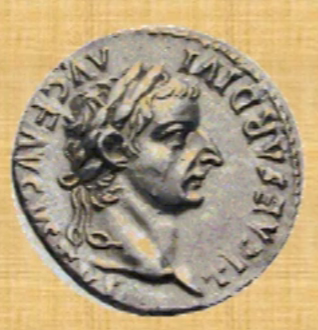
McGrew argues that Jesus’ command to “render to Caesar” was an invitation for the Pharisees to rid themselves of an idolatrous object that violated the First Commandment. By carrying these coins into the Temple, they were literally hoarding the evidence of their own spiritual infidelity. Give to Caesar the things that bear his image (the coins) and give to God the things that bear His image (cf. Genesis 1:26-27). This nuance, involving the specific religious sensitivities of pre-AD 70 Jerusalem, underscores the historical authenticity of the account. It captures a specific cultural tension, where a coin was not just currency, but a theological provocation, that would be difficult for a distant or later fabricator to invent.
2.6 – Internal Evidence – Criterion Of Embarassment
In this section, we will be looking at indicators of truth telling on Matthew’ part using the “criteria of authenticity”. For the sake of time, I will only make a cumulative case for Matthew’s reliability using only the criterion of embarassment. The criterion of embarassment says that when historical source X mentions detail A that would either embarass the author of X, someone X cares about, hurts an argument X is trying to mount, or would be counterproductive to X in any way, the report is more likely to be true than false. After all, how many people make up lies to make themselves look bad or to get themselves into trouble? No one! No one does that! People make up lies to make themselves look good or to get themselves out of trouble!
- 1: The Pedigree of the Messiah (Matthew 1)
The Inclusion of “Scandalous” Women: Matthew’s genealogy includes Tamar (adultery/prostitution), Rahab (a Gentile prostitute), Ruth (a Gentile), and “the wife of Uriah” (Bathsheba—adultery/murder).
Why it’s embarrassing: In a first-century Jewish context, genealogies were meant to establish purity and legal standing. Including women with checkered pasts or Gentile blood was not the way to sell a Jewish Messiah to a skeptical audience unless those details were historically undeniable.
- 2: The Baptism of Jesus by John (Matthew 3:13–15)
The Problem: John’s baptism was a “baptism of repentance for the forgiveness of sins.”
Why it’s embarrassing: This creates a theological “embarrassment”: Why would a sinless Messiah need a baptism of repentance? It also creates a “superiority” problem, as the one baptizing usually has authority over the one being baptized. [39]V. George Shillington, Jesus and Paul before Christianity: Their World and Work in Retrospect (Eugene, Oregon: Cascade Books, 2011). Matthew even records John’s own hesitation (“I need to be baptized by you…”), showing the author was aware of how awkward this was.
- 3: John The Baptist Doubts Jesus – The Criterion Of Embarassment, Historical Fit, and Coherence
Matthew 11:1-6 says “When Jesus had finished instructing his twelve disciples, he went on from there to teach and preach in their cities. Now when John heard in prison about the deeds of the Christ, he sent word by his disciples and said to him, ‘Are you the one who is to come, or shall we look for another?’ And Jesus answered them, ‘Go and tell John what you hear and see: the blind receive their sight and the lame walk, lepers are cleansed and the deaf hear, and the dead are raised up, and the poor have good news preached to them. And blessed is the one who is not offended by me.” (ESV)
There are two ways in which this incident in the gospel of Matthew can be historically verified. One is by the criterion of embarrassment. In this passage, John appears to be doubting that Jesus really is the promised Messiah after all! He sends his own disciples to ask Jesus “Are you the one who is to come, or shall we look for another?” Earlier, Matthew told us that John The Baptist was the Messenger for Yahweh/Messiah that Isaiah 40:3 and Malachi 3:1 predicted would come to prepare Yahweh’s/Messiah’s way for him. [40]See my article “Defending The Trinity From Matthew Alone” to see my exposition and reason for why I say that it isn’t just Messiah’s way that is being prepared, but Yahweh’s. John was the first prophet to speak in 400 years since the close of The Old Testament canon! And THIS is the guy of all people who’s doubting that Jesus is the Messiah!? It is extremely unlikely that Matthew would have made up this incident. It makes John The Baptist look bad. On the basis of the criterion of embarrassment, we can say that this conversation between Jesus and the disciples of John The Baptist probably happened.
As the Christian philosopher and theologian Dr. William Lane Craig says “The criterion of embarrassment supports the historicity of this incident, since John the Baptist seems to be doubting Jesus. The phrase ‘the one who is to come’ harks back to John’s prophecy of ‘the one who is coming after me,’ which is independently recorded in Mark and John (Mark 1:7; John 1:27). Jesus’ answer to John is a blend of prophecies from Isaiah 35:5–6; 26:19; 61:1, the last of which explicitly mentions being God’s Anointed One.” [41]Craig, William Lane. On Guard: Defending Your Faith with Reason and Precision (p. 251). David C Cook. Kindle Edition.
Secondly, again citing Dr. Craig, “Perhaps most remarkably of all, these very signs are listed as signs of the Messiah’s coming in one of the Dead Sea Scrolls from the Jewish sect that lived at Qumran at the time of Jesus (4Q521).” [42]Craig, William Lane. On Guard: Defending Your Faith with Reason and Precision (pp. 251-252). David C Cook. Kindle Edition.
The Qumran Scroll 4Q521 says “[For the hea]vens and the earth shall listen to his Messiah [and all t]hat is in them shall not turn away from the commandments of the holy ones.… He will honor the pious upon the th[ro]ne of the eternal kingdom, setting prisoners free, opening the eyes of the blind, raising up those who are bo[wed down.] … And the Lord shall do glorious things which have not been done, just as he said. For he will heal the injured, he shall make alive the dead, he shall proclaim good news to the afflicted.” —4Q521 (brackets indicate gaps in the document).
In sum, the criteria of embarrassment, historical fit, and coherence with other authentic material, coupled with its presence in a very early source, give good grounds for seeing this incident as historical.
- 4: The Rejection at Nazareth (Matthew 13:54–58)
The Detail: Matthew records that Jesus “could not do many mighty works there because of their unbelief.”
Why it’s embarrassing: A legendary account usually highlights the protagonist’s unlimited power. Admitting that Jesus’ power was somehow limited or hindered by the locals’ reaction is a raw detail that suggests historical reporting.
- 5: The Failures Of The Apostles
Matthew is remarkably honest about the failure of the disciples to understand, or obey Jesus at various points throughout the story. William Paley called this “The Candour Of The Apostles” in his book “Evidences Of Christianity”, in the section in which he, as I am doing here, made a cumulative case for the truthfulness of the gospel writers long before the term “the criterion of embarrassment” was even coined by scholars. Paley took note of all the times the apostles were depicted in a bad light, which would have presumably included Matthew himself. Again, for time’s sake, let’s go through these in rapid-fire succession.
*Peter’s Rebukes: Jesus calls Peter “The Rock” Johnson, “Satan” (Matthew 16:23) and rebukes him for his “little faith” when sinking in the water (14:31).
*Peter’s Denial: Matthew details Peter’s cowardice and his three-fold denial of Jesus (Matthew 26:69–75). R.C Sproul has shown me that this is even more embarrassing than it appears on a prima facie level, for in his commentary on the gospel of Matthew, R.C Sproul writes “Matthew tells us: And a servant girl came to him, saying, ‘You also were with Jesus of Galilee.’ But he denied it before them all, saying, “I do not know what you are saying’ (vv. 69b– 70). As Peter sat in the courtyard, a servant girl approached him and stated that he had been with Jesus. Perhaps she had seen Peter with Jesus as He moved about Jerusalem or taught in the temple. In any case, she was sure of the connection; she did not ask whether Peter was with Jesus; she simply stated that he was. … We must remember that this episode occurred in the ancient world, at a time when women had very little authority and very few rights. Certainly women were not to be feared. Furthermore, this was a young woman; she was just a girl. Not only was she just a girl; she was a slave. Of all the people who may have been milling around that courtyard in Jerusalem that night, the last person Peter had to fear was this little slave girl. Yet, just an hour or so after drawing his sword and cutting off the ear of the servant of the high priest in a bold, dramatic, defiant act against the temple guard, he cowered in fear in front of a slave girl.” [43]R.C Sproul. Matthew Commentary (Kindle Locations 12646-12656). Kindle Edition. Think about that! Denying His Lord three times was bad enough! It was an act of blasphemy as well as of cowardice, but if that wasn’t bad enough, the first denial was prompted out of fear of a little slave girl who, if she had alerted the authorities, would not have been believed anyway! Peter had nothing to lose by acknowledging his allegiance to Jesus to this little slave girl of all people and yet he still buckled! That’s how bad his fear was! This does not appear to be made up!!!
*The Sleeping Disciples: In Gethsemane, the disciples cannot even stay awake for an hour to pray with Jesus in his greatest moment of distress (Matthew 26:40).
*Why it’s embarrassing: If the Gospel were “Church propaganda” written by or for these leaders, you would expect these failures to be softened. Instead, they are laid bare.
Conclusion On Internal Evidences
These and many other examples of embarrassing details in Matthew’s gospel, but I leave it up to the reader to comb through the gospel of Matthew himself to find them. This article is already going to be one of my longest, and we must be moving on from this topic. The point of all of this is that if Matthew would include so many awkward and embarrassing details about John The Baptist, The Disciples (which would include himself), and even occasionally about Jesus (see also Matthew 8:21-22, Matthew 15:21-28 where Jesus calls a woman a “dog”), perhaps we should consider him a credible source? Perhaps he was committed to reporting historical facts, warts and all? Perhaps Premise 2 of David Pallmann’s syllogism as it pertains to Matthew, is true? I certainly think it is!
2.7 Places Where Critics Charge Matthew With Historical Innaccuracy
Although the positive case for the historical reliability of the gospel of Matthew is overwhelming, I now want to turn our attention to places where skeptics have charged it with inaccuracy. If Matthew blunders in multiple places, this would seem to cast doubt on the premise “The Testimony comes from a credible source.”. So, what instances of historical inaccuracies do skeptics of The Bible charge Matthew with?
- 1: Herod’s Slaughter Of The Innocents
In Matthew 2:16-18, we read that when Herod, after realizing the wise men weren’t going to return to tell him where the baby Jesus was, became enraged and ordered his soldiers to kill all of the children in Bethlehem at the age of 2 or under.
Skeptics frequently argue that Herod’s “slaughter of the innocents” could not have taken place because the only place that records this incident is Matthew 2. None of the other gospels mention this, and it’s not mentioned by Flavius Josephus, Tacitus, or any other ancient writer. Therefore, the skeptic argues, this incident likely didn’t happen. Matthew just made it up. Why? Well, he needed the incident so he could say that something in Jesus’ life fulfilled the prophesy of Jeremiah 31:15.
There are three problems with this argument; First, this incident is perfectly in line with what we know about Herod The Great. Although Josephus ignores the deed, it aligns with Herod’s documented cruelty, as he murdered his grandfather-in-law, his wife Mariamne, her two sons, and his oldest son Antipater. [44]Philip Schaff and David Schley Schaff, History of the Christian Church (New York: Charles Scribner’s Sons, 1910), 1:113. While there is no independent record of this particular atrocity, it is mild compared to Herod’s other massacres—he slaughtered the Hasmonean dynasty, executed more than half the Sanhedrin, killed 300 court officers, and executed his wife Mariamne, her mother, and his sons Aristobulus, Alexander, and Antipater. [45]Michael Green, The Message of Matthew: The Kingdom of Heaven, The Bible Speaks Today (Leicester, England; Downers Grove, IL: InterVarsity Press, 2001), 71–72.
Secondly, the slaughter was probably not a massive event. In “The Case for Christ”, Lee Strobel interviews Dr. John McRay, a specialist in New Testament archaeology. McRay points out that Bethlehem was a “tiny village.” McRay explains that Bethlehem was no more than a few hundred people at the time. He states, “Bethlehem was probably no bigger than Nazareth, so how many babies of that age would there be in a village of five hundred or six hundred people? Not thousands, not hundreds, although certainly a few.” [46]Strobel, Lee. Case for Christ Movie Edition: Solving the Biggest Mystery of All Time (p. 114). Zondervan. Kindle Edition.” Thus, as pastor R.C Sproul says “If we look at the scope of this particular mission and indeed at the scope of Herod’s life, we see that this particular mission would not have warranted any kind of mention. Our best guess as to how many such boys were in the Bethlehem region at that time is twelve to fifteen, and given Herod’s history of cruelty, his massacre of twelve to fifteen little boys would hardly warrant a mention against the broader scope of his escapades.” [47]R.C Sproul. Matthew Commentary (Kindle Locations 496-499). Kindle Edition.
Thirdly, this is a logical fallacy known as an argument from silence. When skeptics argue that the silence of Josephus, Tacitus, Suetonius, and other first to second century authors proves that the “Slaughter of the Innocents” never occurred, they are relying on a flawed intuition about what an ancient historian would deem “essential” to record. As Dr. Tim McGrew often points out, we frequently project our modern expectations onto historical figures, assuming that if an event was significant to us, it must have been a priority for them. However, history is replete with inexplicable silences from authors who were eyewitnesses to major events or structures.
For example, consider the travels of Marco Polo. Despite spending seventeen years in China and writing a detailed account of his travels, Polo never once mentions the Great Wall of China! To a modern skeptic using the same logic applied to Matthew, this silence would suggest that the Great Wall did not exist in the 13th century! Yet the wall was undeniably there! Similarly, Ulysses S. Grant, in his massive two-volume Personal Memoirs, fails to mention the Emancipation Proclamation. If we judged the reality of the Proclamation solely by the silence of the Union’s most successful general, we would arrive at a demonstrably false historical conclusion. [48]Timothy McGrew, “02 External Evidence for the Truth of the Gospels,”.McGrew uses the Marco Polo and Ulysses S. Grant examples here to illustrate the danger of the argumentum ex silentio.
As Eric Manning of Testify emphasizes, these examples show that an author’s silence is often governed by their specific purpose, target audience, or personal biases, rather than the importance of the event itself. Josephus, writing for a Roman audience, was focused on the political intrigue of the Judean court and the causes of the Jewish War. The localized execution of a few peasant children in the village of Bethlehem simply did not meet his threshold for political history, especially when compared to the grand-scale atrocities of Herod that Josephus was already documenting. [49]Eric Manning, “Did the Slaughter of the Innocents Actually Happen?” Testify, YouTube, December 24, 2019.
So, in conclusion, there is no sound basis to make a historical judgment when that judgment is based on the logical fallacy known as the argument from silence, especially if good reasons can be marshalled to explain the silence, as is the case here. We have no reason to think that Matthew wasn’t telling the truth when he records that Herod, in an attempt to kill the baby Jesus, ordered his soldiers to kill all children at the age of 2 and younger.
- 2: Matthew Goofs Up Geography In The Story Of The Casting Out Of Legion
In Matthew 8:28-34, we read the story of a demon-possessed man. They acknowledge Jesus as The Son Of God and seem to expect that Jesus is about to perform an exorcism. So they try to bargan with Jesus, asking Him that if He must cast them out, to send them into a nearby herd of pigs. Jesus agrees, says “Go.” and the demons enter the pigs who subsequently run off a steep cliff and into the sea. So, what’s the problem supposed to be here? Skeptics point out that Gerasa is about 30 miles from the Sea of Galilee, too far for a herd of pigs to “run down a steep bank into the sea.” Gadara is closer (about 6 miles), but still not right on the shore. Either way, the pigs would have had to run for miles before they could reach the sea. If Matthew was an eyewitness to this, how could he get this so wrong?
Dr. Tim McGrew, in a lecture titled “04a Alleged Historical Errors in the Gospels (Matthew & Mark)” on the Apologetics 315 YouTube channel responds to this objection. He says;
“First thing: check the text. In this case, what you need to do is get a text that either tells you about the variants or get a Greek Testament that actually has the critical apparatus and look it up. There are several significant textual variants in the text, both of Mark 5 and Matthew 8, and the parallel passage in Luke 8. In Mark and in Luke, the best-attested reading is ‘Gerasenes’—an attempt to represent, as an adjective, something corresponding to the place name, whatever that was.
Now, if the place name was named in Aramaic, it would be even harder to identify because it would just be a three-letter root, and then you fill in the vowels. It would either be G-R-S or K-R-S; fill in vowels as you like. So, modern identification of these things can be a little bit tricky.
Let’s check the map. There is a place on the eastern shore of the Sea of Galilee called Kursi or Kersa. Hear those consonants? The ‘K,’ the ‘R,’ the ‘S.’ At that place, a steep hill runs down almost directly into the water. More effectively than my telling you that, let me show you: here is a picture of the hill at Kursi. You see the Sea of Galilee as the backdrop for this—see how steep that is? We are running down a steep hillside here.
It seems probable that some early copyist of Matthew’s gospel read this name and, maybe he didn’t know about Kersa or Kursi, and substituted something he did know—or maybe he just made a spelling error. If somebody living in Portage were to say that something happened in Oshkosh and you thought the import of the story was that it happened close by, you might wonder if this person made a mistake and meant to say Ashstead. It begins with an ‘O,’ ends with an ‘O,’ has an ‘S’ and a ‘T’ and an ‘E’ somewhere in the middle. You might say, ‘Oh, I think this person just misspoke.’ That wouldn’t mean the person didn’t live in Portage. You would say, ‘Well, people make mistakes like that; it’s not a big deal.’” [50]Timothy McGrew, “04a Alleged Historical Errors in the Gospels (Matthew & Mark),” Apologetics315, YouTube.com (2012). [51]For another discussion on this topic, see also Lee Strobel, The Case for Christ (Grand Rapids: Zondervan, 1998), 138–139.
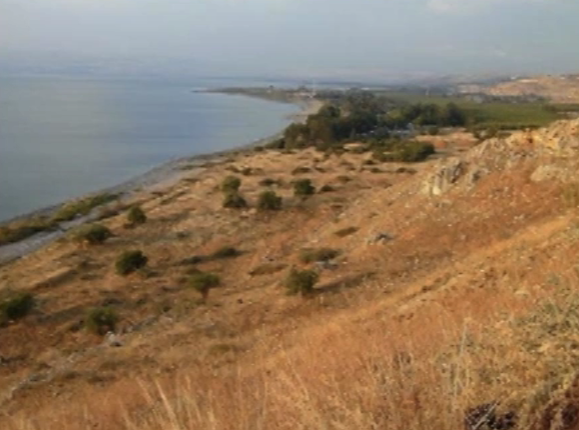
- 3: Jesus – The Donkey Riding Showman
Perhaps the most famous ‘error’ cited by critics is Matthew’s account of the Triumphal Entry. In Matthew 21:1–7, Jesus instructs his disciples to find both a donkey and a colt; the text then says they brought them both, laid their cloaks on them, and Jesus sat ‘on them’ (epano auton). Skeptics like Bart Ehrman argue that Matthew misunderstood the ‘Hebrew parallelism’ of Zechariah 9:9. In Hebrew poetry, a donkey and a colt are often the same animal described twice for poetic effect. Ehrman asserts “Matthew, it seems, misunderstood the prophecy… He has Jesus riding on two animals at the same time! It’s a literalistic reading of a poem that creates a comic-strip image.” [52]Bart Ehrman, The New Testament: A Historical Introduction to the Early Christian Writings (Oxford University Press, 2000), 111.
However, apologists and linguists argue that the ‘error’ lies with the critic, not the Gospel. First, from a historical perspective, a mother donkey and her unridden colt are inseparable; bringing both is a sign of practical animal husbandry, not a misunderstanding of poetry. Second, as Dr. Craig Blomberg points out, the Greek phrase ‘on them’ (epano auton) most naturally refers to the cloaks, not the two animals. One does not sit on two donkeys; one sits on the garments laid across one of them (cf. Matt 21:7). [53]Craig Blomberg, The Historical Reliability of the Gospels (IVP Academic, 2007), 175.
Furthermore, David Pallmann and others note that Matthew—who shows a mastery of Hebrew Scripture elsewhere—is unlikely to have missed a basic poetic device. Instead, by recording the presence of both animals, Matthew provides a ‘high-resolution’ eyewitness detail: Jesus rode the young colt, but the mother was brought along to keep the colt calm through the shouting crowds. What Ehrman sees as a literary blunder, the internal logic of the scene reveals as a nuanced, realistic detail.
- 4: A Zombie Apocalypse?
The most controversial detail unique to Matthew is the account of the tombs opening and ‘many bodies of the saints who had fallen asleep’ being raised and appearing to many in Jerusalem (Matthew 27:51-53). Skeptics, such as Bart Ehrman, frequently use this to dismiss Matthew’s entire passion narrative as legendary. Ehrman argues:
“If the resurrection of the dead at the moment of Jesus’ death were a historical fact, it is virtually inconceivable that no other historian—Jewish, Roman, or Christian—would mention it… This is clearly a case of Matthew creating a story for theological reasons.” [54]Bart D. Ehrman, Jesus, Interrupted: Revealing the Hidden Contradictions in the Bible (HarperOne, 2009), 49.
In response, scholars offer three primary ways to understand this passage without discarding Matthew’s reliability. Dr. Michael Licona suggests the passage may be ‘apocalyptic imagery’—a common ancient literary device where cosmic signs (like earthquakes and resurrections) are used to signal the world-changing significance of a great man’s death, rather than as a literal news report [55]Michael Licona: The Resurrection of Jesus: A New Historiographical Approach (IVP Academic, 2010), 548–553.
However, Dr. Lydia McGrew and Michael Jones (Inspiring Philosophy) argue for a more literal, albeit localized, historical event. McGrew points out that Matthew’s ‘incidental grit’—noting that they didn’t enter the city until after Jesus’ resurrection—is a strange detail to invent for a purely symbolic myth. [56]Lydia McGrew, The Mirror or the Mask: Liberating the Gospels from Literary Devices (Durell, 2019), 244–248. Michael Jones further grounds this in Jewish burial customs; since they came ‘out of the tombs,’ it likely only affected those in the first year of burial before their bones were moved to ossuaries. This would mean we are talking about a small, specific group of roughly a dozen people—a localized miracle that, while profound for the witnesses, would not necessarily have made it into the brief, state-focused records of Roman or Jewish historians. I myself take the latter view.
2.8 Let’s Look At Where We Are So Far.
Just as space did not permit me to discuss all of the positive evidence for Matthew’s reliability, neither does it permit me to examine all of the counter arguments against its reliability. However, I have chosen the ones that are the most commonly raised as well as the most evidentially forceful. I think that more than enough has been said in defense of Matthew’s credibility. To remind my readers, we have spent all this time looking at premise 2 of David Pallmann’s Argument For The Resurrection Of Jesus.
1: There is testimony saying that Jesus was resurrected (Matthew).
2: This testimony comes from a credible source.
3: There are only three logical possibilities with respect to credible testimony: it is deliberately false, it is honestly mistaken, or it is true.
4: The credible testimony for the resurrection of Jesus is not deliberately false.
5: The credible testimony for the resurrection of Jesus is not honestly mistaken.
6: Therefore, the credible testimony for the resurrection of Jesus is true.
7: If the credible testimony for the resurrection of Jesus is true, then Jesus was resurrected.
8: Therefore, Jesus was resurrected.
With premise 2 having been given a lengthy defense, let us now move to the remaining premises.
Defense Of Premise 3: There Are Only Three Logical Possibilities With Respect To Credible Testimony: It Is Deliberately False, It Is Honestly Mistaken, Or It Is True.
Again, as Pallmann said in the quote I used near the beginning of this essay, Premise 1 is undeniable. There is testimony concerning the resurrection of Jesus. And Premise 3 presents a true trichotomy. For any proposition, that proposition is either true or false. If it’s false, the reporter is either unintentionally stating a falsehood or intentionally stating a falsehood. And if it’s true, it’s true. So in saying that Jesus rose from the dead, Matthew is telling us something that is true or something that is false, and he’s either lying or mistaken if the latter is the case. There is no fourth alternative. This premise shouldn’t be disputable.
Defense Of Premise 4 – The Credible Testmony About The Resurrection Of Jesus Is Not Deliberately False
As we have already seen, archaeology and secular history have verified Matthew telling the truth in the smallest details—from the specific title of Pontius Pilate on the Caesarea Stone to the bloodthirsty reputation of Archelaus (Matt 2:22) and the precise financial vocabulary of a Roman official. Not to mention his repeated candor in reporting embarrassing details as we’ve seen above. Moreover, even when Matthew has been accused of getting things wrong, we’ve seen him vindicated four different times!
Concerning the resurrection specifically, there are some embarrassing details that I have not yet mentioned in this article. For example, the empty tomb narrative in Matthew 28 is most likely historical on the basis of the criterion of embarrassment. In both Jewish and Roman cultures of the first century, a woman’s testimony was regarded as virtually worthless in a court of law. The first-century Jewish historian Josephus wrote: “From women let no evidence be accepted, because of the levity and temerity of their sex” (Antiquities 4.8.15). If Matthew were ‘crafting’ a story to convince a skeptical public that Jesus had risen, he would have placed the discovery of the tomb in the hands of Peter, John, or even a Roman centurion—men whose word carried legal weight. Instead, he records that the foundational event of Christianity was first witnessed by women (Matt 28:1–10). The only reason to include such an ’embarrassing’ detail—one that invited immediate ridicule from critics like Celsus—is that it actually happened. Matthew wasn’t writing a marketing brochure; he was tied to the facts, even when those facts were culturally inconvenient. As New Testament scholar N.T Wright says, “As historians we are obliged to comment that if these stories had been made up five years later, let alone thirty, forty, or fifty years later, they would never have had Mary Magdalene in this role. To put Mary there is, from the point of view of Christian apologists wanting to explain to a skeptical audience that Jesus really did rise from the dead, like shooting themselves in the foot. But to us as historians, this kind of thing is gold dust. The early Christians would never, never have made this up.” [57]N. T. Wright, in “There is a God” (2007), p. 207
Another embarrassing detail occurs at the very climax of the Resurrection narrative. In Matthew 28:17, he records the meeting between the disciples and the risen Christ on a mountain in Galilee, stating: “And when they saw him they worshiped him, but some doubted.” If Matthew’s testimony were deliberately false, this detail would have been the first thing to be airbrushed out. A fabricator does not end his persuasive case by admitting that the very men who were to lead the movement weren’t even fully convinced while looking Him in the face.
Perhaps the most underrated evidence for the empty tomb is the ‘Jewish Polemic’ recorded in Matthew 28:11–15. Matthew notes that the Jewish leaders bribed the Roman guards to say, ‘His disciples came by night and stole him away while we were asleep.’ This is most likely to be historical on the basis of the criterion of enemy attestation. By claiming the body was stolen, the Jewish authorities were inadvertently admitting two things: the tomb was indeed empty and there were indeed guards. You do not invent a story about sleeping guards unless there were actual guards to fall asleep, and you do not invent a ‘theft’ theory if the body is still in the grave. As I have said in the past, only nervous cartoon characters respond to accusations nobody is making of them. This reveals that the earliest debate in Jerusalem wasn’t whether the tomb was empty, but why it was empty, a fact that even the enemies of Jesus were forced to concede.
As David Pallmann argues, this creates a low antecedent probability that the author is a liar. It is psychologically inconsistent to suggest that a writer who is fanatically accurate regarding political titles, geography, and local customs would suddenly pivot to inventing a massive, coordinated hoax regarding the central claim of his life.
The final nail in the coffin for the deliberate lie theory is the environment in which Matthew wrote. While the specific details of Matthew’s martyrdom in Ethiopia or Persia are debated in later traditions, the willingness to die is historically undeniable.
Writing in the shadow of Nero’s persecution -where Christians were being used as human torches and fed to beasts, as recorded by the secular historian Tacitus (Annals 15.44) – Matthew knew that his testimony carried a death warrant. Men may lie for power, money, or sex, but they do not invent a lie that results in their own torture and execution. Matthew didn’t just write a book; he signed his name to a testimony he knew could cost him everything. To quote Pascal: “I tend to believe those witnesses who get their throats cut.” [58]Blaise Pascal, Pensées, No. 593 (Brunschvicg edition). And as Dr. Sean McDowell said “The Neronian persecution proves that by the mid-60s AD, being a Christian leader was a high-risk, zero-reward enterprise from a worldly perspective. The ‘antecedent probability’ that a man would forge a narrative under such conditions is near zero. The sword of the state acted as a filter for the fraudulent.” [59]Dr. Sean McDowell, The Fate of the Apostles: Examining the Martyrdom Accounts of the Closest Followers of Jesus (2015).
A very common objection to the “liars don’t die for a lie” argument is that this could prove just about any religious claim, such as the terrorists who flew buildings into The World Trade Center. “Using your logic” the skeptic will say, “This should prove Islam is true. But that can’t be because Christianity and Islam make contradictory truth claims. This shows there must be something wrong in your logic.” But there is nothing wrong with my logic. I’m not claiming Matthew’s willingness to die for claiming Jesus rose from the dead proves that Jesus actually rose from the dead. I’m saying it proves Matthew sincerely believed it! Matthew could be wrong, and that possibility is one we’ll look at when we examine Premise 5. But the willingness to die (or Matthew’s actual death if the later reports are true) show he wasn’t telling a story that was deliberately false.
Defense Of Premise 5 – The Credible Testmony About The Resurrection Of Jesus Is Not Honestly Mistaken.
So, if Matthew’s testimony wasn’t deliberately false, was he just mistaken about what he saw? First, let’s examine Matthew’s actual testimony concerning the events following Jesus’ crucifixion.
Matthew’s account of the Crucifixion begins with a series of public, high-stakes events: Jesus is interrogated by Pilate, Mocked by the Roman soldiers, and crucified at Golgotha (Matthew 27:11-37). Matthew records specific physical markers of death, including the darkness that veiled the land and the temple curtain tearing in two (Matthew 27:45-51). Following his death, a wealthy disciple named Joseph of Arimathea secures the body and places it in his own new tomb, rolling a “great stone” across the entrance (Matthew 27:57-60). Matthew alone records that a guard of Roman soldiers was stationed at the tomb and the entrance was sealed to prevent any foul play (Matthew 27:62-66).
The narrative shifts abruptly on the first day of the week when an earthquake marks the arrival of an angel who rolls back the stone to reveal an empty tomb (Matthew 28:1–6). Matthew emphasizes that the first witnesses were Mary Magdalene and “the other Mary,” who not only saw an empty grave but met the risen Jesus and “took hold of his feet and worshiped him” (Matthew 28:9). The account concludes with a physical appearance to the eleven disciples on a mountain in Galilee, where Jesus claims “all authority in heaven and on earth” and commissions them to baptize the nations (Matthew 28:16–20).
- The Hallucination Theory
This is by far the most popular way to explain the disciples’ experiences from a naturalistic perspective. This theory posits that the disciples all hallucinated seeing the risen Jesus alive after his death. Sometimes this is characterized as their having “grief” hallucinations. This lead to their sincere belief that Jesus had risen from the dead as part of God’s vindication of Him and His message. The disciples weren’t misleading people on purpose, they were simply duped themselves.
The biggest problem with any version of The Hallucination Hypothesis is that Matthew tells us that he and the other apostles all saw Jesus together as a group. Matthew records “Now the eleven disciples went to Galilee, to the mountain to which Jesus had directed them. And when they saw him they worshiped him, but some doubted. And Jesus came and said to them, ‘All authority in heaven and on earth has been given to me. Go therefore and make disciples of all nations, baptizing them in the name of the Father and of the Son and of the Holy Spirit, teaching them to observe all that I have commanded you. And behold, I am with you always, to the end of the age.‘ (Matthew 28:16-20, ESV)
All 11 disciples saw Jesus at exactly the same time! To illustrate the absurdity of group hallucinations, Lee Strobel often uses a humorous domestic analogy. He asks his audience to imagine waking up their spouse in the middle of the night and saying, ‘Honey, I’m having a great dream! We’re on a beautiful beach in Hawaii and it’s a free vacation! Quick, go back to sleep, join me in my dream, and we’ll save so much money!’ [60]Lee Strobel, The Case for Christ: A Journalist’s Personal Investigation of the Evidence for Jesus (Grand Rapids, MI: Zondervan, 1998), 238–239. As Strobel points out, we know this is impossible because dreams and hallucinations are individual, internal mental events. They are not ‘on screen’ for others to walk into. Yet, if the hallucination theory is true, we must believe that 12 men people simultaneously ‘walked into’ the exact same complex, multi-sensory mental event. Hallucinations are individual occurrences. By their very nature, only one person can see a given hallucination at a time. They certainly aren’t something that can be seen by a group of people.
But it gets even worse, because this wasn’t just a group visual hallucination, but a polymodal hallucination; that is, a hallucination that employed more than one of the 5 senses. They didn’t just see Jesus, they heard him talk. Matthew tells us that on the mountain, they not only saw their Rabbi standing there in front of them, but he gave The Great Commission! They all saw him and all heard him giving these instructions to make disciples of all nations. Moreover, before this incident, we are told by Matthew that immediately after discovering the empty tomb, the women were on their way back to the disciples when they saw the risen Jesus standing before them. Jesus said “Greetings”, and then they fell down and clasped his feet! So Matthew records not only one group polymodal hallucination, but two! What are the odds that a group of women and a group of 12 men would, on two different occasions, have simultaneous visual and audio hallucinations of the same man standing before them saying the same thing!? Actually, the women didn’t just see and hear Jesus, but they felt his physical body! “And behold, Jesus met them and said, “Greetings!” And they came up and took hold of his feet and worshiped him.” (Matthew 28:9, ESV, emphasis mine in bold) The women saw him, the women heard him, and the women felt him! When they went to grab his feet, their hands didn’t go through him like a hologram! This is not how hallucinations work!
Moreover, Hallucinations don’t explain how Jesus’ tomb could be empty. We have every reason to believe that Matthew is telling the truth about the empty tomb. Psychological phenomenon do not empty a grave of its body, and so, the Hallucination Hypothesis fails in explanatory scope. It fails not only to explain the postmortem appearances, but the empty tomb as well!
- The Swoon Theory
This theory states that Jesus never really died on the cross, but only fainted while on the cross, and later the cool damp air in the tomb sort of roused him around into consciousness. Then, when he showed up to the disciples, they concluded that he was the risen Lord of life! This could account for the empty tomb (because Jesus simply walked out of it), and it would account for the postmortem appearances. That 11 men all see him at the same time, hear him saying the same words, and that a small group of women all see him at the same time and feel his physical heels, isn’t a problem as it is on The Hallucination Hypothesis. For Jesus is really truly there. Not resurrected, but a survivor of a horrific event.
There are two major problems with The Swoon Theory; (1) It’s medically impossible for Jesus to have survived, (2) It presents an illogical scenario even if Jesus could have survived.
Severe Pre-Crucifixion Trauma (Scourging): The Roman scourging involved 40 lashes from a whip (flagrum) fitted with bone and metal pieces. This inflicted deep lacerations, often exposing muscle, sinew, and sometimes even the spine, as noted by ancient historians like Eusebius and medical analysis (e.g., JAMA). [61]GotQuestions.org says “Deuteronomy 25:3 states that a criminal should not receive more than forty lashes. In order to avoid possibly accidentally breaking this command, the Jews would only give a … Continue reading [62]See Dr. Alexander Methrell’s interview with Lee Strobel in “The Case For Christ”, chapter 11, page 195, published by Zondervan [63]Lumpkin R: The physical suffering of Christ. J Med. Assoc Ala 1978,47:8-10,47.
The severe, deep trauma from the Roman scourging (up to 40 lashes with bone-tipped whips) put Jesus into hypovolemic shock (massive blood loss), which explains his collapse while carrying the cross (Matthew 27:32). This critical condition alone makes survival highly improbable.
Death by Asphyxiation and Shock: Crucifixion causes death primarily through asphyxiation (suffocation), as the body’s weight prevents exhalation. The victim must push up on their feet—bearing excruciating pain on the nailed hands and feet—to take a single breath, as controlled experiments have shown. [64]Some of these experiments were shown on camera on the History Channel documentary called “Crucifixion”. https://www.imdb.com/title/tt1210802/
Had blood loss not been fatal, Jesus would have died of exhaustion and asphyxiation when He could no longer push Himself up to breathe. The Roman guards, skilled executioners, would not have been fooled by a mere “swoon.”
Finally, given the medical evidence above, if Jesus had somehow survived the hellish beating he went through, it is extremely unlikely that when he did appear to his disciples, he would have driven them to the conclusion that Jesus had risen from the dead. The German theologian David Strauss, who wasn’t a Christian, famously dismantled the Swoon Theory in 1835, using this exact argument. He said that “It is impossible that a being who had stolen half dead out of the sepulchre, who crept about weak and ill and wanting medical treatment… could have given the disciples the impression that he was a conqueror over death and the grave, the Prince of life: an impression that lay at the bottom of their future ministry.” [65]Strauss, David. The Life of Jesus for the People. Volume One, Second Edition. London: Williams and Norgate. 1879. 412. If Jesus had somehow had the physical strength to remove the stone covering his tomb, fight off the guards, and then walk all the way to where the disciples were, groaning and yelling with every step he took due to how sore his feet were from being pierced, and then he appeared to his disciples in this condition, more likely than not, the disciples would have been relieved that Jesus survived, and would have tried to get him a doctor. This would be like if I had a friend who was in a horrible car accident, but he showed up at my house two days later in a wheelchair, two leg casts, one arm casts, and an eye patch, and I stupidly exclaim, “You’ve risen from the dead! Hallelujah! A miracle has occurred!” The Swoon Theory is as dead as it claims Jesus wasn’t!
- The Displaced Body Hypothesis
This theory was first proposed by Joseph Klausner in 1922 and he said that Joseph of Arimathea placed Jesus’ body in his tomb temporarily. He had to put Jesus in his own tomb because it was a late Friday, the Passover Sabbath was coming, and they had to get Jesus buried before sundown in order to stay in line with Torah (Deuteronomy 21:23). But the next day, Joseph relocated the corpse to the criminals’ common graveyard. Unaware of the displacement of the body, the disciples upon finding the tomb empty inferred that Jesus was risen from the dead.
Dr. William Lane Craig explains why this theory fails. He writes “The displaced body hypothesis has narrow explanatory scope. It tries to explain the empty tomb but says nothing about the postmortem appearances and the origin of the disciples’ belief in Jesus’ resurrection. Independent hypotheses must be adopted to explain the full scope of the evidence. …Klausner’s hypothesis has no explanatory power with regard to either the appearances or the origin of the Christian faith. As for the empty tomb, the hypothesis faces an obvious problem: Since Joseph and any servants with him knew what they had done with the corpse, the theory is at a loss to explain why the disciples’ error wasn’t corrected once they began to proclaim Jesus’ resurrection—unless, that is, one resorts to contrived conjectures to save the day, such as Joseph and his servants’ sudden deaths!” [66]Craig, William Lane. On Guard: Defending Your Faith with Reason and Precision (p. 317). David C Cook. Kindle Edition.
- The Ghost Jesus Theory
This last theory isn’t a naturalistic theory, so it isn’t one atheists would appeal to, but it is an alternative theory to the bodily resurrection theory. Basically, this theory asserts that the disciples saw a spooky spectre of Jesus prior to him going to Heaven. On this theory Jesus is “resurrected” but only in the sense that his spirit ascended, which is not at all how the early church understood Jesus’ resurrection or how Second Temple Judaism understood the doctrine of the resurrection in general, but I digress. As far as Matthew’s testimony is concerned, this theory fails to account for Jesus’ empty tomb, and therefore, it falls short of adequate explanatory scope. Moreover, it fails to account for the female followers of Jesus grabbing his feet when they fell down to worship him. If Jesus were just a ghost, wouldn’t their hands go right through him? A physical resurrection would be able to explain not only the fact of the group of women and the 11 disciples seeing and hearing Jesus, but of the women being able to reach out and touch him, as well as the fact of the empty tomb.
I’ve looked at 4 possibilities as to how Matthew could have been honestly mistaken. There are other naturalistic theories that I did not have the space to cover here, but if you’re interested in them, I address them in my article “The Gospel Eyewitness Argument For Jesus’ Resurrection”.
6 – Therefore, The Credible Testimony For The Resurrection Of Jesus Is True.
7 – If The Credible Testimony For The Resurrection Of Jesus Is True, Then Jesus Was Resurrected.
8 – Therefore, Jesus Was Resurrected
Given the truth of all of the premises, these conclusions follow logically and necessarily. He is risen! He is risen indeed!
I’ll close out this lengthy essay with a quote from Charles Wesley’s famous hymn, “Christ The Lord Is Risen Today” (1739):
“Lives again our glorious King, Where, O death, is now thy sting? Once He died, our souls to save, Where thy victory, O grave?”
References
| ↑1 | David Pallmann, in his opening statement in the debate “Did Jesus Rise? David Pallmann and Eric Van Evans Debate The Resurrection”, A Sense Of Wonder, July 25th, 2025, Substack. |
|---|---|
| ↑2 | Papias, “Fragments of Papias,” in The Apostolic Fathers with Justin Martyr and Irenaeus, ed. Alexander Roberts, James Donaldson, and A. Cleveland Coxe, vol. 1, The Ante-Nicene Fathers (Buffalo, NY: Christian Literature Company, 1885), 155. |
| ↑3 | the early church father Jerome reported actually seeing a Hebraic copy of the gospel of Matthew. However, whether this is the same, we cannot be sure. |
| ↑4 | Papias quoted in Eusebius, Church History, III.39.3-4 |
| ↑5 | Keith Thompson, “Who Wrote the Gospels? Internal and External Arguments for Traditional Authorship”, https://answering-islam.org/authors/thompson/gospel_authorship.html |
| ↑6 | Irenaeus quoted in Eusebius, Church History, V.8.2 |
| ↑7 | Clement of Alexandria, The Stromata Book 1, Chapter 21 |
| ↑8 | Clement of Alexandria, Who is the Rich Man that Shall Be Saved? |
| ↑9 | Eusebius, Ecclesiastical History, Book 6 Chapter 25, 3-6 |
| ↑10 | See Craig Keener, The Gospel of Matthew: A Socio-Rhetorical Commentary, 296-298. |
| ↑11 | Timothy McGrew, “02 External Evidence for the Truth of the Gospels,” YouTube.com |
| ↑12 | Attributed to Papias by Apollinaris of Laodicea. Preserved in Cramer’s catena on Acts ch. 1. |
| ↑13 | Bart. D. Ehrman, Jesus Before the Gospels, Pg. 116-117 |
| ↑14 | Quoted in in Irenaeus, Against Heresies 5.3. |
| ↑15 | Bart. D. Ehrman, Jesus Before the Gospels, Pg. 117-118 |
| ↑16 | Richard C. Carrier, On the Historicity of Jesus, Pg. 324-325 |
| ↑17 | David Pallmann, “Who Wrote The Gospels?: The Case For Matthew, Mark, Luke, and John”, Faith Because Of Reason, https://youtu.be/BfQ60UaKhsg?si=ZGuS07h1ITMUcyUs |
| ↑18 | ibid. |
| ↑19 | Christopher B. Zeichmann, “Papias as Rhetorician: Ekphrasis in the Bishop’s Account of Judas’ Death” NTS 56, Pg. 428-429 |
| ↑20 | Bart D. Ehrman, Jesus, Interrupted: Revealing the Hidden Contradictions in the Bible (And Why We Don’t Know About Them) (HarperOne, 2009), 104-105. |
| ↑21 | St. Augustine, Contra Faustum, Book XVII, Chapter 4. |
| ↑22 | Flavius Josephus, Jewish War, Book 3, Chapter 8, Part 7 |
| ↑23 | Xenophon, Anabasis 3.1.4 |
| ↑24 | Bart D. Ehrman, “Was the Author of Matthew Matthew?” The Bart Ehrman Blog, June 26, 2013, https://ehrmanblog.org/was-the-author-of-matthew-matthew/. |
| ↑25 | Erik Manning, “3 Bad Reasons To Doubt The Traditional Authorship Of Matthew”, Testify, January 16, 2021, YouTube.com |
| ↑26 | R.T France, “Matthew: Evangelist and Teacher”, Wipf and Stock, October 8th, 2004 |
| ↑27 | Flavius Josephus: Antiquities of the Jews, Book 18, Chapter 3, 3 |
| ↑28 | Cornelius Tacitus, Annals (written ca. AD 116), book 15, chapter 44. |
| ↑29 | McDowell, Josh; McDowell, Sean. Evidence That Demands a Verdict: Life-Changing Truth for a Skeptical World (p. 150). Thomas Nelson. Kindle Edition. |
| ↑30 | Paul L. Maier, In the Fullness of Time: A Historian Looks at Christmas, Easter, and the Early Church (San Francisco: Harper Collins, 1991), 197. |
| ↑31 | Got Questions Ministries, Got Questions? Bible Questions Answered (Bellingham, WA: Logos Bible Software, 2002–2013). |
| ↑32 | See Titus Kennedy’s book “Excavating The Evidence For Jesus: The Archeology and History Of Christ and The Gospels”, Harvest House Publishers, pages 61-66. See also Brian Windle, “Herod The Great: An Archeological Biography”, December 11th 2020 — https://biblearchaeologyreport.com/2020/12/11/herod-the-great-an-archaeological-biography/ |
| ↑33 | Gary Habermas, “The Historical Jesus: Ancient Evidence For The Life Of Christ”, pages 202-203, College Press. |
| ↑34 | T. Michael Kennedy, “Caiaphas,” in The Lexham Bible Dictionary, ed. John D. Barry et al. (Bellingham, WA: Lexham Press, 2016). |
| ↑35 | Robert J. Hutchinson, Searching for Jesus: New Discoveries in the Quest for Jesus of Nazareth—and How They Confirm the Gospel Accounts (Nashville, TN: Thomas Nelson, 2023). See also Craig A. Evans, “Jesus and His World: The Archeological Evidence”, WJK Books, pages 97-98 |
| ↑36 | Timothy McGrew, “02 External Evidence for the Truth of the Gospels,” The Library of Historical Apologetics (2012). [Timestamp: 44:18 – 01:16:45].. |
| ↑37 | Dr. Tim McGrew, “02 – External Evidence for the Truth of the Gospels”, Apologetics 315, March 14th 2012, Time Stamp 55:27-57:24 –> https://www.youtube.com/watch?v=MtL8hCrvctc&list=PLEW9GCMdySl2NaKi3bOMKbiGIPaxS4386&index=2 |
| ↑38 | Now, although that was the common Jewish interpretation of the second commandment at the time, I personally don’t think images in and of themselves violate the second commandment. To see why, check out my blog post “In Defense Of The Chosen” under the subheader, “The Chosen Violates The Second Commandment”. Although I did have a stand alone blog post on this issue alone written much earlier, I am much more satisfied with how I explained the second commandment in the blog post defending The Chosen from its bad critics. A depiction of Jesus is not a violation of the second commandment unless you’re bowing before your TV worshipping Jonathan Roumie. The reason that I wrote about that is because there are some Christians today agree with the Second Temple Jewish interpretation of The Second Commandment. |
| ↑39 | V. George Shillington, Jesus and Paul before Christianity: Their World and Work in Retrospect (Eugene, Oregon: Cascade Books, 2011). |
| ↑40 | See my article “Defending The Trinity From Matthew Alone” to see my exposition and reason for why I say that it isn’t just Messiah’s way that is being prepared, but Yahweh’s. |
| ↑41 | Craig, William Lane. On Guard: Defending Your Faith with Reason and Precision (p. 251). David C Cook. Kindle Edition. |
| ↑42 | Craig, William Lane. On Guard: Defending Your Faith with Reason and Precision (pp. 251-252). David C Cook. Kindle Edition. |
| ↑43 | R.C Sproul. Matthew Commentary (Kindle Locations 12646-12656). Kindle Edition. |
| ↑44 | Philip Schaff and David Schley Schaff, History of the Christian Church (New York: Charles Scribner’s Sons, 1910), 1:113. |
| ↑45 | Michael Green, The Message of Matthew: The Kingdom of Heaven, The Bible Speaks Today (Leicester, England; Downers Grove, IL: InterVarsity Press, 2001), 71–72. |
| ↑46 | Strobel, Lee. Case for Christ Movie Edition: Solving the Biggest Mystery of All Time (p. 114). Zondervan. Kindle Edition.” |
| ↑47 | R.C Sproul. Matthew Commentary (Kindle Locations 496-499). Kindle Edition. |
| ↑48 | Timothy McGrew, “02 External Evidence for the Truth of the Gospels,”.McGrew uses the Marco Polo and Ulysses S. Grant examples here to illustrate the danger of the argumentum ex silentio. |
| ↑49 | Eric Manning, “Did the Slaughter of the Innocents Actually Happen?” Testify, YouTube, December 24, 2019. |
| ↑50 | Timothy McGrew, “04a Alleged Historical Errors in the Gospels (Matthew & Mark),” Apologetics315, YouTube.com (2012). |
| ↑51 | For another discussion on this topic, see also Lee Strobel, The Case for Christ (Grand Rapids: Zondervan, 1998), 138–139. |
| ↑52 | Bart Ehrman, The New Testament: A Historical Introduction to the Early Christian Writings (Oxford University Press, 2000), 111. |
| ↑53 | Craig Blomberg, The Historical Reliability of the Gospels (IVP Academic, 2007), 175. |
| ↑54 | Bart D. Ehrman, Jesus, Interrupted: Revealing the Hidden Contradictions in the Bible (HarperOne, 2009), 49. |
| ↑55 | Michael Licona: The Resurrection of Jesus: A New Historiographical Approach (IVP Academic, 2010), 548–553. |
| ↑56 | Lydia McGrew, The Mirror or the Mask: Liberating the Gospels from Literary Devices (Durell, 2019), 244–248. |
| ↑57 | N. T. Wright, in “There is a God” (2007), p. 207 |
| ↑58 | Blaise Pascal, Pensées, No. 593 (Brunschvicg edition). |
| ↑59 | Dr. Sean McDowell, The Fate of the Apostles: Examining the Martyrdom Accounts of the Closest Followers of Jesus (2015). |
| ↑60 | Lee Strobel, The Case for Christ: A Journalist’s Personal Investigation of the Evidence for Jesus (Grand Rapids, MI: Zondervan, 1998), 238–239. |
| ↑61 | GotQuestions.org says “Deuteronomy 25:3 states that a criminal should not receive more than forty lashes. In order to avoid possibly accidentally breaking this command, the Jews would only give a criminal 39 lashes. The Apostle Paul mentioned this practice in 2 Corinthians 11:24, ‘five times I received from the Jews the forty lashes minus one.’ Again, though, Jesus was scourged by the Romans, not by the Jews. There is no reason to believe that the Romans would follow a Jewish tradition. Scourging was the punishment ordered for Jesus by Pontius Pilate: He was to be flogged (Matthew 27:26) but not killed in that way. His death was to be carried out by crucifixion after the scourging.’” –https://www.gotquestions.org/39-lashes.html Some people have objected that the Romans would not be bound by the limitations of Jewish law, because of the obvious reason that they were Romans, not Jews. However, in the sensitive political climate of that time, I think it is likely that they would accommodate the sensitivities of the Jews. Remember, Pilate didn’t initially want to kill Jesus. The flogging was just to beat him up. Pilate initially was like “We scourged him. Is that enough?” And it obviously wasn’t for the crowd. It wasn’t enough to simply bring Jesus close to death. The crowd wanted him dead.But regardless of whether or not you agree that the Romans would have stuck to the 40 limit, there is no shortage of historical material on how Roman flagellation would rip people to shreds. There were some who didn’t even get to the crucifixion because the flogging alone killed them. So, Jesus would have been in pitiful shape even before being nailed to the cross regardless of this slight detail. A great resource I recommend is The History Channel’s documentary “Crucifixion”. A DVD of this is hard to find these days, but the producers interview doctors and New Testament scholars on the practice of crucifixion and the effects it would have had on a human body, and particularly on Jesus’ body. It is well worth watching. The whole documentary is one long refutation of The Swoon Theory. |
| ↑62 | See Dr. Alexander Methrell’s interview with Lee Strobel in “The Case For Christ”, chapter 11, page 195, published by Zondervan |
| ↑63 | Lumpkin R: The physical suffering of Christ. J Med. Assoc Ala 1978,47:8-10,47. |
| ↑64 | Some of these experiments were shown on camera on the History Channel documentary called “Crucifixion”. https://www.imdb.com/title/tt1210802/ |
| ↑65 | Strauss, David. The Life of Jesus for the People. Volume One, Second Edition. London: Williams and Norgate. 1879. 412. |
| ↑66 | Craig, William Lane. On Guard: Defending Your Faith with Reason and Precision (p. 317). David C Cook. Kindle Edition. |
Discover more from Cerebral Faith
Subscribe to get the latest posts sent to your email.