I’ve talked about this here on the blog before, but in the context of lengthy essays I’ll probably hyperlink at the end of this one. By the grace of Almighty God, this will be a short post like the old days.
Ok, so modern day Arians (like the Jehovah’s Witnesses) like to use 1 Corinthians 8:6 as a proof text against the deity of Christ. It says “yet for us there is one God, the Father, from whom are all things and for whom we exist, and one Lord, Jesus Christ, through whom are all things and through whom we exist.” (1 Corinthians 8:6, ESV)
They will argue that the wording of the text identifies the “one God” as The Father. God is The Father, and The Father is God. And only The Father is the one God. They’ll make a similar argument from John 17:3, and I’ve talked about that verse in other related articles, but here I want to focus on 1 Corinthians 8:6, because the logic of the argument from the verse actually works against them, and if they applied their logic consistently, it would lead them into a different heresy that even they wouldn’t want to affirm.
Let’s read 1 Corinthians 8:6 again; “yet for us there is one God, the Father, from whom are all things and for whom we exist, and one Lord, Jesus Christ, through whom are all things and through whom we exist.” (1 Corinthians 8:6, ESV)
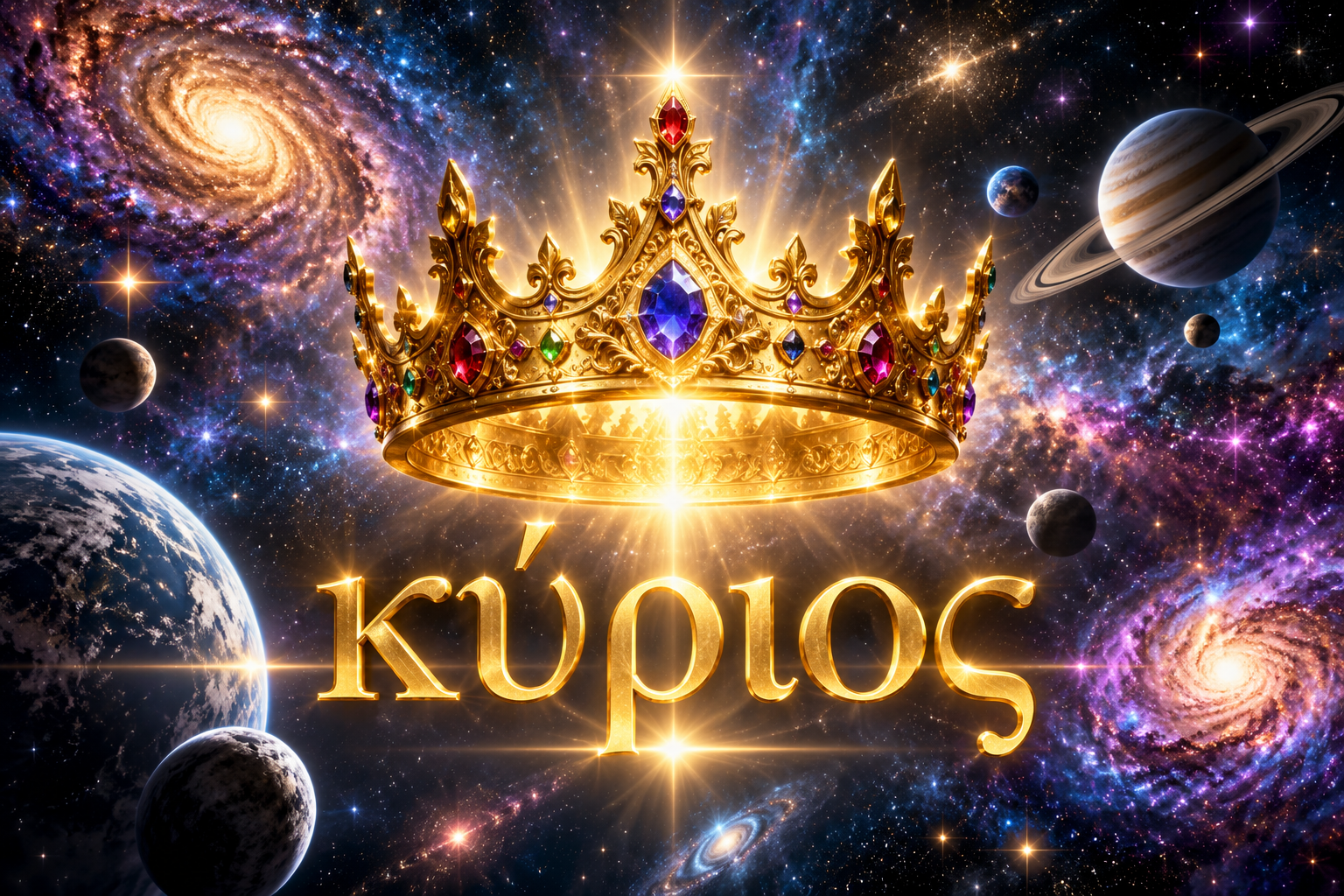
If The Father being identified as the “One God” should lead us to conclude that Jesus cannot also be the “One God”, then that must also mean that only Jesus Christ is the “one Lord”. The Father is not The Lord! The term “Lord” in this verse is Kyrios. It is the term used in place of YHWH (Yahweh) in the Septuagint (I.e the Greek translation of The Old Testament that Greek speaking Jews read from). In The New Testament, Jesus is repeatedly called “Kyrios” or “Lord”. Now, this term doesn’t necessarily equate to a unique claim to divinity. Like the word “Adonai” or our English word “Lord”, it can be used to just refer to a person in power or authority. Like “The Feudal Lord”, “The lord and lady enjoyed tea on their lawn.” And so on. However, the reason for the Septuagint to use Kyrios instead of the Tetragrammaton (I.e those 4 Hebrew letters that make up YHWH or Yahweh) was because Jewish people back then (as well as now) revere the personal name of God so much that they won’t even say it, even when reading scripture. This is a hyper safeguard to prevent themselves from breaking the third commandment; “Thou shalt not take the name of The Lord thy God in vain.” (Exodus 20:7, KJV). You can’t take the name in vain, if you never take it on your lips at all, so the reasoning goes.
Yahweh is The LORD. Yahweh is Kyrios in The Old Testament. Jesus is Kyrios in The New Testament. Now here is where the logic of 1 Corinthians 8:6 as applied by Christological heretics gets them in trouble. Since they say “The one God is The Father. Jesus isn’t called the One God. Only the Father is. So only The Father is Yahweh.” Then by that same logic, you must say “God The Father is not The Lord. See, only Jesus Christ is called The Lord. So Yahweh is not The Lord!”. What’s good for the goose is good for the gander. Now, if the Arian backtracks and says “Well, no, Paul’s language in 1 Corinthians 8:6 doesn’t rob Jehovah of his lordship.” Then we can immediately ask “Then why should the language rob Jesus of his divinity?”
If God The Father can be the “One Lord” even though that title is applied to Jesus, then why can’t Jesus be the “One God” even though this title is applied to The Father in this specific verse?
So ultimately the Unitarian is forced to pick a poison; either admit the argument against the deity of Christ is not a good one, or stick to his guns and say that God is not The Lord!
Something else that often gets overlooked is that 1 Corinthians 8:6 also describes the Father and Jesus in nearly identical terms. “yet for us there is one God, the Father, from whom are all things and for whom we exist, and one Lord, Jesus Christ, through whom are all things and through whom we exist.” (1 Corinthians 8:6, ESV, emphasis mine in bold)
Both The Father and Jesus are credited with the creation of the universe! God The Father is the ultimate source of”from” while The Son is sort of like the tool God The Father used to create everything “through whom”. This pairs nicely with John 1:1-3 which says “In the beginning was the Word, and the Word was with God, and the Word was God. He was in the beginning with God. All things were made through him, and without him was not any thing made that was made.” (John 1:1–3, ESV).
John identifies Jesus as God, and yet paradoxically somehow “with” God. He (The Word) is God, yet is “with” another person called God. And John says that it is “through” Him that all things were made. And John really does say “ALL things”. Not some things, not most things, but all things! That would presumably mean that The Word Himself was not brought into being by God and then “all other” things were brought into being through The Word as Jehovah’s Witnesses will try to argue, and as their mistranslation (i.e The New World Translation) of Colossians 1:15-16 says. Though interestingly the New World Translation of John 1:3 preserves the absolute universal meaning.
This also gets the modern day Arian (like The Jehovah’s Witnesses) into hot water. For what does God say about His creative activities in The Old Testament?
“This is what Jehovah says, your Repurchaser, Who formed you since you were in the womb:“I am Jehovah, who made everything. I stretched out the heavens by myself, I spread out the earth. Who was with me?” – Isaiah 44:24 (NWT) emphasis mine in bold.
“Thus says the Lord, your Redeemer, who formed you from the womb: ‘I am the Lord, who made all things, who alone stretched out the heavens, who spread out the earth by myself,” (Isaiah 44:24, ESV)
Yahweh explicitly says that He created the universe by Himself, and that there was no one with Him. He had no helpers! The NWT (the WatchTower Translation) makes this even more forceful as it adds “Who was with me?” That isn’t in the ESV, NIV, NRSV, the WEB, or the KJV. So ironically the Jehovah’s Witness translation emphasizes and compounds the problem, although the statement that Yahweh was alone is stated in all of these translations.
Yet 1 Corinthians 8:6 is clear and so is John 1:1-3; someone was with God when he created, and indeed was the means by which all things were created; Jesus. Now, this either means The Old Testament and The New Testament contradict each other (which would seem to imply that at least one of them cannot be the word of God), or Jesus is God. If Jesus is God, then what God said in Isaiah 44:24 does not contradict 1 Corinthians 8:6. Jesus and The Father would be the same God. But if Jesus is just a created being, ontologically separate from Yahweh, then the problem remains. Of course, a Modalist or Oneness Pentecostal might take a sigh of relief, but that would be premature. Both 1 Corinthians 8:6 and John 1:1-3 speak of God The Father and Jesus as though they are, in a sense, distinct. Yet a title (Kyrios) and a divine act (Creation) are as much attributed to Jesus as they are The Father. The doctrine of a Godhead (a plurality of persons in one divine essence) makes the most sense out of the data. To put it in philosophical terms; it has the greatest explanatory scope.
I have yet to have anyone who has a low Christology and who affirms that The Bible is divinely inspired give an adequate counter to this.
If you would like to explore the biblical evidence for the doctrine of the Trinity in more depth, check out my lengthy “Gospel Alone” series in which I defend the doctrine of The Trinity staying inside each of the four gospels per argument.
*Defending The Trinity From Matthew Alone
*Defending The Trinity From Mark Alone
*Defending The Trinity From Luke Alone
*Defending The Trinity From John Alone
These four essays are lengthy, heavily cited, heavily footnoted, and anticipated and responds to various objections.
Additionally, there is a 3 part article series in which I respond to the Jehovah’s Witness pamphlet “Should You Believe In The Trinity?” Click here, here, and here to read them. These are also in depth responses to the challenges against the doctrine of The Trinity and the deity of Christ, giving not only positive arguments from both the Old and New Testaments, but also responding to objections. And it became the second book in my Cerebral Faith Blog Book Series “Defending The Trinity: Responding To A Jehovah’s Witness Pamphlet”.
Discover more from Cerebral Faith
Subscribe to get the latest posts sent to your email.