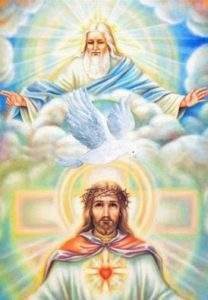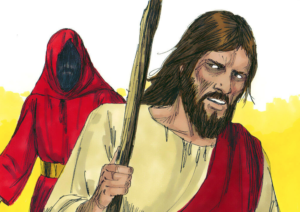
Introduction: In this essay, I will defend the doctrine of The Trinity using only passages from the gospel of Mark. The majority opinion among biblical scholars is that Mark is the earliest gospel written, and many think that Mark does not have a high Christology. My aim in this essay is to show that not only does Mark present Jesus as God like John does, but also that the entire doctrine of The Trinity can be defended just from Markan passages alone. The Doctrine of The Trinity asserts that there is one God who exists as 3 co-eternal persons. God is three persons in one divine essence. There is no one verse in scripture that asserts this, but this conclusion is the natural outflow of putting five biblical teachings together; (1) There is only one God, (2) The Father is God, (3) The Son is God, (4) The Holy Spirit is God, and (5) The Father, The Son, and The Holy Spirit are distinct persons. This essay is part of a series, but unlike previous blog series on this site, each one can be read as a standalone article, and in no particular order. In other words, no “Part 1”, “Part 2”, “Part 3”, etc. My hope in this essay is to show that the biblical evidence for The Trinity is so overwhelming that I can establish it even with the tightest restrictions put on me. Although I can, I don’t need to go outside of Mark to defend the aforementioned five biblical teachings. The only time I will go outside of Mark is to look at Old Testament passages that will provide much-needed background knowledge to the Markan passages.
(1) There Is Only One God.
In Mark 12:28-31, we read “And one of the scribes came up and heard them disputing with one another, and seeing that he answered them well, asked him, ‘Which commandment is the most important of all?’ Jesus answered, ‘The most important is, ‘Hear, O Israel: The Lord our God, the Lord is one. And you shall love the Lord your God with all your heart and with all your soul and with all your mind and with all your strength.’ The second is this: ‘You shall love your neighbor as yourself.’ There is no other commandment greater than these.'” (ESV)
Here, Jesus is asked about which is the greatest commandment by one of the scribes. Jesus’ response comes from Deuteronomy 6:4-5, “Hear, O Israel: The LORD our God, the LORD is one. You shall love the LORD your God with all your heart and with all your soul and with all your might.” (ESV) Jesus says this is the first and greatest commandment. Deuteronomy 6:4 is clearly a statement of monotheism. Matthew’s parallel account in Matthew 22:37 omits the quotation of verse 4 and only includes verse 5. However, this is not a contradiction. Historically, Jesus most likely said both verses 4 and 5, and Matthew simply chose to omit the historical Jesus’ uttering verse 4. But that raises the question as to why Matthew would do such a thing? The most likely explanation is that Matthew was writing to a highly Jewish audience, as is indicated by the heavy saturation of Old Testament prophesies with his statement “This happened to fulfill the scriptures that say…”, (Matthew 1:22-23; 2:15; 2:17-18; 4:14-16) as well as Matthew presupposing knowledge of Jewish customs on the part of his readers (Matthew 15:2, 23:5). Most scholars, by contrast, believe that Mark is writing to a mostly gentile audience, since he includes the highest concentration of interactions between gentiles and Jesus (Mark 7:24-30, Mark 7:31-37, Mark8:1-20, Mark 11:20-13:37, Mark 15:39), [1]Mark has slightly fewer gentile interactions with Jesus than Matthew or Luke, however, Mark is also much shorter than Matthew or Luke. Thus, while the quantity isn’t significant, the fact that … Continue reading plus Mark goes out of his way to explain Jewish customs (Mark 7:3-4; 14:12; 15:42), So with this being the case, the Gentiles in the crowd may not have been familar with the entire context of the commandment. Moreover, Deuteronomy 6:4-5 is part of a Jewish prayer or creed called the “Shema”, which is the Hebrew word for “Hear”. So historically, it is more likely that Jesus would have said both the contents of verses 4 and 5.
At this point, I need to respond to an objection. Arian groups like the Jehovah’s Witnesses will actually use The Shema to argue against The Trinity. For example, the WatchTower Pamphlet “Should You Believe In The Trinity?” says ““Hear, O Israel, the Lord our God is one God.’\”Those words are found at Deuteronomy 6:4. The Catholic New Jerusalem Bible (NJB) here reads: ‘Listen, Israel: Yahweh our God is the one, the only Yahweh.’ * In the grammar of that verse, the word ‘one’ has no plural modifiers to suggest that it means anything but one individual.” [2]The WatchTower Society, “Should You Believe In The Trinity?” — Should You Believe It? (jw.org) For a full point by point refutation of this book, see my articles “Why You … Continue reading The Lord is one is taken by these groups to mean The Lord is one person. The argument is that if the doctrine of The Trinity were true, God would not be one, “The Lord our God is three” would be true.
There are three problems with this argument. For one thing, if the JWs were right about The Trinity being a post 4th century development [3]See The WatchTower Society, “Should You Believe In The Trinity?” — Should You Believe It? (jw.org) (which they are not), then Moses can’t be saying “The Lord is one (person)” in an attempt to refute Trinitarianism because Moses would be making a polemic against a concept that didn’t exist yet. If the Jehovah’s Witnesses were right, then everyone across the ancient world would just assume that each of their gods equaled to one person. It would be like me saying “I, Evan Minton, am one person.” You would go “Well, no duh!” Moreover, there is plentiful evidence of a two-person Godhead in the Old Testament, a concept that Allen Segall calls “The Two Powers In Heaven” in his book by the same name. [4]I would also advise you to check out the following resources; my YouTube video “The Angel Of The Lord and A Two Person Godhead In The Old Testament” in which I go over a lot of the … Continue reading Moreover, The Doctrine of The Trinity is overwhelmingly supported by the New Testament, even if, as we shall see, we stay inside of just one gospel for our evidence! And so, ultimately, we must let scripture interpret scripture. The biblical evidence from everywhere else in the canon overwhelmingly testifies to the doctrine of The Trinity, so the unitarian interpretation of Deuteronomy 6:4 cannot be correct.
But what is Moses saying here? I take this to be a vow of loyalty to Yahweh alone. “The LORD our God”. “Yahweh our elohim, Yahweh is one.” Remember that the gods of the nations are real (see Psalm 82, Exodus 12:12, Deuteronomy 32:8-9, 1 Corinthians 10:20, et. al.) And we know that idolatry was a very real problem in ancient Israel from the books of Kings and the prophetic books. Moses is very likely saying “Yahweh is our elohim”. We don’t have any elohim other than Yahweh. “Hear, O Israel: Yahweh our elohim, Yahweh is one.” This could be construed as “Yahweh is the one”. Moses is saying “Yahweh is the one God that we will worship. We won’t worship any other elohim; not Baal, Dagon, Ashera, Ra, or whoever.” That this is a loyalty oath rather than an (anacronistic) statement of unitarianism is strengthened by the very next verse which says “You shall love the LORD your God with all your heart and with all your soul and with all your might.” (ESV) The phrase “is one” can also be construed as a statement of supremacy. Despite the existence of other elohim being repeatedly acknowledged in scripture, we have statements like “I am the first and the last, besides me there is no god.” (Isaiah 44:6). This isn’t a contradiction, because this is likely meant as a statement of supremacy. I say this for two reasons; first, in Isaiah 44:7 God says “Who is like me? Let him proclaim it. Let him declare and set it before me, since I appointed an ancient people.” (ESV) Secondly, this same language is used in the mouths of Ninevah and Babylon. As the late biblical scholar Dr. Michael S. Heiser says “Isaiah 47:8 and Zephaniah 2:15 have, respectively, Babylon and Nineveh saying “there is none besides me.” Are we to believe that the point of the phrase is to declare that no other cities exist except Babylon or Nineveh? That would be absurd. The point of the statement is that Babylon and Nineveh considered themselves incomparable, as though no other city could measure up to them. This is precisely the point when these same phrases are used of other gods—they cannot measure up to Yahweh.” [5]Heiser, Michael S.. The Unseen Realm: Recovering the Supernatural Worldview of the Bible (p. 35). Lexham Press. Kindle Edition.
Ultimately, Deuteronomy 6:4 is definitely a statement of exclusive worship of Yahweh, and that Yahweh is the only God Israel should worship. There is also a good likelihood that Deuteronomy is saying that Yahweh is the God above all Gods. He is the ultimate God! Such as when in Psalm 51:4, David says, “Against you, you only have I sinned.” meaning “Against you, ultimately, have I sinned.” Or as philosophers like William Lane Craig would say, “God is a Maximally Great Being.” [6]William Lane Craig, “Reasonable Faith: Christian Truth and Apologetics”, ed. John S. Feinberg and Leonard Goss (Wheaton, IL: Crossway Books, 2008), 184–185. So it is true that there is “Only one God” if by “One God” we mean, one Maximally Great Elohim. [7]For an excellent biblical discussion on God’s “Omni” attributes which make Him a Maximally Great Being, I recommend “The Attributes of God Volume 1: A Journey Into the Father’s … Continue reading All other elohim are created beings who either serve Yahweh or are in rebellion against Him. On the doctrine of The Trinity, Jesus and The Holy Spirit are not separate gods on equal footing with Yahweh, they ARE Yahweh! They are the same God as The Father, they just aren’t the same person. The doctrine of The Trinity asserts that God is one spiritual essence containing three co-eternal persons. God is one what and three whos. So, Jesus would not be a “God besides YHWH”. He is Yahweh.
(2) The Father Is God
That Jesus’ Father is Yahweh is perhaps so uncontroversial that I find it unnecessary to even include passages about it here. No heretic denies that The Father is God. Yet, for the sake of completion, I will include at least two passages.
Exhibit A: The Voice From Heaven At Jesus’ Baptism
Mark 1:11, the context of which is Jesus’ baptism by John The Baptist, says “And a voice came from heaven, ‘You are my beloved Son; with you I am well pleased.'” (ESV) This verse contains the direct, audible voice of God the Father, publicly declaring the unique relationship. This declaration uses language rooted in the Old Testament, combining imagery from Psalm 2:7 (“You are my Son”) and Isaiah 42:1 (“my chosen, in whom my soul delights”). The voice from heaven confirms that God is the one calling Jesus his Son.
Exhibit B: The Voice From Heaven At The Transfiguration
“And a cloud overshadowed them, and a voice came out of the cloud, ‘This is my beloved Son; listen to him.'” – Mark 9:7 (ESV)
The context of this verse is the transfiguration. Jesus had lead Peter, James, and John up to a mountainside (Mark 7:2), and then he glowed super brightly. Jesus’ clothes became “whiter than anyone on earth could bleach them” (Mark 7:3), which makes it sound like Mark is making an advert for a new type of laundry product. Moses and Elijah appear (verse 4), and this is when the voice comes from Heaven and declares Jesus to be his son (verse 7). So The Father of Jesus is God. God The Father.
(3) The Son Is God
Now we come to the one of the controversial planks. Arians like the Jehovah’s Witnesses and modalists like the Oneness Pentecostals typically don’t deny that there is one God and that The Father is God. The former will deny that Jesus is God while the latter, while affirming the deity of Jesus, nevertheless denies that Jesus and The Father are distinct persons. Thus, neither are Trinitarians. For that reason, both of those sections will receive a much lengthier and more thorough treatment.
Exhibit A: John The Baptist Prepares The Way For YHWH
In Mark 1:1-4, we read “The beginning of the gospel of Jesus Christ, the Son of God As it is written in Isaiah the prophet, ‘Behold, I send my messenger before your face, who will prepare your way, the voice of one crying in the wilderness: ‘Prepare the way of the Lord, make his paths straight,’ ” (ESV, emphasis in bold mine)
Mark’s gospel begins with John the Baptist preaching in the wilderness. Now, Mark quotes from Isaiah, but this same prophecy occurs in Malachi 3:1. To make my argument as forceful as possible, I will quote both prophecies and examine them.
Malachi 3:1-6 says “Behold, I send my messenger, and he will prepare the way before me. And the Lord whom you seek will suddenly come to his temple; and the messenger of the covenant in whom you delight, behold, he is coming, says the LORD of hosts. But who can endure the day of his coming, and who can stand when he appears? For he is like a refiner’s fire and like fullers’ soap. He will sit as a refiner and purifier of silver, and he will purify the sons of Levi and refine them like gold and silver, and they will bring offerings in righteousness to the LORD. Then the offering of Judah and Jerusalem will be pleasing to the LORD as in the days of old and as in former years. ‘Then I will draw near to you for judgment. I will be a swift witness against the sorcerers, against the adulterers, against those who swear falsely, against those who oppress the hired worker in his wages, the widow and the fatherless, against those who thrust aside the sojourner, and do not fear me, says the LORD of hosts. ‘For I the LORD do not change; therefore you, O children of Jacob, are not consumed.'” (ESV, emphasis added in bold)
This passage is interesting because Yahweh is clearly the speaker here. Yahweh says that “I will send MY messenger, and he will prepare the way for ME.” The messenger is preparing the way for whom? For Yahweh Elohim! It is overwhelmingly clear that Yahweh is the speaker and that he says that the messenger that He will send will prepare the way for Him.
Isaiah 40:3 says “A voice cries: ‘In the wilderness prepare the way of the LORD; make straight in the desert a highway for our God.” (ESV, emphasis added in bold.)
Again, whose way is being prepared? Yahweh. The way is being prepared for Yahweh. The messenger to come would “make straight in the desert a highway for our God“.
Mark quotes two Old Testament prophesies in which a messenger would prepare the way for Yahweh. Mark essentially says John The Baptist is the messenger, and Jesus is the one whose way John is preparing. What does this imply about what Mark thought about regarding the personhood of Jesus? The answer, of course, is obvious! Mark is presenting Jesus as God!
This is a repeating pattern that you will see in this essay, that knowing The Old Testament will show Mark has as high of a Christology as the gospel of John, even if it’s not obvious to our modern Western eyes.
Christian Apologist Erik Manning says it well; “Here Mark again takes Old Testament prophecy and applies it directly to Jesus. Isaiah 40:3 reads ‘make straight…a highway for our God’ but Mark changes it to ‘make his paths straight.’ That’s referring to Jesus. Rather than seeing Jesus as a mere human being, Mark cuts right to the chase in presenting Jesus as the fulfillment of God’s promise to come to visit his people directly in person. If we stopped right here, I think we’ve already undercut the idea that Mark presents a lower, more stripped- down version of Jesus than John.” [8]Erik Manning, “18 Passages In Mark’s Gospel That Prove That Mark Had A High Christology”, December 27, 2018 – www.IsJesusAlive.com
Exhibit B: Jesus Forgives The Sins Of The Paralytic
In Mark 2:5-12, we read “And when Jesus saw their faith, he said to the paralytic, ‘Son, your sins are forgiven.’ Now some of the scribes were sitting there, questioning in their hearts, ‘Why does this man speak like that? He is blaspheming! Who can forgive sins but God alone?’ And immediately Jesus, perceiving in his spirit that they thus questioned within themselves, said to them, ‘Why do you question these things in your hearts? Which is easier, to say to the paralytic, ‘Your sins are forgiven,’ or to say, ‘Rise, take up your bed and walk’? But that you may know that the Son of Man has authority on earth to forgive sins”—he said to the paralytic— ‘I say to you, rise, pick up your bed, and go home.’ And he rose and immediately picked up his bed and went out before them all, so that they were all amazed and glorified God, saying, ‘We never saw anything like this!'” (ESV)
When Jesus encounters the paralytic lying on his bed, he tells the man that his sins are forgiven. This provokes outrage among the scribes in the room, to say “He’s blaspheming! Who can forgive sins but God alone?” C.S Lewis said it well; “Now, unless the speaker is God, this is really so preposterous as to be comic. We can all understand how a man forgives offenses against himself. You tread on my toes and I forgive you, you steal my money and I forgive you. But what should we make of a man, himself unrobbed and untrodden on, who announced that he forgave you for treading on other men’s toes and stealing other men’s money? Asinine fatuity is the kindest description we should give of his conduct. Yet this is what Jesus did. He told people that their sins were forgiven, and never waited to consult all the other people whose sins had undoubtedly injured. He unhesitatingly behaved as if He was the party chiefly concerned, the person chiefly offended in all offenses. This makes sense only if He really was the God whose laws are broken and whose love is wounded in every sin.” [9]C.S Lewis, “Mere Christianity”, pages 51-52
At this point, I want to respond to an objection to this argument that comes from New Testament scholar Bart Ehrman. Ehrman wrote “With respect to the forgiveness of sins: when Jesus forgives sins, he never says ‘I forgive you,’ as God might say, but ‘your sins are forgiven,’ which means that God has forgiven your sins. This prerogative for pronouncing sins forgiven was otherwise reserved for Jewish priests in honor of sacrifices worshipers made at the temple. Jesus may be claiming a priestly, not a divine prerogative.” [10]Bart D. Ehrman, “How Jesus Became God: The Exhaltation Of A Jewish Preacher From Galliee”, pages 126-127
There are three problems with Ehrman’s explanation here:
1: If priests talked like this all the time, surely the scribes wouldn’t have objected.
They might still have been upset, but rather than say “This is blasphemy! Who can forgives sins but God alone?” they would have said “Hey, Jesus! What are you doing!? You’re not a priest. You have no right to say that God forgave this man’s sins.” And yet, that wasn’t the basis of their outrage. The basis of the outrage of the religious leaders was not that Jesus was claiming a priestly prerogative that he couldn’t do. The basis of the outrage was that Jesus was doing something that only God could do. Jesus doesn’t respond to this charge or say “Hey, guys. Don’t you know that priests do this all the time?” Instead he says “I have authority to do this, because I’m the Son of Man. And I’ll show you I have the authority to do this by doing something humanly impossible,” at which point, he heals the paralytic.
2: Jesus wasn’t even a Levite, much less a priest. He was a carpenter and a rabbi.
3: Although Jesus’ priestly role is a part of New Testament theology, it comes from epistles that Ehrman considers later and undoubtedly have a high Christology (e.g Hebrews)
Exhibit C: Jesus Is Lord Of The Sabbath
In Mark 2:23-28, we read, “One Sabbath he was going through the grainfields, and as they made their way, his disciples began to pluck heads of grain. And the Pharisees were saying to him, ‘Look, why are they doing what is not lawful on the Sabbath?’ And he said to them, ‘Have you never read what David did, when he was in need and was hungry, he and those who were with him: how he entered the house of God, in the time of Abiathar the high priest, and ate the bread of the Presence, which it is not lawful for any but the priests to eat, and also gave it to those who were with him?’ And he said to them, ‘The Sabbath was made for man, not man for the Sabbath. So the Son of Man is lord even of the Sabbath.'” (ESV)
There are a lot of interesting things we could talk about when it comes to this passage; did Jesus really break the sabbath commandment? Did Jesus goof up in saying that Abiathar was the high priest when David entered the temple and ate the consecrated bread? And while these are interesting questions, and while I think biblical scholars have given satisfying answers to them, for our purpose here, we just want to focus on what Jesus said at the end of this episode. [11]For those wondering about whether Jesus and his disciples actually broke the Sabbath, see the GotQuestions.org article titled “Did Jesus Break The Sabbath Law?” And for the Abiathar … Continue reading Jesus claims to be the lord of the Sabbath. How could a mere man be the lord of the Sabbath? It was Yahweh who gave the Sabbath in the first place at Mt. Sinai when he said “Remember the Sabbath day, to keep it holy. Six days you shall labor, and do all your work, but the seventh day is a Sabbath to the Lord your God. On it you shall not do any work, you, or your son, or your daughter, your male servant, or your female servant, or your livestock, or the sojourner who is within your gates.” – Exodus 20:8–10 (ESV) Wouldn’t Yahweh be the Lord of the Sabbath? It would seem so. The one who initiated and regulated the Sabbath should surely be the lord over it. After all, he’s the one who runs it! So then, if Yahweh is the Lord of the sabbath, and Jesus is claiming to be The Lord of the sabbath, then by the logical law of identity, Jesus is claiming to be Yahweh!
Exhibit D: Jesus Calms The Storm
In Mark 4:35-41, we read “On that day, when evening had come, he said to them, ‘Let us go across to the other side.’ And leaving the crowd, they took him with them in the boat, just as he was. And other boats were with him. And a great windstorm arose, and the waves were breaking into the boat, so that the boat was already filling. But he was in the stern, asleep on the cushion. And they woke him and said to him, ‘Teacher, do you not care that we are perishing?’ And he awoke and rebuked the wind and said to the sea, ‘Peace! Be still!’ And the wind ceased, and there was a great calm. He said to them, ‘Why are you so afraid? Have you still no faith?’ And they were filled with great fear and said to one another, ‘Who then is this, that even the wind and the sea obey him?'” (ESV)
Jesus rebukes the storm. The winds and waves stop. The FaithLife Study Bible says “Since in the ancient Near East the sea represented chaotic forces controllable only by God, Jesus’ command of the waves serves as a sign of His deity. See note on Gen 1:2.” [12]John D. Barry et al., Faithlife Study Bible (Bellingham, WA: Lexham Press, 2012, 2016), Mt 8:26. It is noteworthy that Jesus does not pray to the Father for the winds and waves to stop. They stop at His direct command. Moreover, this would have astonished Jews because the domain of weather and waves, as the FaithLife Study Bible note explains, was something a god did, Yahweh in The Old Testament and Baal in the Ugaritic material. Jesus couldn’t have chosen a more dramatic way to underscore his divine identity, as the Old Testament explicitly explains that control over weather is one of God’s particular glories. Specifically, Psalm 89:6-9 emphasizes that only the Lord God of Hosts can calm storms. [13]Douglas Mangum, ed., Lexham Context Commentary: New Testament, Lexham Context Commentary (Bellingham, WA: Lexham Press, 2020). Jesus, in rebuking the wind and sea, he demonstrates that only the one who initially created these elements would dare to command them. Their instant obedience reveals his full deity as both Creator and Redeemer. [14]R. Alan Cole, Mark: An Introduction and Commentary, Tyndale New Testament Commentaries (Downers Grove, IL: InterVarsity Press, 1989), 2:156. Importantly, the Gospels indicate that only Jesus performed “nature” miracles, because only Jesus is God, and “only God can do God’s work”.[15]R. Alan Cole, “Mark,” in New Bible Commentary: 21st Century Edition, ed. D. A. Carson et al. (Leicester, England; Downers Grove, IL: Inter-Varsity Press, 1994), 959. This ability to calm a storm was absolutely unprecedented in redemptive history—no Old Testament prophet had ever accomplished such a feat with a simple word of command.
In Psalm 107:28-29, we read, “Then they cried out to the Lord in their trouble, and he brought them out of their distress. He stilled the storm to a whisper; the waves of the sea were hushed. They were glad when it grew calm, and he guided them to their desired haven.” (NIV) Although many of Mark’s readers would have been Gentiles, the disciples themselves in the historical report are all Jewish men. In their minds, these things would have undoubtedly been background knowledge.
Finally, there’s a possiblity that this narrative is alluding to the book of Jonah. Think about it. When Jonah was on a ship to Tarshish (to avoid preaching to the Ninevites) (Jonah 1:3), Jonah fell asleep at the bottom of the ship (Jonah 1:5). God, being angry at Jonah, caused a huge storm to surge (Jonah 1:4). Yet despite how fierce the storm was, Jonah remained asleep until the crew came and frantically woke him up (Jonah 1:6). After Jonah confesses that the storm is God’s doing because God is angry with him, the crew of the boat throw Jonah overboard and the storm ceases (Jonah 1:15). Who caused the storm to become still in this story? Yahweh Elohim, of course. In the gospel event, Jesus (a human prophet like Jonah) is asleep in the boat while a storm rages (Mark 4:38). The disciples are panicking, and like the crew in the book of Jonah, they have to wake Jesus up. (Mark 4:38). After waking Jesus up, the storm is stilled, in this case, because Jesus Himself rebuked the storm (Mark 4:39). Someone greater than Jonah was here indeed! (Matthew 12:41). The comparison between Jesus and Jonah is fascinating because Jesus not only echoes the scene but also transcends it, demonstrating a divine authority that only God exercised in the Book of Jonah.
Exhibit E: Jesus Walks On The Water
In Mark 6:45-52, we read “Immediately Jesus made his disciples get into the boat and go on ahead of him to Bethsaida, while he dismissed the crowd. After leaving them, he went up on a mountainside to pray. Later that night, the boat was in the middle of the lake, and he was alone on land. He saw the disciples straining at the oars, because the wind was against them. Shortly before dawn he went out to them, walking on the lake. He was about to pass by them, but when they saw him walking on the lake, they thought he was a ghost. They cried out, because they all saw him and were terrified. Immediately, he spoke to them and said, ‘Take courage! It is I. Don’t be afraid.’ Then he climbed into the boat with them, and the wind died down. They were completely amazed, for they had not understood about the loaves; their hearts were hardened.” (NIV)
I am going to make the argument that this passage proves that Jesus is God from two different types of mindsets. The first will be a Greek Gentile mindset because, as already stated earlier in this essay, it is very likely that Mark’s initial readers would have largely consisted of Gentiles. But, since this is a historical report involving Jewish men, and as I’ve argued elsewhere, Mark is getting all of his information from Simon Peter [16]See my essay “The Case For The Reliability Of The Gospels – Part 2: The Case For Traditional Authorship”, then hopefully you can see that the Jewish mindset is just as important to take into account. But no matter one’s background information in the ancient world, one would have read this account and concluded, “This is something only God (or a god) can do!”
The Greco-Roman Mindset –
Jason Robert Combs, in a Journal of Biblical Literature article, says the following: “Mark presents several themes typical of classical ghost stories before diverging in a significant way. It is night, the time when there is at least the threat of phantoms looming. Jesus sees the disciples struggling to cross the lake against the wind and begins to walk toward them as light from the dawning sun has barely begun to illuminate their surroundings: the perfect time to sight a phantom. Yet it is not the nighttime hour nor the dimly lit sky to which Mark attributes the disciples’ misconstrual of Jesus. Instead, he implies that their misunderstanding comes from ‘seeing him walking on the sea’ … [Mark 6:49]). Mark suggests that The disciples thought that Jesus was a ghost when they witnessed him doing one thing that ghosts absolutely cannot do: walk on water.
The Jewish and Greco-Roman audience familiar with the sort of ghost stories recounted above, would have been particularly dumbfounded by the disciples’ misunderstanding. If, in addition to this, one considers the research of Yarbro Collins [a New Testament scholar], then the disciples’ misunderstanding becomes even more shocking. Yarbro Collins, as noted previously, reviews a wealth of Greco-Roman sources that describe divine men and gods walking on water. With so many prominent accounts, Mark’s audience would certainly have understood Jesus’ water-walk in terms of divine manifestation, yet the disciples in
Mark do not.” [17]Jason Robert Combs, “A Ghost on the Water? Understanding an Absurdity in Mark 6:49-50.”, Journal of Biblical Literature in 2008.
Commenting on Combs’ essay, the late biblical scholar Dr. Michael S. Heiser said, “…here’s the point Combs is trying to make: Anyone familiar with the literary elements elements of a ghost story would have known that Mark was not describing a ghost. He was describing a god—some god—some divine figure. Mark cast the disciples as basically spiritually clueless or blind to something that should have been obvious.” [18]Dr. Michael S. Heiser, The Naked Bible Podcast, “Episode 25: The Bible’s Literary Context: Greco-Roman Ghost Stories and The Bible”, January 22nd 2015 –> … Continue reading
Combs goes on to say, “… in Mark the disciples’ insistence on believing the absurd seems to emphasize, to the extreme, their failure to believe in Jesus. This is exactly what Mark records. After Jesus identifies himself, Mark describes the astonishment of the disciples, their lack of understanding, and the reason for that lack: their hearts were hardened (6:51–52). (6:51–52). The disciples’ lack of understanding has long been recognized as a Markan theme that appears throughout the Gospel. Here it forms a striking narrative portrayal of cognitive dissonance: the disciples clearly want Jesus to be something that he is not, to the point that they are willing to believe the absurd when Jesus approaches them as something much grander than they had imagined. Gods and divine men walk on water; ghosts do not. But when the disciples see Jesus walking on water, they believe the impossible rather than the obvious.” [19]See Jason Robert Combs, “A Ghost on the Water? Understanding an Absurdity in Mark 6:49-50.”, Journal of Biblical Literature in 2008.
The Jewish Mindset –
In the Jewish mindset, Jesus’ walking on the water also would have signaled his deity. In Ancient Near Eastern (and hence, biblical) thought, the sea was a force that represented chaos. In Ancient Near Eastern creation myths, the sea was often personified as a terrifying dragon that a god had to slay before he could get to the work of creating the world. Baal does this in the Baal cycle, killing a sea god named Litanu, and Marduk slays Tiamut in the Babylonian creation myth “The Enuma Elish”. Marduk slays Tiamat and then uses half of her body to create the land and the other half of her body to create the sky. In The Bible, while Yahweh doesn’t kill a sea dragon in Genesis 1 before he starts creating, this sea dragon does make appearances in places like Psalm 74:14 and Isaiah 27:1. The biblical authors employ this motif as part of their polemic against the pagan nations around them in order to assert the supremacy of Yahweh. Yahweh is the one who crushes the heads of the sea monster. And in Genesis 1:2, I think the polemic is even stronger because The Holy Spirit simply hovers over calm waters. It is as if to say that the Spirit of God is so supreme that Leviathan was too scared to even show up for the battle! Biblical scholars refer to this motif as chaoscompf. [20]See John Day’s book “God’s Conflict With The Dragon Of The Sea: Echoes Of Canaanite Myth”, Wipf and Stock, 2020, Dr. Michael S. Heiser, “Sea Monsters in the Bible: Did … Continue reading Blogger John Daniels explains the significance of this nicely; “In the Gospel accounts of Matthew 14:22–33, Mark 6:45–52, and John 6:16–21, Jesus walks on the Sea of Galilee to reach His disciples. This event is not merely a display of supernatural ability. It is a direct confrontation with ancient Near Eastern ideas of chaos and divine power. In the mythologies of the surrounding nations, the sea symbolized the uncontrollable forces of disorder and rebellion. Deities such as Yam in Canaanite texts or Tiamat in Mesopotamian myth personified the chaotic deep. Only a god could walk upon the sea or subdue it. By walking on the waters of a violent storm, Jesus is not just performing a miracle. He is making a theological claim. He is doing what the Hebrew Scriptures say only Yahweh can do.” [21]John Daniels, “The Meaning Of Jesus Walking On The Water and The Disciples Following Him”, Theology In Five, October 28th 2025, –> … Continue reading
Indeed, Job 9:8 says “[God] alone stretched out the heavens and trampled the waves of the Sea;” (NRSV) God alone. God alone stretches out the heavens, and God alone tramples on the waves of the sea. Yet here we have Jesus of Nazareth controlling the heavens and trampling on the waves of the sea. Hmm… Also, Psalm 77:19 says “Your way was through the sea, your path, through the mighty waters; yet your footprints were unseen.” (NRSV)
The implications of all of this Greco-Roman, Ancient Near Eastern, and biblical data is pretty clear; the walking-on-water incident proves that Jesus is God. Only Yahweh can control the weather and tread on the chaotic seas. Greeks knew this, Jews knew this, everyone in the ancient world knew this. So whether it be Matthew’s Jewish audience reading this account in his gospel, Mark’s gentile audience reading this in his gospel, or Luke and John’s more likely mixed audience reading this, everyone would know “This is no mere man. This is God in human form.”
Exhibit F: Jesus’ Words Will Never Pass Away
In Mark 13:31, Jesus says “Heaven and Earth will pass away, but my words will never pass away.” (NIV) This alludes to Isaiah 40:8 which says “Grass withers and flowers fade away when the Lord’s breath blows on them, but the word of our God will stand forever.” (NIV) Jesus says that the words he speaks have the same enduring quality as the words of God.
A possible objection to this argument might be “Well, Jesus is a prophet of God, so his words are God’s words. Ergo, any prophet could say that.” While that’s a good point, wouldn’t a prophet not say “My words?” Wouldn’t he phrase it as something like “Heaven and Earth will pass away, but God’s words which I speak unto you will never pass away?”
I don’t consider this point to be an airtight argument, but it is highly suggestive. And in light of all of the other examples of a high Christology we’ve seen in Mark’s gospel, it seems to me like the most likely interpretation is that Jesus is equating his words to God’s words.
Exhibit G: The Son Of Man Sitting At The Right Hand Of Power And Coming On The Clouds Of Heaven
In Mark 14:61-64, we read, “But he remained silent and made no answer. Again the high priest asked him, ‘Are you the Christ, the Son of the Blessed?’ And Jesus said, ‘I am, and you will see the Son of Man seated at the right hand of Power, and coming with the clouds of heaven.’ And the high priest tore his garments and said, ‘What further witnesses do we need? You have heard his blasphemy. What is your decision?’ And they all condemned him as deserving death.” (ESV)
This scene is Jesus’ trial before the Sanhedrin. Caiaphas asks Jesus point-blank whether he is the Christ, and “The Son of the Blessed?” Jesus responds affirmatively and tells Caiphas that he would see him, The Son Of Man, sitting at the right hand of God and coming on the clouds of Heaven. Caiaphas tore his robes, accused Jesus of blasphemy, and the entire Sanhedrin found him worthy of death. This is puzzling to modern readers. It wasn’t blasphemous to call oneself the Messiah or even God’s son (at least in a qualified sense), and isn’t The Son of Man just a title than means “son of a human being?” This is where we need to dissect Jesus’ words and look at their Old Testament context, which was obvious to the Jewish leaders, but lost on most of us.
First, Jesus claims to sit at the right hand of God. To sit at God’s right hand was to sit on God’s throne! To sit on God’s throne was to claim equality with God! Jesus basically told the Jewish Sanhedrin, “I am going to sit right next to God on the highest throne in existence! From there, I shall reign!” Imagine if I told you that I was going to walse into the White House, sit at the desk in the oval office, and maybe even prop my feet up on the desk. You would probably say “Who do you think you are? That’s where the president sits!” Or, to use a closer governmental analogue, suppose I said I was going to sit on the throne of the monarch of England. You would think I was making myself equal to them. To say that he would sit at God’s right hand was to sit on God’s throne. The highest place of rule in all of reality! Moreover, Jesus’ words purposefully allude to Psalm 110:1, which was considered a messianic Psalm in the second temple period. This Psalm says “The LORD says to my Lord: ‘Sit at my right hand, until I make your enemies your footstool.'” (ESV) The words for the first and second uses of “lord” in our English Bibles are actually, in Hebrew, “YHWH” and “Adonai”. Now, Adonai was not originally a special name for God. It was just the generic word for “lord”. Like how today, we’d say “The lord and lady had tea on their balcony”. However, Jews from ancient times to the present (whether adherants to Judaism or Messianic Jews) do not say YHWH or Yahweh out loud. They regard the name of God as so holy that in order to safeguard themselves from breaking the command to not take the Lord’s name in vain (Exodus 20:7), they just decided they wouldn’t say it at all, not even while reading scripture out loud! They substituted the tetragrammaton for terms like “Adonai” or “Hashem”, the latter of which means “The Name”. What this means is that in all likelihood, in Jesus’ day, Psalm 110:1 would have audiably been heard read and sung as “Adonai said to Adonai ‘Sit at my right hand until I make your enemies your footstool.” which makes it sound like there are two Yahwehs! A binitarian Godhead! This phonetic twist of reading the passage would mean that Jesus wasn’t just claiming to sit on God’s throne, but to be Adonai. The second Adonai sits at the right hand of the first Adonai.
Secondly, Jesus claims to be “The Son of Man” who will “come on the clouds of Heaven”. This doesn’t sound anything peculiar at first, but Jesus is alluding to Daniel 7:13-14, which says, “I saw in the night visions, and behold, with the clouds of heaven there came one like a son of man, and he came to the Ancient of Days, and was presented before him. And to him was given dominion and glory and a kingdom, that all peoples, nations, and languages should serve him; his dominion is an everlasting dominion, which shall not pass away, and his kingdom one that shall not be destroyed.” (ESV)
Cloud riding has divine associations. In his excellent book “The Unseen Realm”, the late biblical scholar Dr. Michael S. Heiser wrote the following; “The first thing we need to understand is the wider ancient context for this description. We’ve talked a good bit about the ancient literature of Ugarit, Israel’s close neighbor to the north. In the Ugaritic texts, the god Baal is called ‘the one who rides the clouds.’5 The description became an official title of Baal, whom the entire ancient Near Eastern world considered a deity of rank. To ancient people people all over the Mediterranean, Israelite or not, the ‘one who rides the clouds’ was a deity—his status as a god was unquestioned. Consequently, any figure to whom the title was attributed was a god. Old Testament writers were quite familiar with Baal. Baal was the main source of consternation about Israel’s propensity toward idolatry. In an effort to make the point that Yahweh, the God of Israel, deserved worship instead of Baal, the biblical writers occasionally pilfered this stock description of Baal as “cloud rider” and assigned it to Yahweh.” [22]Heiser, Michael S.. The Unseen Realm: Recovering the Supernatural Worldview of the Bible (p. 251). Lexham Press. Kindle Edition.
Here’s a sampling of the biblical passages; (emphasis in bold)
“There is no one like God, O, Jeshurun, who rides through the heavens to your help, and with his majesty through the skies” – Deuteronomy 33:26 (LEB)
“O kingdoms of the earth, sing to God; sing praise to the Lord, Selah, to the one who rides in the highest heavens of old. See, he gives forth his voice, a mighty voice.” – Psalm 68:32–33 (LEB)
“Bless Yahweh, O my soul. O Yahweh my God, you are very great. You clothe yourself with splendor and majesty, you who cover yourself with light as with a garment, who stretch out the heavens like a tent curtain, the one who sets beams in the waters for his upper chambers, who makes clouds his chariot, who rides on the wings of the wind.” – Psalm 104:1–4 (LEB)
Dr. Heiser contends that the Old Testament uses the image of the “Cloud Rider” as a literary tactic to assert the supremacy of Yahweh over other gods. This title, widely known across the ancient Near East as belonging to the storm deity Baal, was intentionally applied to Yahweh to “displace” Baal and establish Yahweh as the sole, legitimate deity surveying and governing the world. With one crucial exception, every instance of this unambiguous description in the Old Testament refers exclusively to the God of Israel.
The exception is found in Daniel 7:13, where a second, human-like figure—the Son of Man—is also described as a Cloud Rider. Given the strong association of this title with Yahweh’s deity status throughout the rest of Scripture, Heiser argues that Daniel 7 is deliberately depicting two figures of divine power in heaven. When Jesus answers the High Priest Caiaphas’s question by quoting Daniel 7:13 (the Cloud Rider imagery), Caiaphas instantly grasps that Jesus is claiming to be this second Yahweh-figure. This claim of divine identity was deemed an intolerable blasphemy by the high priest, providing the basis for Jesus’s death sentence, and simultaneously serving as a clear testimony that Jesus is the final, incarnate Yahweh who will ultimately reclaim the nations for God. [23]ibid. Pages 251-253, Kindle Edition
As a side note, these passages also heavily indicate a two person Godhead (a Binity, if you will) in The Old Testament, what scholars call “The Two Powers In Heaven”, which means the doctrine of The Trinity was not some completely innovative concept that came onto the scene with the writing of The New Testament. All The New Testament authors did was identify their rabbi as The Second Power incarnate, and then tack a third person onto the two person GodHead, a person Who made cameos in the Old Testament, but whose distinct personality was not made clear until the new (e.g Genesis 1:2, Exodus 32:1-2, 2 Samuel 23:2, Isaiah 63:10).
Thirdly, The Son of Man in the Daniel passage is given authority, glory, and sovereign power. That all peoples of every language serve him! He approaches The Ancient Of Days BY riding on the clouds! He enters into the very presence of God by doing the thing that only God can do. This is an extremely exalted figure that Daniel is describing! The Ancient Of Days gives Him an everlasting dominion that will not pass away and one that shall not be destroyed. The Son Of Man is the eternal King! Now, what’s interesting about the language used to describe the Son Of Man’s Kingdom is that this same language is used to describe Yahweh’s Kingdom! In Daniel 4:34, we read “At the end of the days I, Nebuchadnezzar, lifted my eyes to heaven, and my reason returned to me, and I blessed the Most High, and praised and honored him who lives forever, for his dominion is an everlasting dominion, and his kingdom endures from generation to generation;” (ESV) This is in the same book too! What are we to make of this! The Most High (and there’s no doubt who he is) gives His eternal kingdom to the cloud riding Son Of Man!
Summary of Why The Sanhedrin Found Jesus’ Claim Blasphemous:
1: He would be “seated at the right hand of God”. To sit at God’s right hand is to sit on God’s throne. To sit on God’s throne is to claim equality with God!
2: He would come in judgment “Riding On The Clouds”. He’s The Cloud Rider. Riding The Clouds In Judgment Is Yahweh’s Job!
3: Jesus claimed to be Daniel 7’s Son of Man who would (A) be given authority, glory, and sovereign power, (B) would be worshipped by people all over the world, and (C) would have a kingdom that would never end. A Kingdom that rightfully belongs to The Ancient Of Days (I.e God)!
Although the significance of Jesus’ words are lost on many modern readers, in the ears of the Jewish Sanhedrin, Jesus couldn’t have been more explicit. Jesus was claiming to be God! This was why the Sanhedrin condemned Jesus on grounds of blasphemy. Now, of course, at this point I must say that if Jesus’ claims were false, it would indeed be blasphemy. However, a historical case for the resurrection of Jesus can be made – as I have done in my essays “Jesus Is A.L.I.V.E” and “The Gospel Eyewitness Argument For Jesus’ Resurrection” – and if Jesus rose from the dead, then that is pretty good evidence that he was telling the truth. God would never raise a heretic and a blasphemer. If Jesus rose from the dead, then The First Power in Heaven showed that He agreed with Jesus of Nazareth’s claim to be The Second Power In Heaven. And this has rippling implications for one’s view of the authoritativeness and accuracy of The Old Testament, the existence of angels and demons, and whether there is life after death.
(4) The Holy Spirit Is God
The Gospel of Mark is a succinct and action-oriented narrative, so it doesn’t offer extensive theological discourse on the Holy Spirit’s nature like John’s Gospel does. However, certain passages clearly imply the Holy Spirit’s divine authority and personhood.
Exhibit A: Blasphemy Against The Holy Spirit
In Mark 3:28–30, we read “Truly I tell you, people will be forgiven all their sins and whatever blasphemies they utter. But whoever blasphemes against the Holy Spirit will never be forgiven, but is guilty of an eternal sin.”
Blasphemy is defined as contempt, insult, or irreverence shown to God. The fact that the most serious, unforgivable offense is reserved for blasphemy against the Holy Spirit strongly implies the Spirit’s supreme divine status. To willfully attribute the Holy Spirit’s divine works (which Jesus was performing) to a demonic source is equated with rejecting God himself. The severity of the penalty (unforgivable) underscores the transcendent deity of the Spirit. Now, what exactly this sin is and how one can know whether or not they have committed it is a topic that would take us way too far afield here. It should be an article unto itself! But suffice it to say that The Holy Spirit is divine because The Holy Spirit is someone you can blaspheme.
Exhibit B: The Holy Spirit As The Source Of Divine Scripture
In Mark 12:36, we read “David himself, speaking by the Holy Spirit, declared: ‘The Lord said to my Lord: Sit at my right hand until I put your enemies under your feet.’”
This verse shows the Holy Spirit as the direct divine inspirer of Scripture, placing the Spirit in the role of ultimate spiritual authority, a role traditionally held by God alone.
The personhood of the Holy Spirit is demonstrated when the Spirit is shown to act with an independent will, direction, and purpose, which are qualities of a person, not merely a passive force.
Exhibit A: The Spirit Directing Jesus
After Jesus’s baptism, the Spirit takes decisive action toward Jesus. “The Spirit immediately drove him out into the wilderness.” – Mark 1:12
The Greek word used for “drove out” ἐκβάλλω (ekballō) is a strong verb often used for casting out demons. It suggests an active, forceful, and intentional will separate from Jesus’s own. [24]See “The Lexham Analytical Lexicon To The Greek New Testament” by Rick Brannon A person drives; a force (like gravity or electricity) merely operates.
Exhibit B: The Spirit Speaking and Teaching
Jesus instructs his followers that the Holy Spirit will act as their speaker in times of persecution.“Whenever you are arrested and brought to trial, do not worry beforehand about what to say. Just say whatever is given you at the time, for it is not you speaking, but the Holy Spirit.“— Mark 13:11
The act of speaking is an inherently personal function involving knowledge, selection of words, and communication of thought. This verse indicates the Holy Spirit will choose what to say and speak it, demonstrating intellect, will, and a voice.
(5) The Father, The Son, and The Holy Spirit Are Distinct Persons
Exhibit A: The Baptism Of Jesus
In Mark 1:9-11, we read, “In those days Jesus came from Nazareth of Galilee and was baptized by John in the Jordan. And when he came up out of the water, immediately he saw the heavens being torn open and the Spirit descending on him like a dove. And a voice came from heaven, ‘You are my beloved Son; with you I am well pleased.'” (ESV)
In the baptism account of Jesus, we see all three persons of The Trinity present. The Son goes into the water and then comes out of the water. The Holy Spirit descends down upon Jesus from Heaven in the form of a dove. The Father speaks from Heaven and says “You are my beloved Son; with you I am well pleased.” This is not one person putting on different masks at different times (Sometimes He’s the Father, sometimes He’s the Son, sometimes He’s The Holy Spirit) as Oneness Pentecostals claim. These are three distinct persons all simultaneously present in the same narrative! Modalists, like the Oneness Pentecostals, claim that God is 1 person who changes through 3 different “modes”. For the Modalist, The Father, The Son, and The Holy Spirit are not 3 distinct persons, but the same person. Just as Bruce Wayne and Batman are the same person, just under different personas. But what if we saw Bruce Wayne and Batman in the same room together. Well, the only conclusions we could draw is either (A) Bruce Wayne and Batman are different persons, or (B) Bruce Wayne really is Batman, and he hired someone to dawn the suit to fool people into thinking he isn’t. And so it is with the historical report of Jesus’ baptism. Either God The Father and Jesus are not the same person, or there is a divine ruse going on. But given that God doesn’t lie (Numbers 23:19, Titus 1:2), then we must conclude that The Father, The Son, and The Holy Spirit are distinct persons.
Exhibit B: Jesus is The Son Of The Most High God
In Mark 5:7, we read “And crying out with a loud voice, he said, “What have you to do with me, Jesus, Son of the Most High God? I adjure you by God, do not torment me.” (ESV)
The demon in a demon-possessed man distinguishes Jesus from The Father by saying “What do you have to do with me, Jesus, Son Of The Most High God?” It is absurd to think that Jesus is his own son. And yet, such a view is what Sabellianism (a.k.a Modalism) requires of us. What Legion cries out here would be tantamount to saying “What have you to do with me, Jesus, Son of yourself, because you’re The Most High God? I adjure you by yourself, do not torment me!” The most rational view is that God The Father and Jesus are distinct persons. Jesus is God, yes. We’ve seen overwhelming evidence of this in this essay so far. But He is not The Father.
Exhibit C: Jesus Prays To The Father In Gethsemane
In Mark 14:35-36, we read “And going a little farther, he fell on the ground and prayed that, if it were possible, the hour might pass from him. And he said, ‘Abba, Father, all things are possible for you. Remove this cup from me. Yet not what I will, but what you will.'” (ESV)
If God were not a Trinity, then Jesus would literally be talking to himself here. It reminds me of an atheist meme I’ve seen a few times on Facebook. It has a traditional painting of Jesus kneeling on a rock in Gethsemane, and the caption says “Hello, God? It’s me again, you.” The attempt was to mock the doctrine of The Trinity, but the atheist who posted it was actually showing the absurdity of modalism/Sabellianism! There is no absurdity if Jesus and God The Father are distinct persons, even if they are the same God, by being united by the same divine substance (homoousion). Because it’s not absurd for one person to talk to another person. It is, however, absurd for a person to talk to themselves using second person language as if they are another person. And I’m not talking about pep talks to yourself, but asking yourself to do something, yet you don’t want your will to be done, but the other person…..and the other person is you so it’s still your will! Modalism makes Yahweh into a schizophrenic mess!
Exhibit D: Jesus Sitting At The Right Hand Of The Power
Remember Jesus’ response to Caiaphas in his trial in Mark 14:61-64 discussed earlier in this essay? Well, it turns out that as strong evidence as this is for the deity of Jesus, it equally supports the distinction of Jesus and The Father. Because you can’t sit beside yourself! If you move to the right, you will no longer be sitting to the left. Outside of weird sci-fi scenarios in which you clone yourself or travel back in time, it’s not possible for you to sit at your own right hand. If Jesus and The Father really were the same person as modalists would have us believe, then Jesus wouldn’t be sitting at anyone’s right hand! He would just be a single, solitary figure on the cosmic throne! Jesus does sit on the cosmic throne. I’m not denying that. But he doesn’t sit on the throne alone. He sits next to his Father, who is of the same substance as himself (homoousion).
Conclusion
We have seen that the doctrine of The Trinity is abundantly supported in the Gospel of Mark. There are two things that are really profound about this; first is that the vast majority of biblical scholars (both Christian and non-Christian) believe that Mark was the first and earliest gospel to be written. If you ask most skeptical scholars, they will say that although Jesus is God in the gospel of John, none of the Synoptics present him as anything more than a human prophet. We have seen that that is false (2) Not only is Jesus presented as God in the gospel of Mark, but all 5 aspects of The Trinity can be supported solely from Markan pericopes. (1) There is only one God, (2) The Father Is God, (3) The Son is God, (4) The Holy Spirit is God, and (5) The Father, The Son, and The Holy Spirit are distinct persons. When these five biblical teachings are taken together, they logically entail the doctrine of the Trinity; that is that God is one divine essence who exist as three coeternal equal persons.
And so, The Doctrine Of The Trinity is a biblical doctrine. It was not just a fourth century development. And the deity of Christ was not something that evolved overtime until the gospel of John was written. From the very first and earliest gospel, Jesus is presented as God, a member of a three person Godhead.
References
| ↑1 | Mark has slightly fewer gentile interactions with Jesus than Matthew or Luke, however, Mark is also much shorter than Matthew or Luke. Thus, while the quantity isn’t significant, the fact that Mark seems to choose these stories in his much shorter gospel shows that he is concentrating on this. They are concentrated in the gospel of Mark, and a few of them happen back to back. |
|---|---|
| ↑2 | The WatchTower Society, “Should You Believe In The Trinity?” — Should You Believe It? (jw.org) For a full point by point refutation of this book, see my articles “Why You Should Believe In The Trinity: Responding To The WatchTower (Part 1)”, “Why You Should Believe In The Trinity: Responding To The WatchTower (Part 2)”, and “Why You Should Believe In The Trinity: Responding To The WatchTower (Part 3)” |
| ↑3 | See The WatchTower Society, “Should You Believe In The Trinity?” — Should You Believe It? (jw.org |
| ↑4 | I would also advise you to check out the following resources; my YouTube video “The Angel Of The Lord and A Two Person Godhead In The Old Testament” in which I go over a lot of the biblical evidence. You can also check out the book “The Angel Of The Lord: A Biblical, Historical, and Theological Study” written by Douglas Van Doorn and Matthew Foreman, and my blog post “Yahweh or Yahweh’s Agent?: A Response To Ronn Johnson”. |
| ↑5 | Heiser, Michael S.. The Unseen Realm: Recovering the Supernatural Worldview of the Bible (p. 35). Lexham Press. Kindle Edition. |
| ↑6 | William Lane Craig, “Reasonable Faith: Christian Truth and Apologetics”, ed. John S. Feinberg and Leonard Goss (Wheaton, IL: Crossway Books, 2008), 184–185. |
| ↑7 | For an excellent biblical discussion on God’s “Omni” attributes which make Him a Maximally Great Being, I recommend “The Attributes of God Volume 1: A Journey Into the Father’s Heart” and “The Attributes Of God Volume 2: Deeper Into The Father’s Heart” by A.W Tozer. For a philosophical discussion in relation to the biblical data, see William Lane Craig’s Defenders Podcast in the Attributes Of God section on ReasonableFaith.org. –> https://www.reasonablefaith.org/podcasts/defenders-podcast-series-3/s3-doctrine-of-god-attributes-of-god. |
| ↑8 | Erik Manning, “18 Passages In Mark’s Gospel That Prove That Mark Had A High Christology”, December 27, 2018 – www.IsJesusAlive.com |
| ↑9 | C.S Lewis, “Mere Christianity”, pages 51-52 |
| ↑10 | Bart D. Ehrman, “How Jesus Became God: The Exhaltation Of A Jewish Preacher From Galliee”, pages 126-127 |
| ↑11 | For those wondering about whether Jesus and his disciples actually broke the Sabbath, see the GotQuestions.org article titled “Did Jesus Break The Sabbath Law?” And for the Abiathar objection, see the GotQuestion.org article “Why Does Jesus Call Abiathar The High Priest Nn Mark 2:26, When 1 Samuel 21 Indicates It Was Ahimelech?“ |
| ↑12 | John D. Barry et al., Faithlife Study Bible (Bellingham, WA: Lexham Press, 2012, 2016), Mt 8:26. |
| ↑13 | Douglas Mangum, ed., Lexham Context Commentary: New Testament, Lexham Context Commentary (Bellingham, WA: Lexham Press, 2020). |
| ↑14 | R. Alan Cole, Mark: An Introduction and Commentary, Tyndale New Testament Commentaries (Downers Grove, IL: InterVarsity Press, 1989), 2:156. |
| ↑15 | R. Alan Cole, “Mark,” in New Bible Commentary: 21st Century Edition, ed. D. A. Carson et al. (Leicester, England; Downers Grove, IL: Inter-Varsity Press, 1994), 959. |
| ↑16 | See my essay “The Case For The Reliability Of The Gospels – Part 2: The Case For Traditional Authorship” |
| ↑17 | Jason Robert Combs, “A Ghost on the Water? Understanding an Absurdity in Mark 6:49-50.”, Journal of Biblical Literature in 2008. |
| ↑18 | Dr. Michael S. Heiser, The Naked Bible Podcast, “Episode 25: The Bible’s Literary Context: Greco-Roman Ghost Stories and The Bible”, January 22nd 2015 –> https://nakedbiblepodcast.com/podcast/naked-bible-025-the-bibles-literary-context-greco-roman-ghost-stories-and-the-gospels/ |
| ↑19 | See Jason Robert Combs, “A Ghost on the Water? Understanding an Absurdity in Mark 6:49-50.”, Journal of Biblical Literature in 2008. |
| ↑20 | See John Day’s book “God’s Conflict With The Dragon Of The Sea: Echoes Of Canaanite Myth”, Wipf and Stock, 2020, Dr. Michael S. Heiser, “Sea Monsters in the Bible: Did God Fight a Literal Serpent at Creation?”, Logos Blog, March 11th 2022, –> https://www.logos.com/grow/bible-say-god-battled-sea-monsters-creation/?msockid=0874d30713316a3d3aa4c71312186bab, |
| ↑21 | John Daniels, “The Meaning Of Jesus Walking On The Water and The Disciples Following Him”, Theology In Five, October 28th 2025, –> https://theologyinfive.com/the-meaning-of-jesus-walking-on-water-and-the-disciples-following-him/ |
| ↑22 | Heiser, Michael S.. The Unseen Realm: Recovering the Supernatural Worldview of the Bible (p. 251). Lexham Press. Kindle Edition. |
| ↑23 | ibid. Pages 251-253, Kindle Edition |
| ↑24 | See “The Lexham Analytical Lexicon To The Greek New Testament” by Rick Brannon |
Discover more from Cerebral Faith
Subscribe to get the latest posts sent to your email.